


 03 9070 5784
 Help & Support
 Track My Order



Recently Viewed
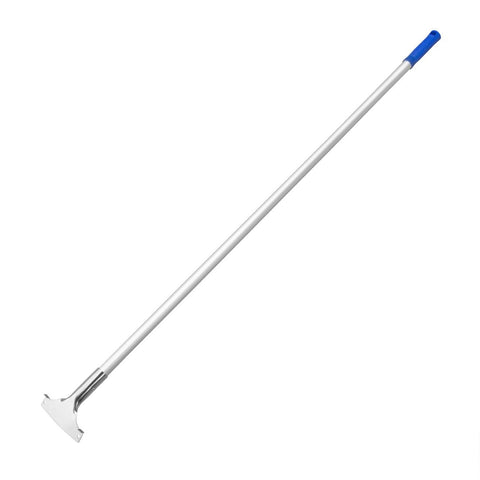


 Brenner 6-inch Heavy Duty Aluminium Grill Scraper with 16-inch Handle - GS-16AL
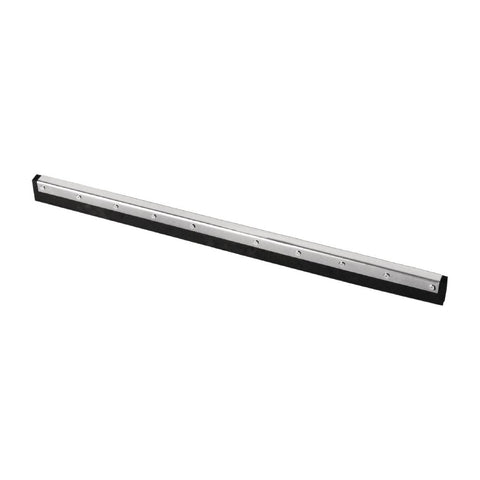

 Jantex Galvanised Steel Squeegee 762mm - CF248
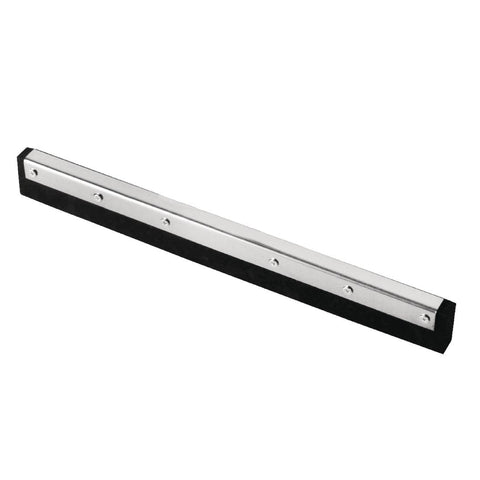
 Jantex Galvanised Steel Squeegee 457mm - CF246
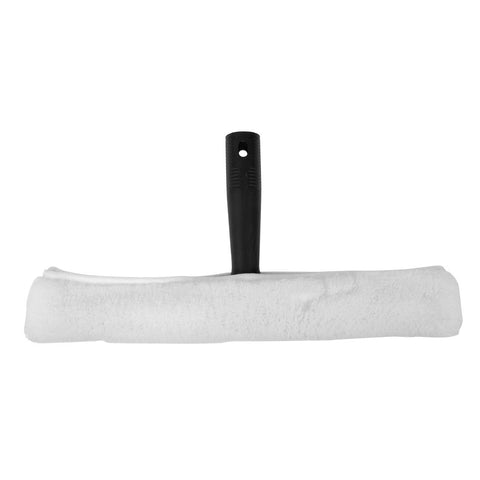

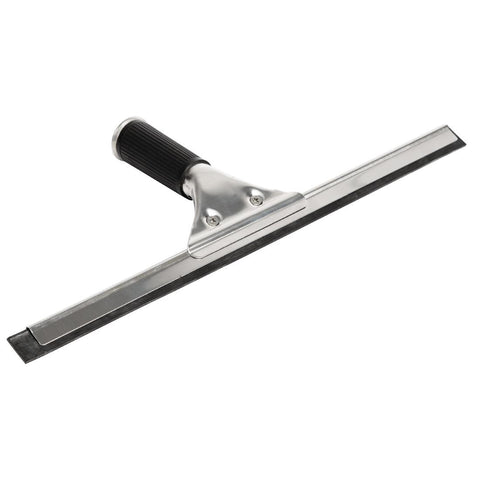
 Jantex Stainless Steel Window Wiper 355mm - CC938
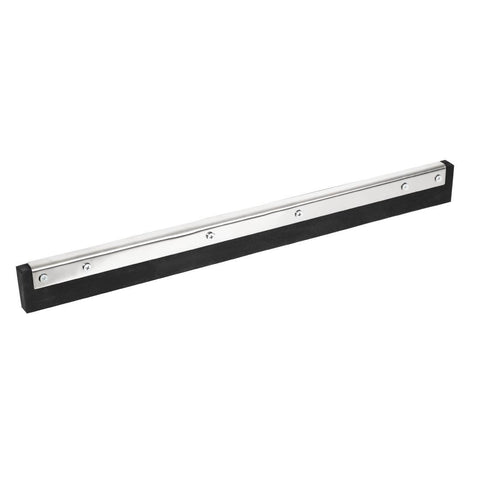

A floor squeegee pushes wash-down water to the drain faster than a mop can lift it, and a grill scraper takes carbon off a hotplate. Squeegees and scrapers share a shelf and not much else.
On a wash-down floor the squeegee is the finishing tool: scrub with a brush, then push the water out rather than lifting it with a mop. Keep one with the mops and brushes and a window squeegee separately, because a blade that has been on the floor will smear glass.
Scrapers split by surface. A stiff steel blade for a steel griddle, a plastic or wooden scraper for coated and chrome plates, and a dough scraper for bench work — those live with the bakery accessories rather than here.
Deciding between one wide floor blade and a narrow one for behind the line? Both widths, and the scraper blades that go with them, are costed in the price guide.
Speed and dryness. A squeegee pushes the bulk of the water to the drain in one pass, so the floor is walkable far sooner and the mop is only lifting the film that is left.
On a kitchen floor with a fall to a drain it is the obvious tool. Pair it with a mop bucket and wringer for the final pass.
Wide enough to cover the run in few passes, narrow enough to get between equipment legs and into a corner. Most kitchens are better served by a mid-width blade than the widest one available.
Two blades — one wide for open floor, one narrow for behind the line — covers it. Widths are listed per product.
Rubber is the default for floors: it holds an edge, handles grit and can be reversed when one side wears. Foam suits smooth surfaces and smaller spills but tears on a tiled floor with grit on it.
Double-blade rubber squeegees clear more water per pass. Single-blade is easier to clean and lighter to use.
On a plain steel plate, no, and it is the right tool. On chrome, coated or cast surfaces it will mark them, and the manufacturer's documentation or specifications will tell you what the plate tolerates.
If you are not sure of the surface, start with a plastic blade. The benchtop griddles listings state plate material.
A squeegee blade that leaves a trail of water behind it has lost its edge. A scraper with a rolled or nicked blade digs into the plate rather than sliding across it.
Both are cheap enough that there is no reason to persevere with a worn one.
A hotplate scraper and an oven scraper are different shapes — flat and wide against a plate, narrow and angled to get into a corner of a cavity. One tool does both jobs badly.
For an oven, the chemical does most of the work. See cooking equipment cleaners for what to pair with the scraping.
Hung by the handle, blade clear of the floor, so the rubber does not take a set. A squeegee stored on its blade for a week will have a flat spot in it.
A cleaning trolley or a wall rack keeps them with the rest of the cleaning supplies and out of the walkway.

We have a special page just for stock that's warehoused in Perth.
Click Here to see all WA stockWhat our customers say about us on Google, and how Google scores our store for things like shipping and returns.
Store scores from Google