


 03 9070 5784
 Help & Support
 Track My Order



Recently Viewed
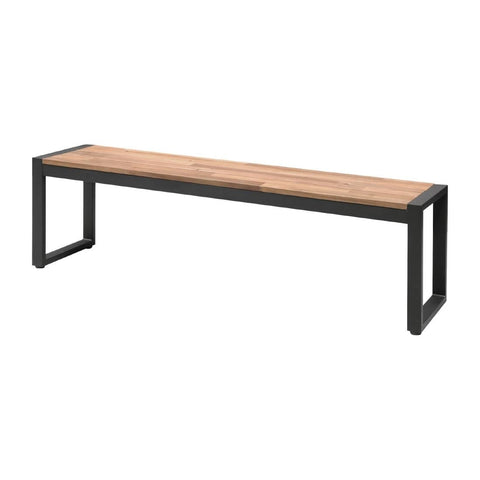

 Bolero Acacia Wood and Steel Industrial Benches 1600mm (Pack of 2) - DS158
1600(W) x 450(H) x 380(D)mm
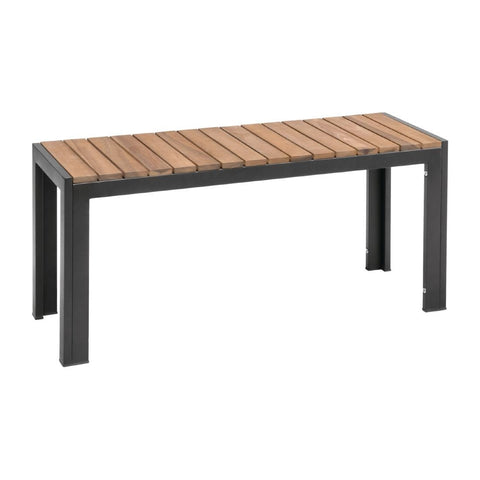
 Bolero Rectangular Steel and Acacia Benches 1000mm (Pack of 2) - DS154
1000(W) x 450(H) x 350(D)mm
Commercial cafe benches seat customers in a run along a wall, under a window or back to back through the middle of the floor. A cafe bench puts more people in the same footprint than loose chairs, because nobody needs circulation space behind them. The loose-seating range is cafe chairs and cafe bar stools.
Most rooms use both. Benches go where the walls are, and chairs fill the open floor, so the room can still be reconfigured for a big group. Pair a coffee shop bench with rectangular cafe tables rather than round ones, because a straight edge sits flush against the seat.
Formats in the range run from upholstered banquette modules to timber and steel benches, with and without backs. Choosing a bench for cafe use rather than a domestic one comes down to the covering, because a cafe seat takes constant sliding, spills and wiping every day. See the whole seating group in commercial kitchen chairs.
Benches are usually bought as part of a fit-out rather than one at a time, which is where Silverchef Rent-Try-Buy helps spread the cost — read how it works on our Silverchef Rent-Try-Buy page. Send us your wall lengths and we will work out the run.
Measure the clear wall length, then subtract anything that interrupts it — a door swing, a skirting heater, a power point you need access to, a column. What is left is what the run has to fit into, and bench modules are sold in set lengths, so the run is built from the sizes available rather than cut to measure.
Work out the covers from your own table spacing, not from a per-person figure we have made up: the comfortable gap between tables in your room is what sets it. Module lengths and depths are on each product page. Then match the tables with cafe tables.
Freestanding is the default in the range and the more useful choice for most venues, because the room can be changed later and the bench can be pulled out to clean behind. It also avoids making an alteration to a leased building.
Fixing to the wall or floor is worth it where the bench forms a divider in the middle of the floor and will otherwise get pushed around, or where it is upholstered to the wall line as a continuous banquette. If the premises are leased, check with the landlord before anything is fixed.
Commercial vinyl is the workhorse: it wipes clean, resists spills and handles people sliding in and out all day. Commercial-grade fabric looks softer and suits dining rooms with slower turnover, but it needs a cleaning regime. Timber and steel benches have no covering at all and are the easiest to maintain.
Match the covering to turnover rather than to the look you want first. A high-turnover cafe window seat will punish fabric; a quiet dining room will not. Each product page states what the seat is covered in.
Only where the bench is built for it. An upholstered indoor banquette will not survive weather, while a steel or treated-timber bench is made to. Look for a product page that states outdoor use, and expect to bring cushions in.
Covered outdoor areas sit between the two. If the bench is under cover, shade and heating decide whether the seats get used at all, so look at commercial outdoor umbrellas and outdoor heaters at the same time.
No, and they sit at different heights. A coffee bar bench is seating at table height along a wall or window. A bar run is a high counter with stools pulled up to it, which suits solo customers and short stays. Heights for each are on the product pages, and the stool range is cafe bar stools.
Plenty of cafes use both: a window bar for takeaway customers who stay ten minutes, and bench seating along the wall for the people who order food. Decide by dwell time, not by floor space alone.
Buy the run in one go, from one product line, and order a spare module if the layout might grow. Second batches of a commercial covering do not always match an older one exactly, and a mismatched module in the middle of a wall is obvious.
For the same reason, settle on the table shape before the benches arrive. Swapping to a different table depth later leaves a gap between the seat and the table edge. Cafe table tops and cafe table bases are sold separately if you need a specific combination.
It works well around the perimeter and badly in the middle, because benches do not move for a different layout. The usual approach is benches along the walls, loose chairs and commercial folding tables in the open floor so the room can be reset.
For hotels, a bench along a lobby window or in a breakfast room adds seating without adding furniture to move at cleaning time. The wider range for those spaces is hotel furniture.

We have a special page just for stock that's warehoused in Perth.
Click Here to see all WA stockWhat our customers say about us on Google, and how Google scores our store for things like shipping and returns.
Store scores from Google