


 03 9070 5784
 Help & Support
 Track My Order



Recently Viewed


 Blizzard Air-Cooled Ice Maker SN-700P
760(W) x 860(D) x 1745(H)mm

 Blizzard Air-Cooled Ice Maker SN-420P
560(W) x 860(D) x 1745(H)mm

 Blizzard Air-Cooled Ice Maker SN-500P
760(W) x 860(D) x 1745(H)mm

 Blizzard Air-Cooled Ice Maker SN-1500P
1227(W) x 965(D) x 1927(H)mm

 AG Free standing Ice Machine cube ice - 95Kg/24Hr ICE95
660(W) x 707(D) x 919(H)mm

 Blizzard Professional Ice Maker SN-145C
560(W) x 860(D) x 1720(H)mm

 Blizzard Air-Cooled Ice Maker SN-1000P
760(W) x 860(D) x 1920(H)mm


 Skope SPIKA MS220 A Half Dice Modular Ice Cube Maker - SPIKA MS220 A HD R290
762(W) x 500(H) x 620(D)mm
 AG Free Standing Modular Ice Machine Cube Ice - 160Kg/24Hr ICE159
560(W) x 800(D) x 1720(H)mm
 AG Free Standing Modular Ice Machine Cube Ice - 225Kg/24Hr ICE227
760(W) x 860(D) x 1745(H)mm

 Blizzard Professional Ice Machines SN-2000P
1262(W) x 965(D) x 2057(H)mm

 ICEMATIC 54kg Self Contained Ice Machines with Removable Air Filter and Integrated Drain pump C54DP-A
500(W) x 800(H) x 580(D)mm
 ICEMATIC 46kg Self Contained Ice Machines with Removable Air Filter and Integrated Drain pump C46DP-A
500(W) x 690(H) x 540(D)mm
 ICEMATIC 28kg Self Contained Ice Machines with Removable Air Filter and Integrated Drain pump C28DPPLUS-A
400(W) x 600(H) x 480(D)mm
 ICEMATIC 90kg Self Contained Ice Machines with Removable Air Filter and Integrated Drain pump C90DP-A
700(W) x 910(H) x 580(D)mm
 ICEMATIC 70kg Self Contained Ice Machines with Removable Air Filter and Integrated Drain pump C70DP-A
700(W) x 910(H) x 580(D)mm
 ICEMATIC 38kg Self Contained Ice Machines with Removable Air Filter and Integrated Drain pump C38DP-A
400(W) x 690(H) x 540(D)mm
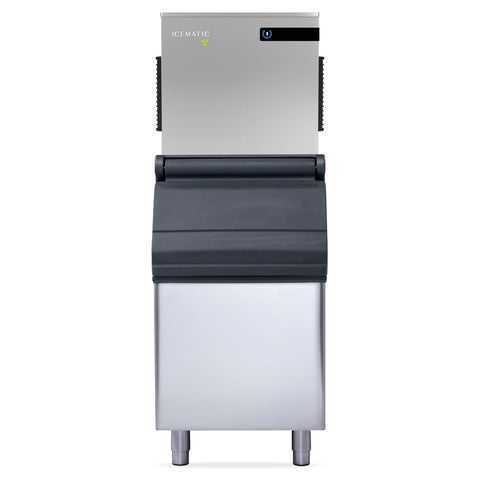 Icematic 130Kg High Production Nugget Ice Machine G125-A
570(W) x 535(H) x 545(D)mm
 Icematic 300Kg High Production Flake Ice Machine B305-A
570(W) x 535(H) x 545(D)mm
 Icematic 210Kg High Production Nugget Ice Machine G205-A
570(W) x 535(H) x 545(D)mm
 Icematic 540Kg High Production Super Flake Ice Machine B505-A
670(W) x 710(H) x 670(D)mm
Icematic High Production Nugget Ice Machine
570(W) x 535(H) x 545(D)mm
 Icematic 200Kg High Production Flake Ice Machine B205-A
570(W) x 535(H) x 545(D)mm
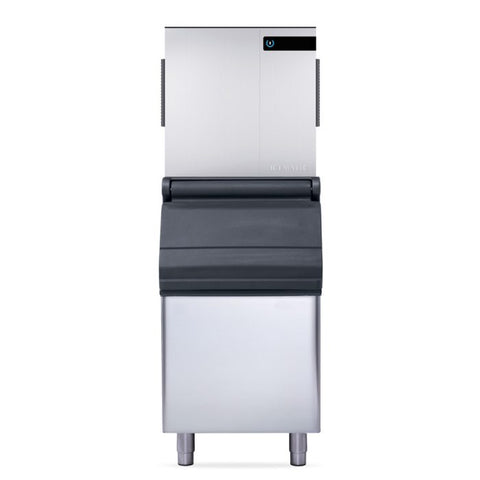 Icematic 145Kg High Production Dice Cube Ice Maker M145-A
560(W) x 575(H) x 620(D)mm
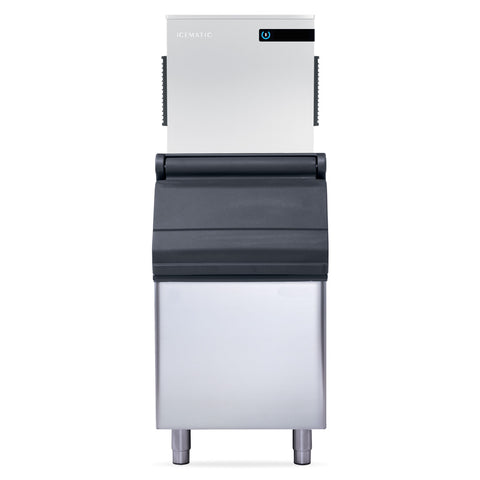 Icematic 120Kg High Production Flake Ice Machine B125-A
570(W) x 535(H) x 545(D)mm
 Icematic 400Kg High Production Dice Cube Ice Maker M405-A
760(W) x 575(H) x 620(D)mm
 Icematic High Production Flake Ice Machine
570-670(W) x 535-710(H) x 545-670(D)mm
 Icematic High Production Dice Cube Ice Maker
560-760(W) x 575-660(H) x 620(D)mm
Icematic 212Kg High Production Dice Cube Ice Maker M195-A
560(W) x 660(H) x 620(D)mm
 Icematic 220Kg High Production Dice Cube Ice Maker M205-A
760(W) x 575(H) x 620(D)mm
 Icematic 276Kg High Production Dice Cube Ice Maker M305-A
760(W) x 575(H) x 620(D)mm


 Ice-O-Matic CIM1135FA90 Modular Full Cube Ice Maker
768(W) x 683(D) x 616(H)mm

 Ice-O-Matic CIM1135HA90 Modular Half Cube Ice Maker
768(W) x 683(D) x 616(H)mm

 Ice-O-Matic CIM0325FA90 Modular Full Cube Ice Maker
565(W) x 540(D) x 616(H)mm

 Ice-O-Matic CIM0525FA90 Modular Full Cube Ice Maker
565(W) x 540(D) x 616(H)mm

 Ice-O-Matic CIM0325HA90 Modular Half Cube Ice Maker
565(W) x 540(D) x 616(H)mm

 Ice-O-Matic CIM0525HA90 Modular Half Cube Ice Maker
565(W) x 540(D) x 616(H)mm

 Skope SPIKA MS410 A Half Dice Modular Ice Cube Maker - SPIKA MS410 A HD
760(W) x 762(H) x 620(D)mm
 Skope SPIKA MS220 A Full Dice Modular Ice Cube Maker - SPIKA MS220 A FD R290
762(W) x 500(H) x 620(D)mm
 Skope SPIKA MS410 A Full Dice Modular Ice Cube Maker - SPIKA MS410 A FD
760(W) x 762(H) x 620(D)mm

 Bromic Modular Ice Machine (Head Only) - Flake - 200kg/24h IM0200FM-NR
564(W) x 536(D) x 531(H)mm
 Bromic Modular Ice Machine (Head Only) - Flake - 410kg/24h IM0400FM-NR
538(W) x 663(D) x 790(H)mm
 Bromic Modular Ice Machine (Head Only) - Flake - 300kg/24h IM0300FM-NR
538(W) x 663(D) x 650(H)mm
 Bromic Modular Ice Machine (Head Only) - Half Dice - 320kg/24h IM0320HDM
760(W) x 620(D) x 575(H)mm
 Bromic Modular Ice Machine (Head Only) - Half Dice - 485kg/24h IM0485HDM
760(W) x 620(D) x 800(H)mm
 Bromic Modular Ice Machine (Head Only) - Half Dice - 160kg/24h IM0160HDM
558(W) x 610(D) x 609(H)mm
 Bromic Modular Ice Machine (Head Only) - Half Dice - 250kg/24h IM0250HDM
558(W) x 610(D) x 610(H)mm

 Ice-O-Matic CIM0635 Modular Cube Ice Maker
768(W) x 540(D) x 616(H)mm

 Ice-O-Matic CIM0325 Narrow Modular Cube Ice Maker
565(W) x 616(D) x 540(H)mm

 Ice-O-Matic CIM1135 Modular Cube Ice Maker
768(W) x 616(D) x 683(H)mm

 Ice-O-Matic CIM0525 Narrow Modular Cube Ice Maker
565(W) x 616(D) x 540(H)mm

 Blizzard Professional Ice Maker SN-280C
760(W) x 860(D) x 1810(H)mm
A commercial modular ice maker comes in two parts: a head that makes the ice, and a bin underneath that holds it until the bar or the kitchen comes for it. That split is what gets you the volume — ice buckets of beer, cocktails made in bulk, an ice bed under a display, and a summer rush that does not run the bar dry.
Commercial modular ice makers make hundreds of kilos of ice a day, and many models give you a choice of cube sizes and shapes. Shop the range here at Restaurant Equipment Online, from the top brands in the trade, with delivery anywhere in Australia.
A head and a bin together is a big-ticket buy, so SilverChef Rent-Try-Buy can fund the pair, with the option to upgrade or hand it back as the venue changes.
When the machine you have stops keeping up. If an underbench ice maker is running dry before the night is over, and adding a benchtop ice maker alongside it would not close the gap, a modular machine is the next step. Most underbench models max out at around 120 kilos of ice a day, while modular units go up to around 310 kilos, which is more than double.
Yes. The output is what the machine can make, not what it has to make. In the quiet season, or after a menu change, you can dial production back to what you are actually using instead of making ice that melts in the bin.
The thing to plan for is where the ice goes. Smaller underbench and countertop machines hold their own ice in the same cabinet. With a modular machine the bin does that job, so size the bin to the head and to your peak session. For moving ice out to the bar, an ice caddy keeps it clean and cuts melt on the way.
That comes down to what you serve, how much ice goes in each drink, and how much you want sitting in the bin before a rush. A venue with 100 seats or more serving plenty of chilled drinks, wine in buckets included, is usually looking at 200 kilos of ice a day or more. A modular machine covers that, and the point of the bin is that staff scoop from a full one rather than waiting on the machine between rounds.
The head sits on top and drops the finished ice straight into the bin below it, so the two are bought and installed as a pair. Bins are matched to the head's footprint and mounting, so check the pairing on the product page or ask us to confirm it.
The bin is insulated with a drain, not refrigerated the way a freezer is, so some melt is normal and the bin takes the water away. Ice keeps in it for a shift rather than indefinitely. Sizing an ice tub to the head is how you avoid both running out and making ice nobody uses.
Mostly the hard, slow-melting cube that suits spirits, cocktails and soft drinks. Some models will also make nuggets or flakes. If you like a machine but it only makes one shape, an ice crusher gives you a second option off the same machine.
In one practical way, yes: the head is a separate unit from the bin, so there is less to pull apart to get at it. Descaling, sanitising and filter changes are the routine jobs, and most units have removable panels and a drain designed to make them quick. Clean the bin on the manufacturer's schedule as well, and keep a dedicated scoop stored outside the ice.
Water, power, drainage and space. The machine needs a water supply and somewhere for the waste water to go, room for the cabinet, and clear air around the condenser so it can shed heat while it works. Check the clearance the maker asks for on the product page before the joinery goes in.
Water quality is the other one. Metro supply is generally low in minerals; outside the city, a filter stops scale building up inside the machine. Even on metro water, a filter is worth fitting if you want the clearest, cleanest-tasting ice you can get.
A modular machine is the highest-output format in the ice machines range, and it keeps making ice into the bin while the bar is drawing from it. That is the difference through a long Friday night: the bin is being refilled the whole time rather than emptied once and left.
Less walking and less juggling. One machine filling one bin means nobody is checking two cabinets, carrying ice from the kitchen to the bar mid-round, or deciding which machine has enough left in it. With more stored ice to draw on, the bar can keep its pace through a peak.

We have a special page just for stock that's warehoused in Perth.
Click Here to see all WA stockWhat our customers say about us on Google, and how Google scores our store for things like shipping and returns.
Store scores from Google