


 03 9070 5784
 Help & Support
 Track My Order



Recently Viewed


 Gasmax Superfast LPG Gas Tube Fryer - RC300ELPG
394(W) x 759(D) x 1195(H)mm

 Gasmax Superfast LPG Gas Tube Fryer - RC500ELPG
534(W) x 759(D) x 1195(H)mm
 Gasmax Superfast Natural Gas Tube - RC300E
394(W) x 759(D) x 1195(H)mm
Gasmax Superfast Natural Gas Tube Fryer - RC500E
534(W) x 759(D) x 1195(H)mm

 FryMAX RC300E Superfast Tube Fryer - Natural Gas/LPG

 Gasmax Superfast Natural Gas Tube Fryer - RC400E
394(W) x 759(D) x 1195(H)mm
Gasmax Superfast LPG Gas Tube Fryer - RC400ELPG
394(W) x 759(D) x 1195(H)mm
 FryMAX RC500E Superfast Tube Fryer - Natural Gas/LPG

 Gasmax Superfast Natural Gas Tube Twin Vat Fryer - RC400TE
534(W) x 769(D) x 1195(H)mm
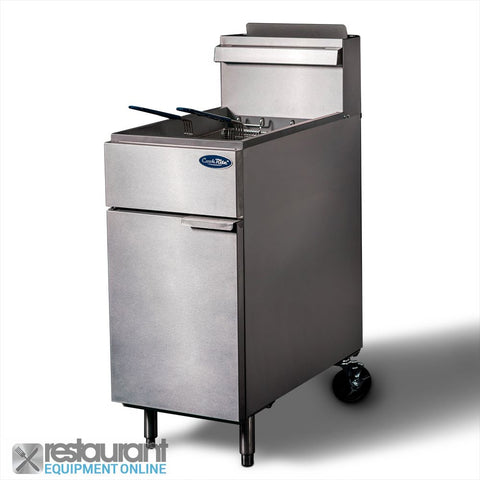

 Cookrite ATFS-40 3 Tubes Gas Deep Fryer - Natural Gas/LPG
395(W) x 765(D) x 1128(H)mm
 Cookrite 84Mj/h 3 Tubes Gas Deep Fryer LPG ATFS-40-LPG
395(W) x 765(D) x 1128(H)mm
Cookrite 84Mj/h 3 Tubes Gas Deep Fryer NG ATFS-40-NG
395(W) x 765(D) x 1128(H)mm
Gasmax Superfast LPG Gas Tube Twin Vat Fryer - RC400TELPG
534(W) x 769(D) x 1195(H)mm
 FryMAX RC400E Superfast Tube Fryer - Natural Gas/LPG

 FryMAX V-Pan LPG Deep Fryer VP122LPG
400(W) x 784(D) x 1178(H)mm

 Cookrite ATFS-50 4 Tubes Gas Deep Fryer - Natural Gas/LPG
395(W) x 765(D) x 1128(H)mm
Frymax RC400TE Superfast Tube Twin Vat Fryer - Natural Gas/LPG


 Luus FVG-60 Slimline V-Pan Fryer
600(W) x 800(D) x 1100(H)mm
 Cookrite 112Mj/h 4 Tubes Gas Deep Fryer NG ATFS-50-NG
395(W) x 765(D) x 1128(H)mm
 Frymax VP122 V Pan Deep Fryer - Natural Gas/LPG

 Luus Single V-Pan Fryer FV-45
450(W) x 800(D) x 1100(H)mm

 Cookrite ATFS-75 5 Tubes Gas Deep Fryer - Natural Gas/LPG
535(W) x 765(D) x 1128(H)mm
 Luus Single V-Pan Fryer FV-45-LPG - LPG
450(W) x 800(D) x 1100(H)mm
 Cookrite 114Mj/h 5 Tubes Gas Deep Fryer NG ATFS-75-NG
535(W) x 765(D) x 1128(H)mm
 Cookrite 112Mj/h 4 Tubes Gas Deep Fryer LPG ATFS-50-LPG
395(W) x 765(D) x 1128(H)mm

 Fagor Kore 900 Electric Fryer With 2X15L Tank And 2 Baskets F-E9215
800(W) x 930(D) x 850(H)mm
 Fagor Kore 900 Series Deep Fat Fryer F-G9221
800(W) x 930(D) x 850(H)mm

 Luus 3 Basket Split V-Pan Fryer FSV-60
600(W) x 800(D) x 1100(H)mm

 Luus 2 Basket Split V-Pan Fryer FSV-45
450(W) x 800(D) x 1100(H)mm

 Fagor Kore 900 Series F-G9115 Deep Fat Fryer - Natural Gas/LPG
 Luus FVG-40 400mm Commercial Slimline Gas V-Pan Fryer FVG-40-LPG
400(W) x 800(D) x 1100(H)mm
 Luus FVG-40 400mm Commercial Slimline Gas V-Pan Fryer FVG-40-NG
400(W) x 800(D) x 1100(H)mm

 Baron 23L Single Basin Gas Deep Fryer Q90FRI/G423
400(W) x 900(H) x 900(D)mm
 Baron 10+10L Split Pot Gas Deep Fryer Q90FRI/G610
600(W) x 900(H) x 900(D)mm
 Baron 23+23L Double Basin Gas Deep Fryer Q90FRI/G823
800(W) x 900(H) x 900(D)mm
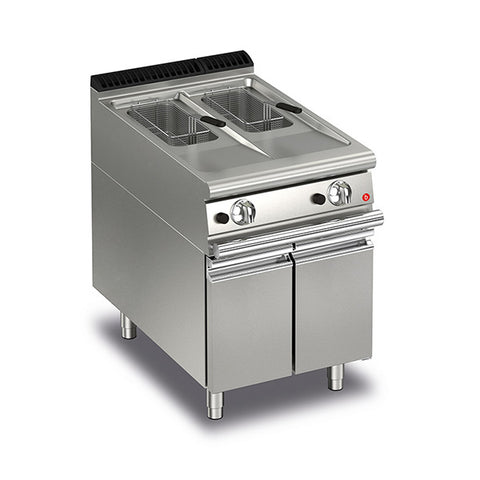 Baron 10+10L Split Pot Gas Deep Fryer With Piezo Ignition Q70FRI/G610
600(W) x 900(H) x 700(D)mm
 Baron 15+15L Double Basin Electric Deep Fryer Q70FRI/E815
800(W) x 900(H) x 700(D)mm
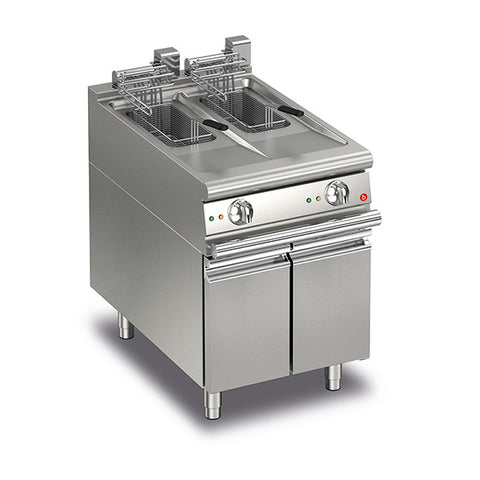 Baron 10+10L Split Pot Electric Deep Fryer Q70FRI/E610
600(W) x 900(H) x 700(D)mm
 Baron 15+15L Double Basin Gas Deep Fryer With Piezo Ignition Q70FRI/G815
800(W) x 900(H) x 700(D)mm
 Baron 15L Single Basin Electric Deep Fryer Q70FRI/E415
400(W) x 900(H) x 700(D)mm
 Baron 15L Single Basin Gas Deep Fryer With Piezo Ignition Q70FRI/G415
400(W) x 900(H) x 700(D)mm
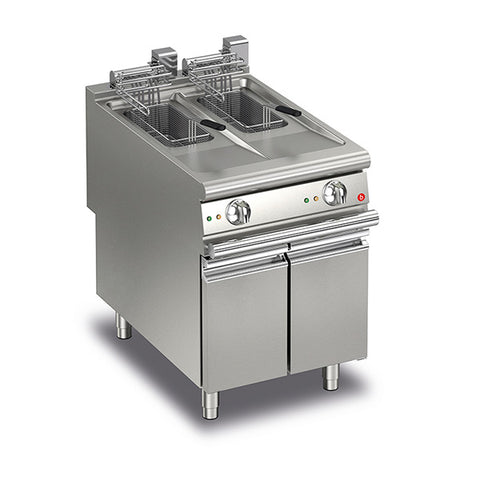
 Baron Queen 9 Series Basin Gas Deep Fryer
400-800(W) x 900(H) x 900(D)mm
Baron Queen 7 Series Basin Gas Deep Fryer With Piezo Ignition
400-800(W) x 900(H) x 700(D)mm
 Baron Queen 7 Series Basin Electric Deep Fryer
400-800(W) x 900(H) x 700(D)mm

 Fagor Kore 900 F-E9 Electric Fryer with 1x15L Tank and Basket - 1-2 Tanks & 1-4 Baskets
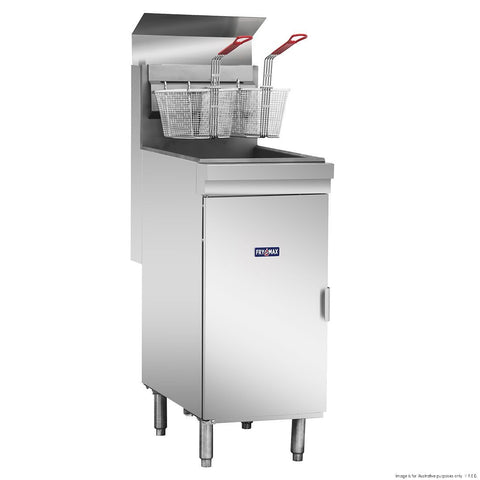
 CLEARANCE - Frymax Superfast LPG Gas Tube Fryer - RC300ELPG-VIC1064
145(W) x 394(D) x 759(H)mm
394(W) x 759(D) x 1195(H)mm

 Luus 2 Basket Split V-Pan Fryer FSV-45-NG - Natural Gas
450(W) x 800(D) x 1100(H)mm
 Luus 2 Basket Split V-Pan Fryer FSV-45-LPG - LPG
450(W) x 800(D) x 1100(H)mm

 Luus 3 Basket Split V-Pan Fryer FSV-60-NG - Natural Gas
600(W) x 800(D) x 1100(H)mm
 Luus 3 Basket Split V-Pan Fryer FSV-60-LPG - LPG
600(W) x 800(D) x 1100(H)mm

 Luus Single V-Pan Fryer FV-45-NG - Natural Gas
450(W) x 800(D) x 1100(H)mm
 Cookrite 140Mj/h 5 Tubes Gas Deep Fryer LPG ATFS-75-LPG
535(W) x 765(D) x 1128(H)mm
A gas deep fryer cooks chips, fish and anything crumbed in hot oil, and the number of vats you buy decides how many of those can come out at once without the flavours crossing over. Pubs, food trucks, cafes and restaurants all buy the same commercial gas deep fryers; what changes is the vat count and whether you want to filter the oil by hand.
Our commercial gas deep fryers include small single vat benchtop units for a takeaway counter up to large floor-standing models with three or four vats for a pub kitchen, with or without built-in oil filtration, so you can buy the size that suits your business at its current size, then size up as your business grows. Most kitchens here start around a 20 litre single vat and go up from there. Delivered anywhere in Australia, which means one order to track and one number to call if something goes wrong, instead of chasing several suppliers.
Pricing a full frying station? Get a quote and we will put the options together.
Start with how much you fry at once. Floor-standing commercial gas deep fryers start at around 20 litres in a single vat and go up to three or four vats of 30 litres or more. If chips, fish and anything crumbed all have to come out at the same time, you need more than one vat so the flavours stay apart.
Then look at the space you have and whether the site is set up for gas or electric. A first fryer often needs gas or electrical work done before it can go in. If floor space is tight, benchtop deep fryers do the same job on a bench.
Last, decide which features you will actually use: tighter temperature control, built-in filtration, or an idle mode that drops the oil temperature between rushes.
We stock the brands that hold up in a commercial kitchen. The best one for you depends on the vat size and features you need, but the models we recommend most often come from Luus, Fagor and FryMAX.
Call our team if you want it narrowed down to two or three models for your kitchen.
Five to ten years, depending on how hard you run it and how well it is looked after. Daily cleaning, filtering the oil and regular boil-outs make most of the difference. There is a guide to deep fryer maintenance on our blog.
Your fryer comes with the maker's maintenance instructions. Follow them and book a service now and then. It keeps the food coming out the same every time.
Roughly every six to eight uses, but it depends on how well you filter it and how hot you run it. Oils with a high smoke point, like canola, peanut and safflower, take the heat better than the rest.
Filtering the oil stretches that out. Some gas fryers filter on their own; others you do by hand.
You will know it is time when the oil foams at frying temperature, smells off or goes cloudy. Food coming out darker than usual is the other sign.
Yes. A fryer needs proper extraction to meet safety rules and to stop it overheating. Good airflow pulls the oil mist out of the air instead of letting it settle on everything around the fryer, which is what turns a small flare-up into a kitchen fire.
Venting also takes away the steam and the smell, and keeps the air above the fryer from getting too hot. What you need depends on the model and the layout, so get a professional to look at it before the first fryer goes in.
Nothing, really. They are the same machine. A deep fat fryer just means more oil to the amount of food, which gives a slightly different result.
Measure the space first, including room for the gas or power and for the extraction above it. Then work out how many serves an hour you have to get out at your busiest.
Use about six parts oil to one part food. Drop more food than that into the vat and the oil temperature falls away, and the food comes out soggy instead of crisp. That ratio is what the vat litres on each listing should be checked against.
Gas needs a site that already has gas connected. Where you have it, gas recovers oil temperature faster under constant load, which matters when a basket of chilled product goes straight in after a cooked one comes out.
Electric takes longer to recover but holds the temperature more steadily between batches, and it installs anywhere with the right electrical supply, which is why it is the usual answer in a shopping centre tenancy or a food court. That is the whole trade-off: recovery against steadiness and where you can put it.
It pays for itself if you fry all day. Filtration pulls out the crumbs and bits that end up in the oil, so the oil lasts longer and the food keeps tasting the way it should, and nobody has to stand there filtering it by hand.
Oil in a fryer with no filtration spoils faster, and you get through more of it.
Space and volume decide it. A benchtop fryer can be moved and put wherever there is bench, which suits a small kitchen. A floor model holds more oil and keeps up better at volume.
Plenty of kitchens run both: the floor model for chips, and a benchtop kept for gluten-free or vegetarian orders so nothing crosses over.
A chip warmer, filtering and extraction. Chip warmers hold fried food hot, fryer filter machines extend oil life, and commercial kitchen exhaust hoods handle grease vapour. Smaller sites can use benchtop deep fryers instead.

We have a special page just for stock that's warehoused in Perth.
Click Here to see all WA stockWhat our customers say about us on Google, and how Google scores our store for things like shipping and returns.
Store scores from Google