


 03 9070 5784
 Help & Support
 Track My Order



Recently Viewed


 Modular Systems Canopy Range Hood CHOOD1200
1000(W) x 1200(D) x 600(H)mm

 Modular Systems HOOD Bench Top Filtered Hood - 750-1500MM Width

 Modular Systems Bench Top Filtered Hood - 750mm HOOD750A
750(W) x 700(D) x 1150(H)mm


 SimcoHood SH Series Exhaust Canopy
1000-4000(W) x 1000(D) x 900(H)mm
 Simcohood SH Series Exhaust Canopy 2000x1000 mm SH2000
Modular Systems Bench Top Filtered Hood 1200MM HOOD1200A
1200(W) x 700(D) x 1150(H)mm
Modular Systems Bench Top Filtered Hood 1000MM HOOD1000A
1000(W) x 700(D) x 1150(H)mm

 Modular Systems HB Range Hood and Workbench System - 1200-1800mm Width


 Fagor Electric Condensing Hood For 061 And 101 Ikore Oven EXH-061-101
970(W) x 940(D) x 370(H)mm

 Simcohood Ductless Exhaust Hood System
1500-1800(W) x 750-850(D) x 1400(H)mm
 Simcohood Ductless Exhaust Hood System 620 Mm-W 1500Mm X D 850Mm X H 1400Mm DH1500-850
1500(W) x 850(D) x 1400(H)mm
 Simcohood SH Series Exhaust Canopy 3000x1000 mm SH3000
 Simcohood SH Series Exhaust Canopy 1200x1000 mm SH1200
 Simcohood SH Series Exhaust Canopy 2400x1000 mm SH2400
 Simcohood SH Series Exhaust Canopy 1500x1000 mm SH1500
 Simcohood SH Series Exhaust Canopy 1800x1000 mm SH1800


 Tecnodom Steamless Canopy For Tdc Oven Range TD-FECL
920(W) x 1005(D) x 300(H)mm


 BakerMAX Stainless Steel Hood With Motor And Speed Regulator- KT4-44MS
1100(W) x 1110(D) x 120(H)mm

 Modular Systems Range Hood And Workbench System HB1800-850
1800(W) x 850(D) x 1400(H)mm
 Modular Systems Range Hood And Workbench System HB1500-750
1500(W) x 750(D) x 1400(H)mm

 Ecovent Pro-P2 Exhaust System - 1700Mm Wide PRO-P2
1700(W) x 2195(H) x 785(D)mm
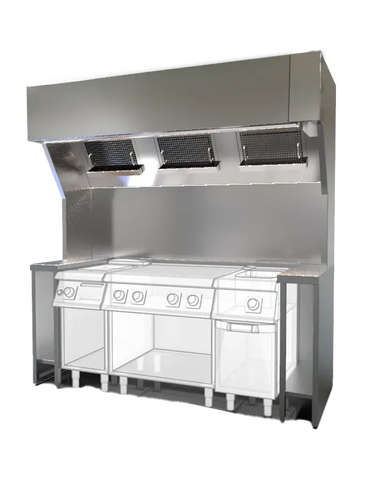 Ecovent Pro-P Exhaust System - 2100Mm Wide PRO-P
2100(W) x 2195(H) x 785(D)mm
 Ecovent Pro-P1 Exhaust System - 1300Mm Wide PRO-P1
1300(W) x 2195(H) x 785(D)mm

 Envirovent Ecovent Pro Exhaust System
1300-2100(W) x 2195(H) x 785(D)mm
 Fagor iKORE Kompact Steam Condensing Hood — EXH-KCA-Kompact (for iKORE Kompact 061 & 101)
856(W) x 521(D) x 218(H)mm

 SimcoHood Asian Type SHA Series Exhaust Canopy
1000-4000(W) x 1150(D) x 850(H)mm

 Simcohood Ductless Exhaust Hood System DH1800-750
1800(W) x 750(D) x 1400(H)mm
 Simcohood Pizza Canopy PizzaCanopy
2200(W) x 1700(D) x 700(H)mm

 Simcohood Ductless Exhaust Hood System 620 Mm-W 1800Mm X D 750Mm X H 1400Mm DH1800
1800(W) x 750(D) x 1400(H)mm
 Simcohood Ductless Exhaust Hood System 620 Mm-W 1500Mm X D 750Mm X H 1400Mm DH1500-750
1500(W) x 750(D) x 1400(H)mm
 Simcohood Asian Type SHA Series Exhaust Canopy 3800 x 1150 mm SHA3800
 Simcohood Asian Type SHA Series Exhaust Canopy 4000 x 1150 mm SHA4000
 Simcohood Asian Type SHA Series Exhaust Canopy 3600 x 1150 mm SHA3600
 Simcohood Asian Type SHA Series Exhaust Canopy 3200 x 1150 mm SHA3200
 Simcohood Asian Type SHA Series Exhaust Canopy 3400 x 1150 mm SHA3400
 Simcohood Asian Type SHA Series Exhaust Canopy 3000 X 1150 mm SHA3000
 Simcohood Asian Type SHA Series Exhaust Canopy 3900 x 1150 mm SHA3900
 Simcohood Asian Type SHA Series Exhaust Canopy 3300 x 1150 mm SHA3300
 Simcohood Asian Type SHA Series Exhaust Canopy 3700 x 1150 mm SHA3700
 Simcohood Asian Type SHA Series Exhaust Canopy 2900 X 1150 mm SHA2900
 Simcohood Asian Type SHA Series Exhaust Canopy 2300 X 1150 mm SHA2300
 Simcohood Asian Type SHA Series Exhaust Canopy 3500 x 1150 mm SHA3500
 Simcohood Asian Type SHA Series Exhaust Canopy 3100 X 1150 mm SHA3100
 Simcohood Asian Type SHA Series Exhaust Canopy 2500 X 1150 mm SHA2500
 Simcohood Asian Type SHA Series Exhaust Canopy 2400 X 1150 mm SHA2400
 Simcohood Asian Type SHA Series Exhaust Canopy 2800 X 1150 mm SHA2800
 Simcohood Asian Type SHA Series Exhaust Canopy 2000 X 1150 mm SHA2000
 Simcohood Asian Type SHA Series Exhaust Canopy 2700 X 1150 mm SHA2700
 Simcohood Asian Type SHA Series Exhaust Canopy 2100 X 1150 mm SHA2100
 Simcohood Asian Type SHA Series Exhaust Canopy 1600 X 1150 mm SHA1600
 Simcohood Asian Type SHA Series Exhaust Canopy 2200 X 1150 mm SHA2200
 Simcohood Asian Type SHA Series Exhaust Canopy 2600 X 1150 mm SHA2600
A commercial exhaust canopy draws steam, smoke, cooking smells and heat away from the cooking line, so the kitchen stays cooler, cleaner and safer to work in. It is also a regulatory requirement for any appliance outputting 8kW or more, cooking equipment and dishwashers alike.
Our commercial kitchen exhaust hoods include small portable ventilation units up to large fixed commercial kitchen exhaust systems, and canopies can be combined and placed where you need them through the kitchen, so you can buy the size that suits your business at its current size, then size up as your business grows. Ducted models carry the air outside the building, while ductless models filter it and recirculate it inside, which is the option where ducting cannot be run. Delivered anywhere in Australia.
Buying several or fitting out a whole site? Get a quote and we will price the commercial kitchen exhaust hoods you need together. Related ranges: commercial modular canopy, ductless exhaust canopies and commercial kitchen trolleys.
Commercial exhaust canopy systems serve a number of functions in your kitchen. First and most importantly, they’ll help reduce the chances of fires by extracting ambient smoke, steam, airborne oil and heat from your kitchen. This is especially crucial for kitchens with deep fryers, large cooking equipment and even commercial dishwashers. They’re so essential that they’re compulsory for any appliance outputting 8kW or more, cooking equipment and dishwashers alike.
Along with reducing the risks of fires, exhaust canopies also help to keep the kitchen at a more ambient, consistent temperature, making for more comfortable cooking conditions for your kitchen staff. They’ll also reduce the amount of cleaning you need to do by filtering particulates in the air into filters, keeping your food prep and kitchen space cleaner for longer.
Depending on the models of cooking appliances you have, some may come with in-built steam extraction, reducing the need for exhaust hoods in certain areas of your kitchen.
Ducted exhaust canopies are the most common option. However, ducting isn’t compulsory, and you can get models without it. Ducting serves to remove oil-carrying air from the kitchen and vents it outside the building. By contrast, ductless exhaust canopies will filter and recirculate air from the kitchen within the unit, removing the need for cutting holes in the walls or ceiling. Both model types will still require regular cleaning though the ways in which you maintain them differ slightly.
Depending on the configuration and size of your kitchen, you may be better off with one or the other. For large kitchens with high levels of food turnover or inadequate ventilation, ducted models are a great choice. However, for buildings or establishments that are smaller, or are unable to be altered due to heritage listings, ductless options can still do a good job of keeping your kitchen’s air clearer, cleaner and safer.
There are a few key differences between the various commercial kitchen exhaust systems. The first difference is whether they’re ducted or internally vented and filtered. Ducted models will extract air from the kitchen and remove it to be expelled to the outside of the building, while ductless models will circulate the air internally within filters to remove airborne particulate matter like smoke and oil.
The next key difference between models is the kind of fans and motors they feature. Commercial exhaust canopies are designed to whisk away higher volumes of air than residential models and, as such, have powerful fans and motors. You can find models with single-speed motors, while others will have different speed settings to suit the needs of your kitchen, depending on what you’re cooking and in what kind of volume.
At REO, we have different types of exhaust hood to suit different venues, including ductless standing filters for sites where external ventilation simply can’t be brought in.
There are a number of factors to consider when you’re choosing the best commercial exhaust canopy for your industrial kitchen. The first is to calculate what kind of capacity you’ll need to properly ventilate your space.
To start, you’ll want to consider what kind of appliances you have in your kitchen and how much steam, smoke or oil they’ll generate during peak hours. Your exhaust canopy needs to be properly placed to cover the appliance itself but also cover the full footprint of the oven or dishwasher when it’s in use. For deck or combi ovens, ensure you’re choosing an option that covers the door area when they’re in use to properly vent away steam or smoke. We have a range of sizes available, and canopies can be combined and placed where you need them through the kitchen. Keep in mind that oversized fans aren’t the best route to take as they’ll use more power and generate more noise than necessary, getting the right fit for your space is important.
Next, you’ll want to look at the capacity of air your fan can move. Each product will have different types of fans and fan settings, allowing you to choose what kind of volume of air you can filter or remove from your kitchen at any given time.
Finally, the design and the materials of your commercial exhaust canopy are important to look at. We recommend opting for 304-grade stainless steel models as these are resilient against rust, are easier to clean and are exceptionally hard-wearing. When it comes to design, look for models with filters that are either easy to maintain or can be replaced with ease, depending on whether you get a ducted or non-ducted model. The air filters are a crucial part of ensuring the safety and air quality of your kitchen, so choosing a model with high-quality parts is essential.
How frequently you need to clean your exhaust canopy will depend on what you’re cooking and how dirty it gets as a result. Oil will attract more dust and dirt, meaning more frequent cleans are needed, while steam cooking and using a dishwasher will mostly just generate steam.
Generally speaking, you’ll want to clean it at least once a month. For establishments using high volumes of deep frying and oil for their menu items, like fish and chip shops, you’ll likely need to do it at least once a week.
In order to choose the right size, you’ll need to account for the footprint of your appliances, along with the total space they take up while in use. You’ll want around one metre of overhang across each appliance to ensure proper ventilation and coverage.
Equally, you’ll need to account for how rapidly they can operate and what kind of volume of air they can move. The best way to find the perfect size for your kitchen is to contact the team at REO, and we can come and measure it for you. From there, we can recommend a setup that suits your kitchen, your hygiene requirements and your safety obligations.
There are four key components you’ll need to clean in order to keep it operating to the highest possible standards. First, you’ll need to clean the baffle filters. This part will likely need to be cleaned the most frequently as it’s directly in the line of where smoke, oil, and steam will hit. Slide them out and, if they’re especially greasy, scrub them by hand first before putting them in the dishwasher for proper cleaning and sanitisation.
Next, you’ll want to regularly check, maintain and clean the grease trap. Empty any oil that’s been captured into the bin or into a designated tub. Clean your traps thoroughly, soaking them for a few hours in a degreaser if they’re especially dirty.
Ensure you’re also periodically checking the fan itself. You may want to get a professional to service this part for you. Otherwise, you’ll need to disassemble the fan before cleaning it. Similarly, if you have a ducted model of exhaust canopy, check the duct itself for any built-up oil both inside and outside the duct.
If you’re properly maintaining your exhaust canopy, cleaning it properly and ensuring the filters are kept in good condition, they can last a lifetime. Choosing high-quality models made from hard-wearing materials like 304-grade stainless steel will also help to ensure you get the best possible return on investment for years to come.
You will see commercial exhaust hood, commercial kitchen hood, commercial extractor hood, commercial vent hood, kitchen hood extractor and restaurant hoods used for the same kind of equipment. The name changes with the supplier and the region, not the job it does. Compare models on capacity, construction and the specification on each product page, and check the full commercial kitchen exhaust hoods range to see every option side by side.

We have a special page just for stock that's warehoused in Perth.
Click Here to see all WA stockWhat our customers say about us on Google, and how Google scores our store for things like shipping and returns.
Store scores from Google