


 03 9070 5784
 Help & Support
 Track My Order



Recently Viewed

 CLEARANCE - Thermaster Heated Bain Marie Food Display PG210FE-YG-NSW1856
642(W) x (D) x (H)mm
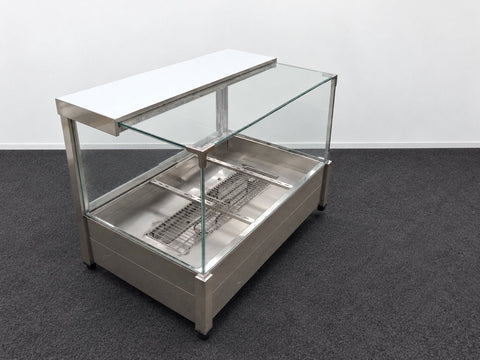

 Bonvue BM11SC Bain Marie - 931584
1055W x 624D x 720Hmm
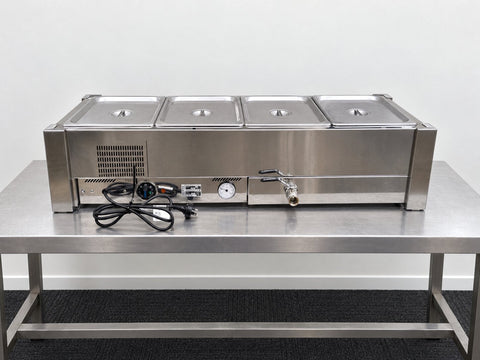

 Roband BM14 Bain Marie - 929845
1135W x 410D x 255Hmm
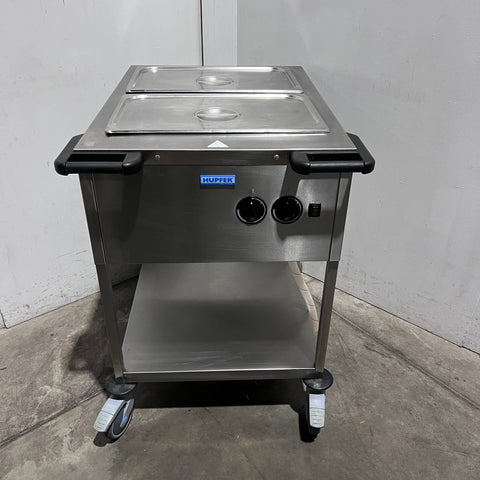

 Hupfer SPA-EB-2F-S-S Bain Marie - 867642
677W x 914D x 900Hmm
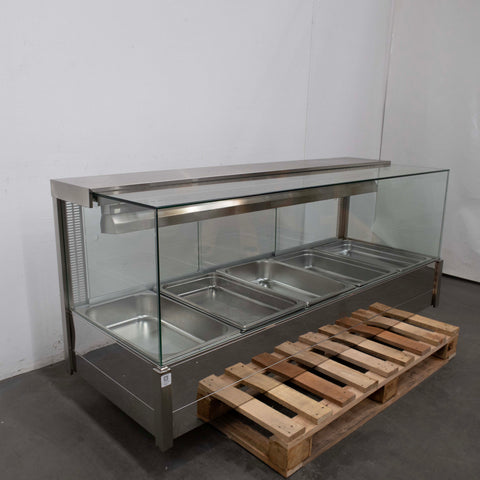
 Bonvue BM17SC Bain Marie - 854742
1720W x 625D x 720Hmm
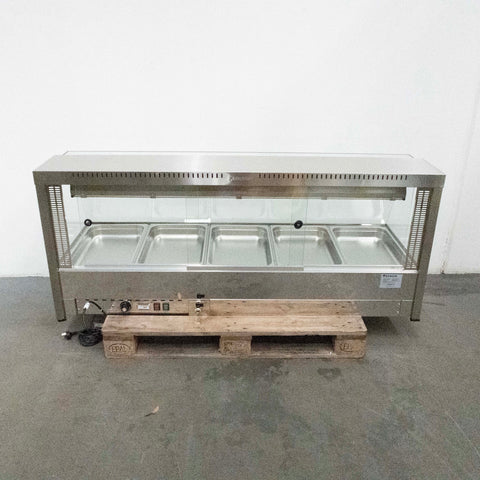
 Bonvue BM17TC Countertop Bain Marie - 909129
1725W x 620D x 720Hmm
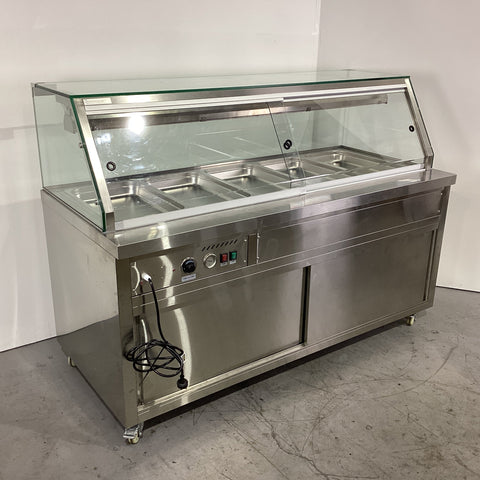
 Thermaster PG180FE-XG Bain Marie - 929017
1800W x 790D x 1270Hmm
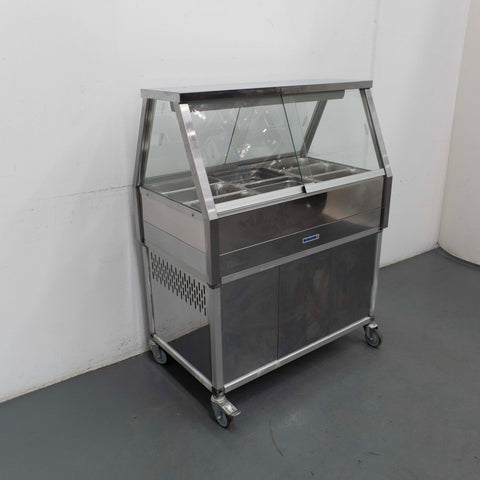
 Roband E23 Bain Marie + Stand - 820173
1030W x 620D x 1330Hmm
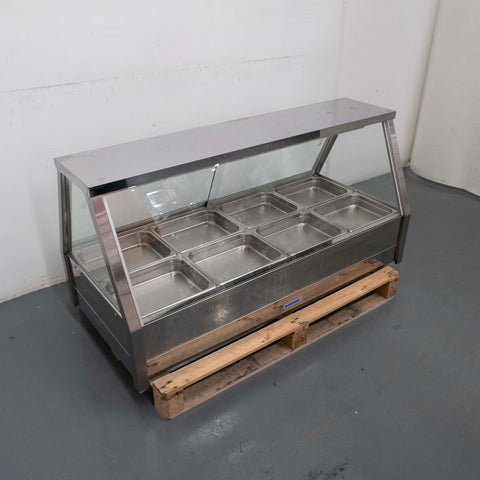
 Roband E24 Bain Marie - 902137
1355W x 615D x 675Hmm
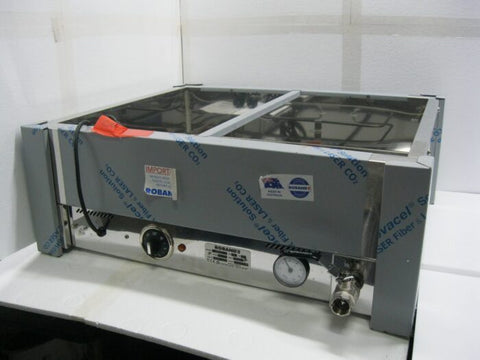
 Bain Marie (CL-BM22-553)
705(W) X 615(D) X 255(H)mm
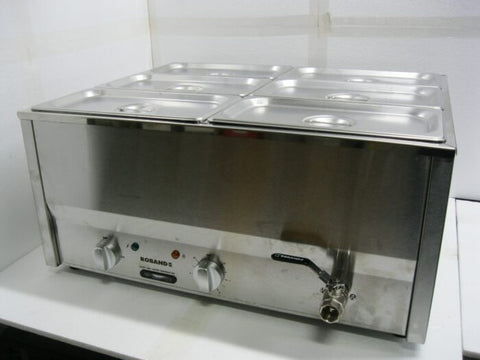
 Bain Marie (CL-BM4B-4702)
680(W) X 560(D) X 320(H)mm


 Woodson W.HFSQ24 Bain Marie + Trolley - 853969
1355W x 660D x 1345Hmm

 Woodson W.HFSQ24C Bain Marie - 887524
1355W x 660D x 690Hmm

 Thermaster PG210FE-XG Bain Marie - 881073
2140W x 790D x 1280Hmm


 Royston BM-4 Bain Marie - 829795
1400W x 700D x 755Hmm

 Roband ERX25RD Bain Marie + Trolley - 889396
1680W x 820D x 1330Hmm

 Roband E26 Bain Marie - 905691
2005W x 615D x 685Hmm

 Roband E23 Countertop Bain Marie - 918396
1030W x 685D x 680Hmm

 Roband BR26 In-Counter Refrigerated Bain Marie - 828859
1980W x 590D x 655Hmm

 Hupfer SPA-EB-2F-S-S Bain Marie - 867641
677W x 914D x 900Hmm

 Hupfer SPA-EB-2F-S-S Bain Marie - 867643
677W x 914D x 900Hmm


 Federal BS5C Buffet Servery + Canopy - 890678
1900W x 950D x 1525Hmm


 Culinaire CH.BM.D.GDD.3 Drop In Bain Marie - 853566
1135W x 645D x 1094Hmm

 Bonvue BM17TC Countertop Bain Marie - 911325
1730W x 640D x 720Hmm

 CLEARANCE - Bonvue Square Countertop Wet and Dry Bain Marie - BM17SC-VIC1006
260(W) x 1721(D) x 624(H)mm
Refurbished commercial bain maries hold cooked food at serving temperature in gastronorm pans. They are what keeps a buffet, a bistro pass or a food court counter ready to serve through the day. The new range is commercial bain maries.
Units come off showroom floors, out of demonstration kitchens and off supplier clearance lines, each one inspected, tested and verified in working condition before it is relisted for sale. The condition of a particular unit, marks included, is described on its product page.
The splits that matter are wet or dry, and benchtop or freestanding. Where the bain marie faces a customer rather than a chef, look at bain marie displays and hot bain marie displays in the new range. Whatever you buy, you will need gastronorm containers to go in it.
Nearly every unit here is a one-off, so the quickest way to compare is to say how many pans you need to hold and get a quote on what is actually on the floor this week. Related refurbished ranges: refurbished commercial food warmers and refurbished commercial cooking equipment.
A wet bain marie heats the pans through water, which gives gentle, even heat and suits saucy and moist food — curries, casseroles, vegetables. A dry bain marie heats the well directly, which is faster to come up, needs no water management, and suits food that should not be steamed, such as crumbed and fried items.
Wet units need filling, topping up and draining, and the water needs managing at the end of service. Dry units are less work but harsher on delicate product and more likely to catch at the edges of a pan. If the menu is mostly wet dishes, buy wet; if it is mixed, a dry unit with lids is usually the more forgiving buy.
Freestanding is the default for a service counter, because it brings the wells to a working height, carries more pans, and usually gives you storage or a heated cupboard underneath. Benchtop units suit a short run of pans added to an existing counter and can be moved or stored out of season.
The constraint on a benchtop unit is the bench: it has to be strong enough, deep enough, and near a power point that can carry the load. If the counter already has refurbished commercial kitchen furniture doing other work, a freestanding unit frees the bench entirely.
Count the dishes on the menu that have to be held at once, then allow a pan for each, and remember that two half pans give you twice the choice of one full pan in the same space. Gastronorm containers come in standard fractions, so a well is described by how many full-size pans it will take.
Depth matters as much as area. Deep pans hold more but the product at the bottom spends longer in the unit, which is fine for a casserole and poor for vegetables. Shallow pans swapped more often give better food. Buy the pans from the same supplier as the unit where you can, because small differences between brands affect how a pan seats in the well.
It will if the food sits too long or the pans are the wrong depth, which is a service problem rather than a machine problem. A bain marie holds; it does not improve. Food goes in hot and ready, and the clock starts.
What helps: lids on anything that will take them, shallow pans turned over frequently, water kept topped up on a wet unit, and the unit set to hold rather than to its highest setting. Keep a probe thermometer at the counter rather than relying on a dial, because a dial tells you about the well and not about the food.
The well first, for pitting, scale and any sign of a previous leak, then the elements and the thermostat, then the drain and tap on a wet unit. The well on a commercial unit is stainless steel — 304 is the food-safety grade used in Australian kitchens — and heavy scale inside a wet well tells you about the water and the cleaning history.
Then the practical things: the power lead and plug, the castors or feet, the lids and pan bars if they are meant to be included, and whether the pans themselves come with it. Ask us what was replaced during the refurbishment rather than what was inspected.
No, and this is the single most common misuse. A bain marie does not have the power to bring cold food up through the temperature range quickly, so food reheated in one spends a long time in exactly the range you want it out of. Reheat in an oven or a commercial microwave, then transfer it hot.
If reheating is a regular part of service, that is what a regeneration oven is built for. Keep the bain marie for the job it does well, which is holding hot food through a service without cooking it further.

We have a special page just for stock that's warehoused in Perth.
Click Here to see all WA stockWhat our customers say about us on Google, and how Google scores our store for things like shipping and returns.
Store scores from Google