


 03 9070 5784
 Help & Support
 Track My Order



Recently Viewed
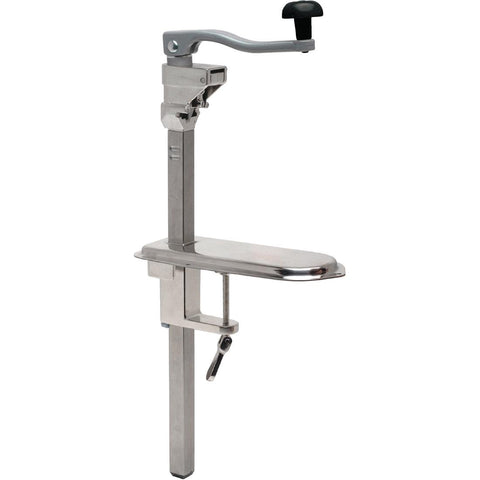

 Vogue Bench Can Opener 530mm - CE038
100(W) x 530(H) x 260(D)mm
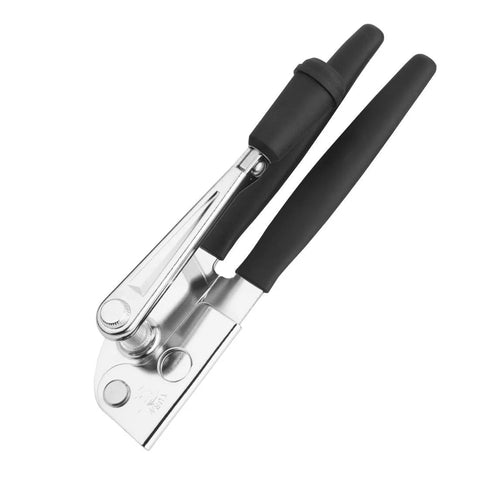
 Vogue Handheld Can Opener - CJ368
59(W) x 57(H) x 20(D)mm
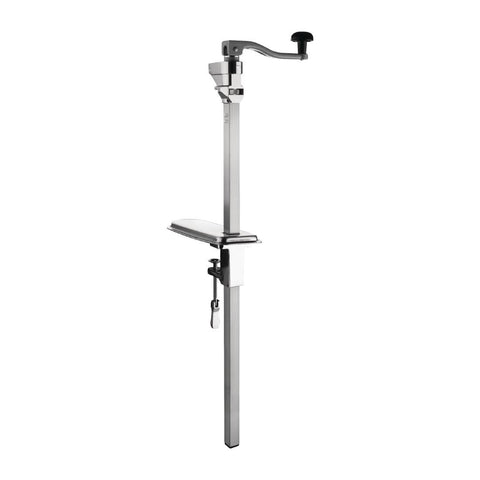
 Vogue Bench Can Opener 770mm - CE039
250(W) x 770(H) x 110(D)mm

 Edlund Crown Punch Pneumatic Can Opener - 610
 Edlund Electric Can Opener - 266
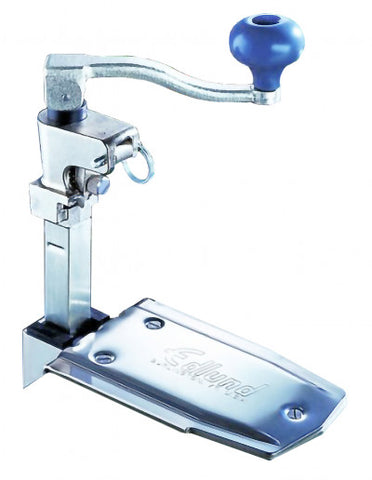
 Edlund Manual Can Opener - Model 1
Commercial can openers open full-size catering tins, so a kitchen can get a case of them decanted at the start of prep and move on. How many tins you open in a shift is what decides which type you buy. A domestic opener on a case of catering tins fails within weeks, which is why an industrial can opener exists as a separate product.
There are three types. A hand-held heavy duty can opener for a few tins a day. A bench-mounted opener that clamps to the edge and takes a full-size catering tin. And a table-mounted opener with a long arm for very high volume. A commercial tin opener in the Australian trade usually means one of the last two.
The tin size decides the tool more than the brand does. A heavy duty commercial can opener is built around the diameter and the gauge of a catering tin, which a domestic one is not. Mount it near the stainless steel bench where the tins are decanted.
Deciding between a hand-held and a bench mount? The price guide has both priced, so you can weigh them against the tins you open in a shift.
Bench-mounted for anything above a handful of tins a day. The mount takes the force, so the operator only turns the handle and the cut stays square.
Hand-held suits a small kitchen or a second position away from the main bench. Keep one as a backup even where a bench opener is fitted, because a stuck mechanism in the middle of prep stops the section.
A replaceable cutting wheel and gear, and a body that comes apart to be cleaned. Those two things decide whether it is a five-year tool or a six-month one.
Ask what spares are available before you buy. Our spare parts request page covers how to order replacement wheels and gears.
The cutting assembly has to come off and be washed after every session, because it is in direct contact with food and sits in the open. A wheel with dried product on it is the main hygiene risk in this whole category.
Most assemblies are hand-wash items rather than dishwasher items, and the product page states it. Wipe the mount down with the rest of the bench — see surface and floor cleaners.
A side-cut opener removes the lid by cutting the side seam, leaving a smooth rim on both the tin and the lid. A top-cut opener leaves a sharp edge, which is the usual cause of cuts in this part of the kitchen.
If staff are reaching into opened tins, the side-cut type is worth the extra. Pair it with the usual care around commercial knives in the same section.
A bench opener with an adjustable arm handles the normal range of catering tins. Very large or very shallow tins can sit outside what a given model takes, and that range is on the product page.
If you buy one size of tin constantly, match the opener to it. Decanting goes faster with gastronorm containers ready beside the opener.
At the decanting station, far enough from the edge that a full tin can sit flat beside it, and nowhere near a hand wash basin splash zone.
Leave room for the arm to swing fully. An opener mounted into a corner gets used at an angle, and that is what damages it. Wall shelves above it keep the decanting containers close.
Industrial can opener, catering can opener, commercial tin opener, bench can opener and table-mount opener all describe the same family of tools.
Compare the mount type, the maximum tin size and whether the cutting assembly is removable, rather than the name. The rest of the range is in commercial kitchen tools.

We have a special page just for stock that's warehoused in Perth.
Click Here to see all WA stockWhat our customers say about us on Google, and how Google scores our store for things like shipping and returns.
Store scores from Google