


 03 9070 5784
 Help & Support
 Track My Order



Recently Viewed
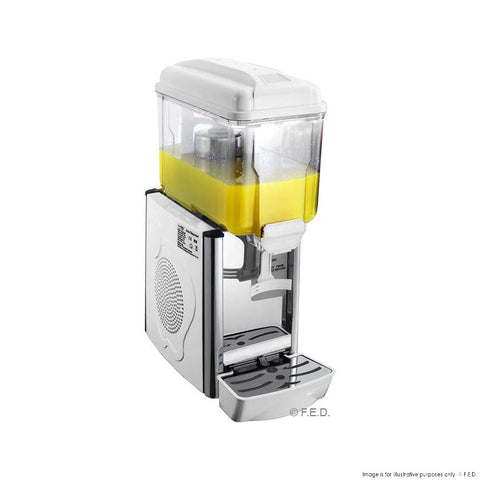

 CLEARANCE - Single 12 Litre Paddle Action KD-1X12P
35(W) x (D) x (H)mm


 Polar GG753-A Drink Dispenser - 886049
600W x 400D x 660Hmm
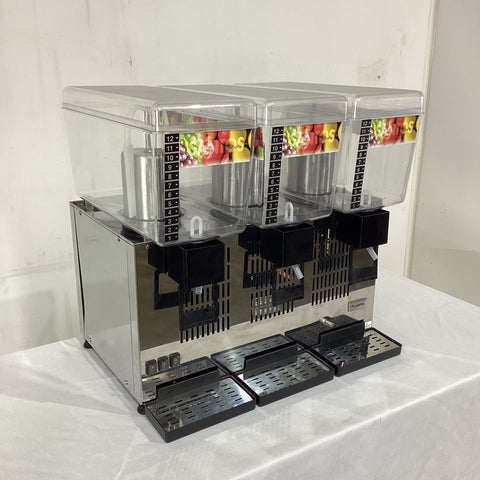

 Santos 34-3 Cold Drink Dispenser - 860040
570W x 430D x 550Hmm

 Polar CF760-A-04 Drink Dispenser - 858799
210W x 440D x 670Hmm


 Federal KF12L-2 Juice Dispenser - 876191
410W x 400D x 660Hmm
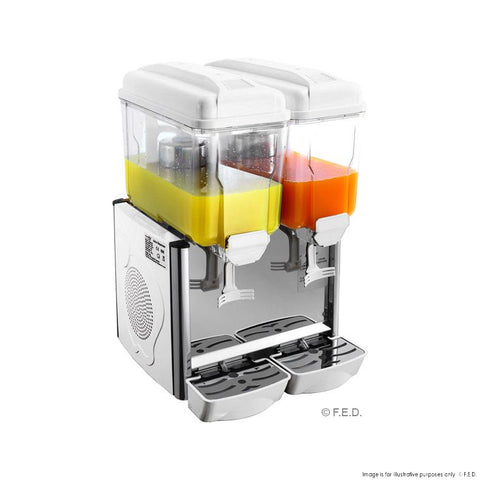
 CLEARANCE - Double 12 Litre Paddle Action KD-2X12P
55(W) x (D) x (H)mm
A refurbished commercial drink dispenser holds a drink at temperature and pours it on demand, which is what a buffet, a food court, a function room or a servo counter runs on. It is self-service equipment, so it has to be reliable and easy to clean. The new ranges are commercial beverage dispensers and commercial refrigerated drink dispensers.
Units come off showroom floors, out of demonstration venues and off supplier clearance lines. Each one is inspected, tested and verified in working condition before it is relisted for sale, and the marks on a given machine are described on its own product page.
Dispensers split by what they are holding. Chilled bowl units circulate juice or cordial behind clear plastic; insulated units hold a batch without refrigeration; commercial slushy machines freeze as they churn; water dispensers and commercial hot water urns cover the plumbed and hot ends.
Tell us the service and the volume and get a quote on current stock. Related ranges: refurbished commercial beverage equipment, refurbished commercial juicers and insulated beverage storage for transport.
A refrigerated dispenser chills the drink itself and will hold it cold for a full trading day, which is what a counter or a food court needs. An insulated dispenser holds a batch that went in cold and keeps it that way for a period, which is what a function, a breakfast service or an off-site job needs.
The practical split is whether the unit sits in one place all day with power, or gets filled and carried. If it sits, buy refrigerated. If it moves, buy insulated and chill the drink before it goes in, because an insulated unit cannot bring a warm batch down.
It depends entirely on how it was cleaned, which is the one thing to ask about in this category. Juice and syrup residue sours in the lines and the taps, and a dispenser that was rinsed rather than stripped will show it. The parts that matter are the bowl seals, the tap assemblies and the circulation pump.
Ask us what was replaced during the refurbishment rather than what was checked, and ask whether the seal and tap kit for that model is still available. Then plan on stripping and sanitising to the manufacturer's routine from day one, because a dispenser is only as clean as its last strip-down.
One per drink you want available at once, plus a spare if a line is likely to run out mid-service. Self-service customers will not wait for a bowl to be refilled, and a dispenser with one empty bowl looks like a counter nobody is watching.
Beyond that, size for the peak rather than the day. A breakfast service pushes most of its juice through in a short window, so the question is how much the unit holds and how fast it can be refilled, not how much it will dispense over eight hours.
Not usually — they are different machines. A chilled dispenser has a refrigeration circuit and clear bowls; a hot unit is an urn or a heated dispenser built to hold at serving temperature. Asking one machine to do both ends badly.
If the counter needs both, buy both and place them so customers can see which is which. An urn covers tea and coffee service, and the chilled units handle juice and cordial.
Most do not. Bowl dispensers are filled by hand and simply need a bench, a power point and somewhere for the drip tray to be emptied. Post-mix and plumbed water units are the exception and need a water connection and often a drain.
The product page states what a unit needs. Check it before the counter is built, because adding a water point to a finished counter is the sort of job that costs more than the machine. Also check the bench can take the weight of a full unit, which is heavier than most people expect.
Where customers reach it without crossing the service path, with the taps over a drip tray that staff can get to and empty. Give the unit the clearance the maker asks for, because a chilled dispenser boxed in on a crowded counter cannot shed its heat.
Keep it out of direct sun and away from any heat on the counter, and think about the floor underneath, because self-service drinks spill. If the counter also has to display food, plan the dispenser position alongside the refurbished display equipment rather than squeezing it in afterwards.

We have a special page just for stock that's warehoused in Perth.
Click Here to see all WA stockWhat our customers say about us on Google, and how Google scores our store for things like shipping and returns.
Store scores from Google