


 03 9070 5784
 Help & Support
 Track My Order



Recently Viewed


 Mazzer Robur S Electronic Black - Brand New
240(W) x 263(D) x 650(H)mm

 Mazzer Mini Manual Black - Brand New
150(W) x 250(D) x 270(H)mm
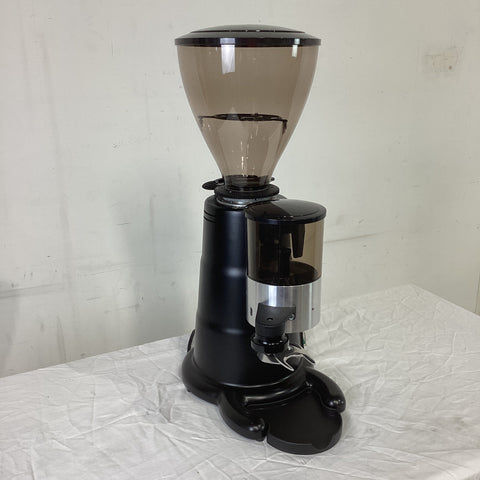

 Macap M7A Coffee Grinder - 822209
250W x 410D x 630Hmm


 Buffalo Spice and Coffee Grinder - FU476-A
166(W) x 317(H) x 183(D)mm

 Mazzer MAJOR AUT Electronic Coffee Grinder - 819820
210W x 320D x 635Hmm

 Mazzer SUPER JOLLY V UP E Electronic Coffee Grinder - 889742
240W x 420D x 605Hmm

 Mazzer SUPER JOLLY V PRO E Electronic Coffee Grinder - 857077
210W x 400D x 600Hmm

 Mazzer SUPER JOLLY V UP E Electronic Coffee Grinder - 861830
210W x 260D x 610Hmm

 Mazzer Luigi MAJOR V ELECT Coffee Grinder - 835219
250W x 310D x 660Hmm

 Macap M7A Auto Coffee Grinder - 837902
250W x 410D x 630Hmm


 Victoria Arduino MYTHOS MY75 Electronic Coffee Grinder - 802547
195W x 375D x 500Hmm


 Rancilio KRYO65OD Coffee Grinder - 905347
220W x 360D x 590Hmm

 Mazzer MAJOR AUT Coffee Grinder - 879374
210W x 450D x 630Hmm
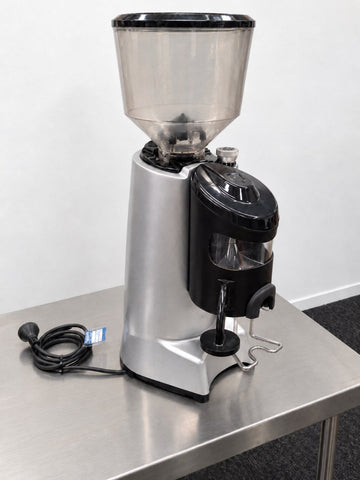

 Eureka ZT60A Coffee Grinder - 782584
215W x 430D x 550Hmm
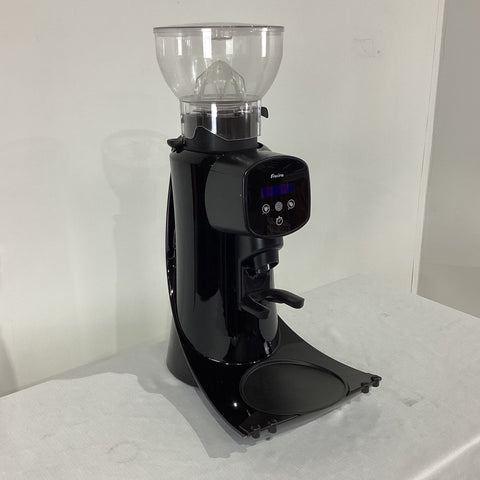

 Fracino Cunill Luxomatic Silencer Coffee Grinder - 917614
285W x 405D x 630Hmm
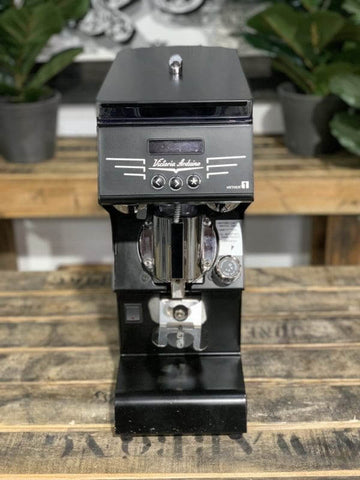
 Victoria Arduino Mythos One - Refurbished
190(W) x 400(D) x 500(H)mm
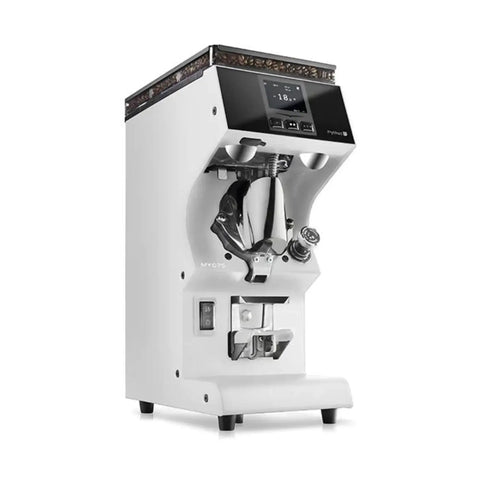
 Victoria arduino Mythos MYG75 Gravimetric White - Brand New
350(W) x 195(D) x 475(H)mm
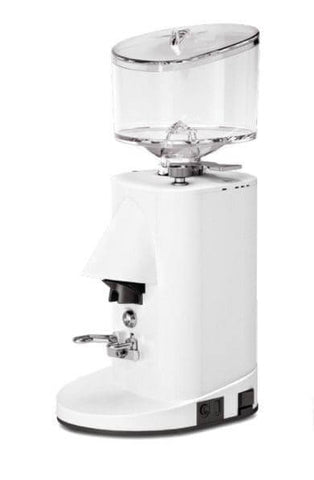

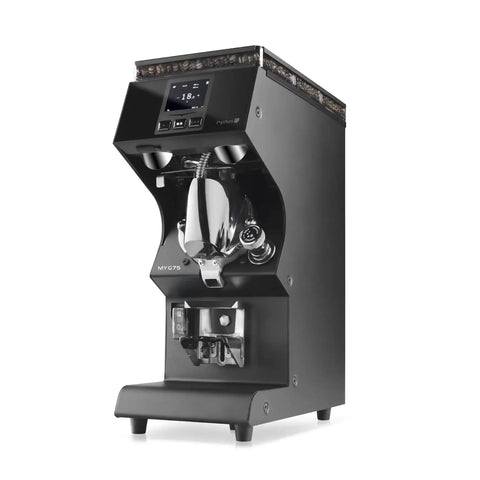
 Victoria Arduino Mythos MYG75 Gravimetric- - Brand New
195(W) x 350(D) x 475(H)mm
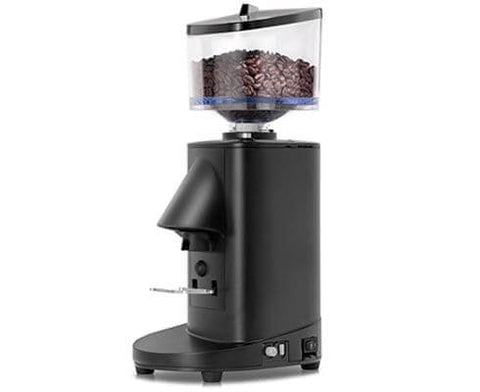
 Victoria Arduino MDH Black - Brand New
250(W) x 420(D) x 470(H)mm
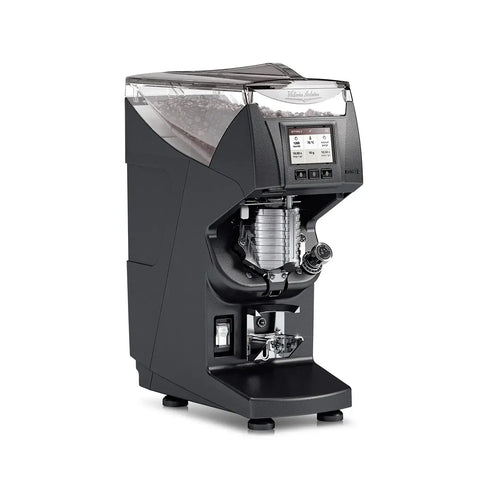
 Victoria Arduino Mythos 2 Black - Brand New
202(W) x 416(D) x 518(H)mm
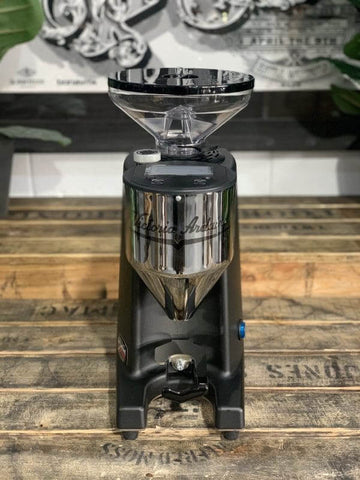
 Victoria Arduino G60 Electronic - Brand New
150(W) x 270(D) x 400(H)mm


 Schaerer Joy Fully Automatic Commercial Espresso Machine - Brand New
310(W) x 450(D) x 560(H)mm
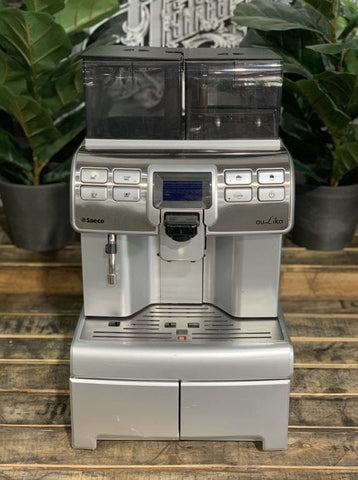

 Saeco Aulika Fully Automatic - Brand New
330(W) x 390(D) x 570(H)mm


 Quamar Q50 Push White - Brand New
155(W) x 240(D) x 410(H)mm


 Quamar Q50 Push Timer Gloss Black - Brand New
155(W) x 240(D) x 410(H)mm

 Quamar Q50 Push Timer - Brand New
155(W) x 240(D) x 410(H)mm


 Quamar Q50 Electronic - Brand New
155(W) x 240(D) x 410(H)mm


 Profitec Pro T64 - Brand New
17(W) x 250(D) x 430(H)mm


 Precision GSP Black - Brand New
110(W) x 245(D) x 470(H)mm

 Precision GSP White - Brand New
110(W) x 245(D) x 470(H)mm

 Precision GS30 White - Brand New
130(W) x 225(D) x 355(H)mm


 Nuova Simonelli Grinta Black - Brand New
140(W) x 210(D) x 420(H)mm

 Nuova Simonelli Grinta Lux - Brand New
140(W) x 210(D) x 420(H)mm

 Mazzer Super Jolly V Pro Electronic Silver - Brand New

 Mazzer Super Jolly Automatic Black - Refurbished
240(W) x 420(D) x 610(H)mm
 Mazzer Super Jolly V Pro Electronic - Brand New

 Mazzer Super Jolly V Electronic Black - Brand New
255(W) x 240(D) x 595(H)mm

 Mazzer Super Jolly V Pro Electronic White - Brand New

 Mazzer Robur S Electronic White - Brand New
240(W) x 263(D) x 650(H)mm

 Mazzer Super Jolly Automatic White - Refurbished
240(W) x 420(D) x 610(H)mm
 Mazzer Mini Manual Silver - Refurbished
150(W) x 250(D) x 270(H)mm

 Mazzer Mini Manual White - Refurbished
150(W) x 250(D) x 270(H)mm
 Mazzer Mini Manual Black - Refurbished
150(W) x 250(D) x 270(H)mm

 Mazzer Mini Manual Silver - Brand New
150(W) x 250(D) x 270(H)mm

 Mazzer Mini Manual Silver - Brand New
150(W) x 250(D) x 270(H)mm
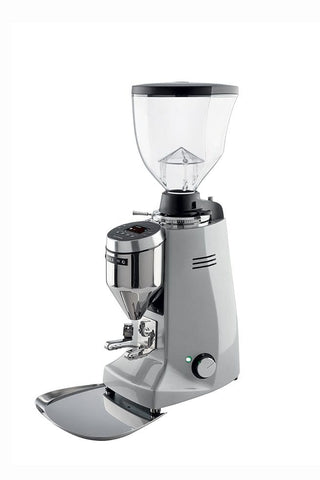
 Mazzer Major V Electronic Silver - Brand New
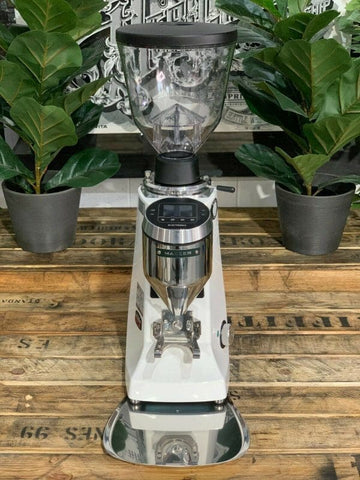
 Mazzer Major V Electronic White - Brand New
292(W) x 252(D) x 681(H)mm

 Macap LEO 55 Satin White - Brand New
200(W) x 290(D) x 320(H)mm
A commercial coffee grinder grinds beans to order at the bar, and the grind setting is what a barista adjusts through the day to keep the coffee tasting the same. A commercial coffee grinder machine holds a consistent particle size dose after dose, and one that has drifted off its setting will pull inconsistent shots on any espresso machine.
See the grinders alongside our commercial coffee machines and the wider commercial coffee equipment range, delivered anywhere in Australia. Most cafes run one grinder per blend plus one for decaf, so you can start with the blends you pour now and add more as your business grows.
We can arrange installation, and Silverchef Rent-Try-Buy applies to coffee equipment, so you can rent the grinder now and buy it out later, with the option to upgrade or hand equipment back as things change.
A lot of things, and they all describe the same machine. You will see industrial coffee grinder machine, professional coffee grinder machine, professional coffee bean grinder, commercial coffee bean grinder machine, industrial coffee bean grinder, commercial bean grinder, and a coffee grinder for commercial use.
Older listings use milling language: commercial coffee mill, industrial coffee mill, coffee bean mill and industrial coffee milling machine. A search for coffee grinder machine commercial will turn up the same products. Compare them on burr type, burr size and output rather than on the name.
Both are used in commercial grinders. Conical burrs generally run cooler at lower speeds, flat burrs are favoured where particle uniformity matters most. The size and condition of the burrs matters more than the shape.
Burr specifications are on each product page; see the specifications reference for how we publish them.
On-demand grinds straight into the basket for each shot, which keeps the coffee fresh and is the standard for cafes. A doser holds pre-ground coffee for speed and suits very high-volume service where throughput beats freshness.
Most Australian cafes run on-demand. Pair it with a coffee tamper and a knock bin.
One per blend, plus one for decaf. Swapping beans in a single grinder means purging and re-dialling every time, which wastes coffee and slows the bar.
A second grinder is usually a better spend than a bigger machine; compare the 2 group and 3 group options.
When the grind will no longer hold a setting and the shots start running inconsistently at the same dose. Burrs wear gradually, so the symptom is drift rather than failure.
Replacement burrs go through our spare parts request form, and servicing through the service request form.
Yes, as humidity and bean temperature move. Checking the dose and the shot time at the start of each shift and after any long gap is standard practice.
A set of kitchen scales on the bench makes that a measurement rather than a guess.
Only if it adjusts across that range, and you accept re-dialling each time. Venues doing both usually keep a second grinder on a coarse setting.
See stainless steel coffee plungers and commercial coffee percolators for the brewing side.
A knock bin, a tamper, milk jugs and a rinser, laid out so the barista does not turn around.
See coffee knock bins, coffee tampers, milk frothing jugs and commercial jug rinsers.

We have a special page just for stock that's warehoused in Perth.
Click Here to see all WA stockWhat our customers say about us on Google, and how Google scores our store for things like shipping and returns.
Store scores from Google