


 03 9070 5784
 Help & Support
 Track My Order



Recently Viewed


 ConvectMAX Oven Heats 50 To 300 Degrees - YXD-1AE
595(W) x 530(D) x 570(H)mm


 Apuro Bain-Marie with Tap & Pans 2x GN 1/3 2x GN 1/6 - FT692-A
645(W) x 327(H) x 432(D)mm

 ConvectMAX Digital Convection Oven YXD-1DI
595(W) x 30(D) x 570(H)mm

 ConvectMAX Electric Convection Oven - YXD-6A
798(W) x 650(D) x 596(H)mm

 Apuro Double Contact Grill Ribbed Plates with Timer - FC383-A
550(W) x 210(H) x 395(D)mm

 Benchstar Stainless Steel Microwave Oven - MD-1400
553(W) x 488(D) x 343(H)mm

 Benchstar Toaster / Griller Salamander AT-360BE
440(W) x 345(D) x 402(H)mm


 GasMAX Lpg Gas 4 Burner Char Grill Top QR-24ELPG
609(W) x 770(D) x 460(H)mm


 Roband Griddle - Very High Production - G700
725(W) X 529(D) X 263(H)mm

 Cookrite Bain Marie with Mechanical Controller 8700
580(W) x 340(D) x 245(H)mm

 Apuro Extra Wide Griddle Steel Plate - CU627-A
743(W) x 200(H) x 415(D)mm
 Apuro Rice Cooker 13 Ltr - J300-A
460(W) x 370(H) x 400(D)mm
 Apuro Rice Cooker 23Ltr - CB944-A
560(W) x 395(H) x 485(D)mm

 ConvectMAX Digital Convection Oven With Grill - YXD-3DI
595(W) x 595(D) x 585(H)mm
 Benchstar Benchtop Heated Bain Marie ZCK165BT-1
360(W) x 590(D) x 240(H)mm
 Benchstar Stainless Steel Microwave Oven - MD-1000L
511(W) x 432(D) x 311(H)mm
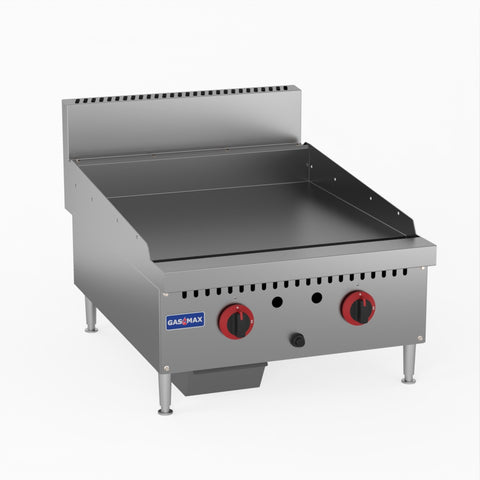
 GasMAX Two Burner Lpg Griddle Top - GG-24LPG
610(W) x 824(D) x 546(H)mm

 Anvil Conveyor Toaster 2 Slice - CTK0001
367(W) x 424(H) x 761(D)mm

 Roband Donut Fryer - FD10
380(W) X 485(D) X 290(H)mm


 Apuro Twin Tank Electric Fryer with Timer - 2x8Ltr - 2x2.9kW - CU621-A
560(W) x 410(H) x 505(D)mm

 Apuro 5L Double Electric Fryer - CU619-A
545(W) x 305(H) x 410(D)mm

 Apuro Light Duty Programmable Commercial Microwave 25Ltr - FB862-A
432(W) x 311(H) x 511(D)mm

 Apuro Heavy Duty Programmable Commercial Microwave 17Ltr - FB865-A
528(W) x 368(H) x 574(D)mm

 Apuro Portable Sous Vide Machine 40Ltr - DM868-A
163(W) x 320(H) x 130(D)mm
 ConvectMAX Electric Convection Oven - YXD-6A/15
798(W) x 670(D) x 580(H)mm
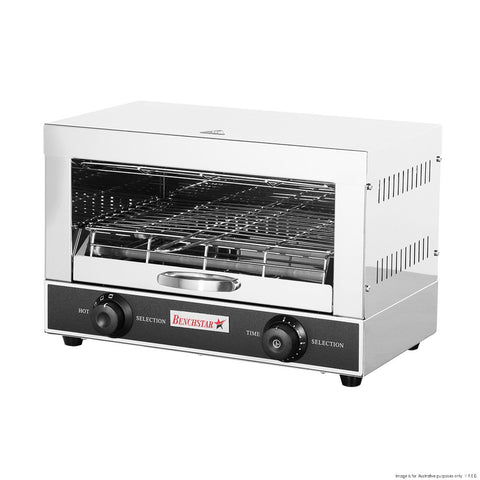
 Benchstar Single Infrared Quartz Element Salamander Griller Toaster And Timer QT-1
440(W) x 245(D) x 287(H)mm

 Benchstar Electric Griddle GH-760E
760(W) x 561(D) x 266(H)mm
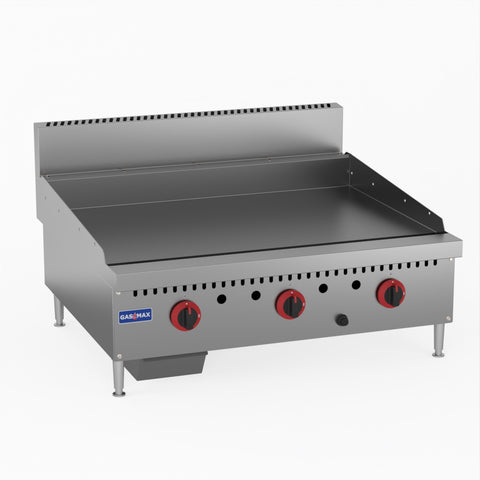
 GasMAX Three Burner Lpg Griddle Top - GG-36LPG
900(W) x 824(D) x 546(H)mm

 Benchstar Benchtop Electric Doughnut Fryer EF-TE
460(W) x 620(D) x 355(H)mm

 Benchstar S/S Chip Warmer DH-310E
330(W) x 560(D) x 500(H)mm

 Hatco High Watt 4 Slot Pop-Up Toaster up to 160 toast slices / hour - TPT-230-4-10
346(W) x 313(D) x 204(H)mm
 Anvil Panini Press Single Flat Top Flat Bottom - TSS2001
410(W) x 205(H) x 378(D)mm
 Anvil Panini Press Double Flat Top Flat Bottom - TSS3001
570(W) x 205(H) x 378(D)mm
 GasMAX Heavy Duty Natural Gas Salamander REB-02E
914(W) x 522(D) x 580(H)mm
 GasMAX Two Burner Char Grill Top Lpg - QR-14ELPG
354(W) x 773(D) x 475(H)mm
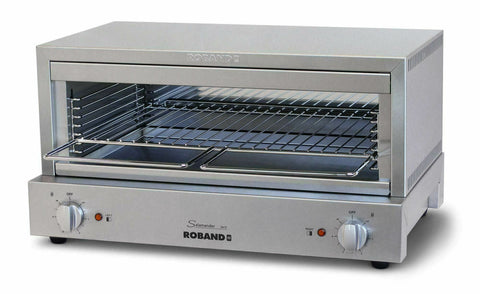
 Roband Salamander, 15 slice - SA15
690(W) X 455(D) X 355(H)mm

 Roband Grill Station 8 slice, smooth non stick plates - GSA810ST
560(W) X 490(D) X 220(H)mm

 Roband Grill Station 8 slice, smooth plates - GSA810S
560(W) X 490(D) X 220(H)mm

 Roband Grill Max Toaster 8 slice - GMX810
585(W) X 315(D) X 315(H)mm

 Roband Double Pan Fryer 2 x 8lt - F28
545(W) X 425(D) X 390(H)mm

 Roband Single Pan/Double Basket Frypod 11lt - FR111
555(W) X 480(D) X 335(H)mm

 Roband Eclipse Bun & Snack Toaster, 10 Amps - ET310
480(W) X 485(D) X 400(H)mm
 Roband Chocolate Bain Marie 2 x 1/2 size, pans not included - CHOC2
560(W) X 355(D) X 320(H)mm
 Cookrite 10L Soup Kettle AT51588
360(W) x 355(D) x 380(H)mm

 Cookrite 25Mj/h 400mm Hotplate NG AT65G4G-C-NG
400(W) x 650(D) x 485(H)mm

 Apuro Double Round Belgian Waffle Maker - CJ533-A

 Apuro Extra Large Contact Grill Ribbed & Flat Plate - CU609-A
430(W) x 200(H) x 310(D)mm

 Apuro 5L Single Electric Fryer - CU617-A
270(W) x 305(H) x 410(D)mm

 Apuro Steel Plate Electric Griddle - CU626-A
525(W) x 200(H) x 465(D)mm
 Apuro Bistro Double Contact Grill - CU605-A
570(W) x 200(H) x 310(D)mm

 Apuro Bistro Large Contact Grill - CU603-A
410(W) x 200(H) x 310(D)mm
Commercial benchtop appliances sit on the bench and plug in, which lets a small kitchen, a food truck or a catering job cook something it has no floor space for: a fryer, a griddle, an induction hob, a rice cooker, a wok burner. They do the same work as the freestanding versions, and they can be moved, stored between uses or taken to a job.
The range covers electric and gas, from the main commercial brands, so you can start with the one station that needs covering now and add more as your business grows. Order online with delivery anywhere in Australia.
Buying several or fitting out a whole site? Get a quote and we will price the commercial benchtop appliances you need together.
In a small kitchen, usually a benchtop deep fryer or a griddle. Both cook fast and both open up a lot of menu for very little bench: chips, wings, burgers and a breakfast service all come off those two.
After that, an induction cooktop is the one worth looking at. It gives you close temperature control for anything from sautéing to a long simmer, and it puts less heat into the room than a flame does.
It comes down to your menu and how you cook. Gas heats up faster and is what you want for a wok burner. Electric gives closer temperature control and more even heat across the plate, which suits a menu where every serve has to come out the same.
Both work. If you are not sure which fits the menu you run and the site you are in, the team at REO are happy to help — contact us for a recommendation.
Single phase is the most common supply in smaller venues and runs most benchtop electric units. Larger and higher-output appliances often need three phase. Check the requirement on the product page before you buy, because an undersized supply trips circuits or overloads them.
Gas units need a secure connection fitted by a gas fitter. We can arrange installation and put you in touch with an appliance installer near you.
Start from the most you have to get out in a peak hour and work back from there. Two smaller fryers are often more useful than one big one — one for crumbed chicken, one for chips — because you are not moving flavours between products. One larger unit makes more sense if you are cooking in bulk to fill a hot food display.
Capacities are on each product page. If you would rather talk it through, contact us and we will give you a recommendation for your menu.
A digital thermostat, so you can see the temperature before you load the next batch rather than guessing. Loading a fryer before the oil is back up to temperature is what makes food soggy and oily.
On a griddle, plate thickness is the one to check. A thicker plate holds its heat and spreads it more evenly, which gives you a faster turnaround between batches and a more consistent result on the plate.
With a fryer, it is the oil: skim the debris out, filter it between shifts where you can, and do a proper boil-out when you change the oil. Food tastes better for it and the fryer lasts longer.
Look for appliances with parts that go in the dishwasher, so anything that needs cleaning mid-shift can be sanitised and back in use quickly. Everything we sell comes with the manufacturer's cleaning and maintenance guidelines, and it is worth booking a service if you notice the output or the quality changing.
When the floor space is not there, and when you only need the appliance some of the time. Something used for one menu item a week is better off being stored between uses than taking up a permanent station.
Even in a big kitchen, benchtop units are useful as a second station for a peak period or a menu line that does not justify its own freestanding appliance.
Anything with gas or a heavy electrical load wants a professional installation. Leave the clearance the manufacturer asks for around each appliance, and put it somewhere that makes sense in the flow of the kitchen, so nobody is reaching across a hot plate or carrying oil past a doorway when the line is flat out.
You will also need ventilation over cooking appliances, both for the staff and for compliance, so plan an exhaust canopy above them. The rules vary with the appliance and the area, so check with your local requirements or ask our team.

We have a special page just for stock that's warehoused in Perth.
Click Here to see all WA stockWhat our customers say about us on Google, and how Google scores our store for things like shipping and returns.
Store scores from Google