


 03 9070 5784
 Help & Support
 Track My Order



Recently Viewed
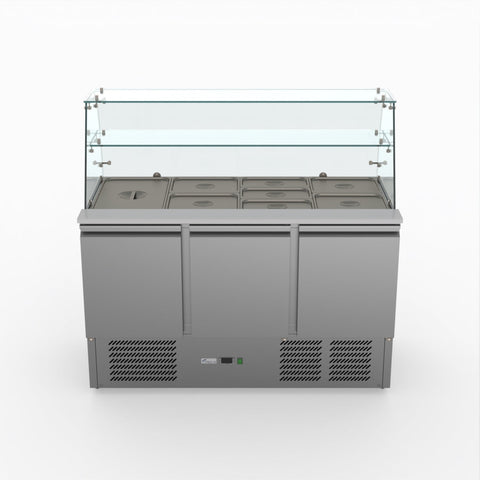

 FED-X Three Door Salad Prep Fridge With Glass Top XS903GC
1365(W) x 700(D) x 1310(H)mm
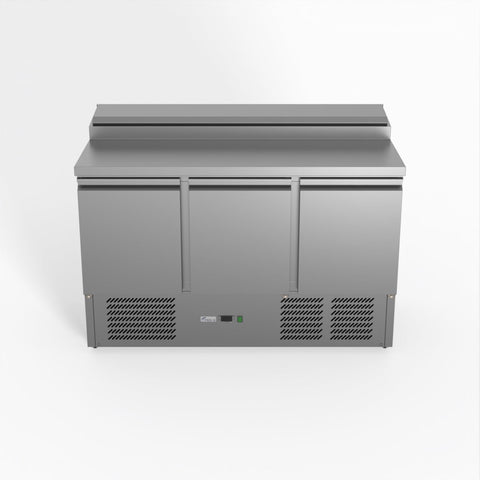
 FED-X Three Door Salad Prep Fridge XGNS1300D
1368(W) x 700(D) x 1020(H)mm

 FED-X S/S Three Door Sandwich Counter XSS7C18S3V
1795(W) x 700(D) x 1406(H)mm
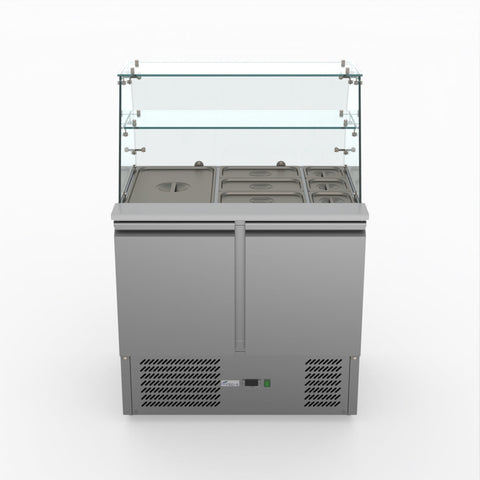
 FED-X Two Door Salad Prep Fridge With Square Glass Top XS900GC
903(W) x 700(D) x 1310(H)mm
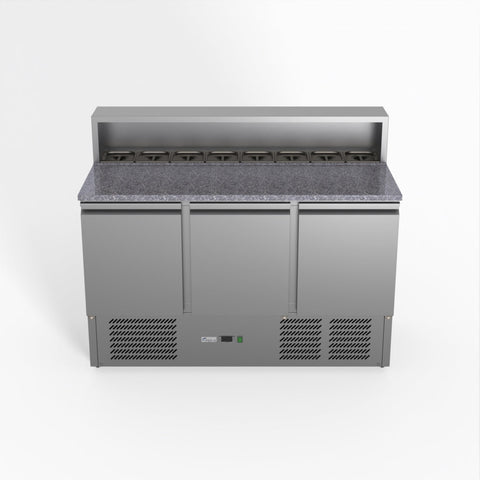
 FED-X Three Door Salad Prep Fridge With Marble Top XGNS1300E
1368(W) x 700(D) x 1107(H)mm


 AG 3 Saladette with G/N 1/3 GN trays x 10 SH3000-800
2020(W) x 800(D) x 1085(H)mm

 AG 3 Door Saladette Fridge - Fits 8 x 1/3 GN Trays SH3000-700
1795(W) x 700(D) x 1085(H)mm

 FED-X Two Door Salad Prep Fridge XGNS900D
903(W) x 700(D) x 1020(H)mm
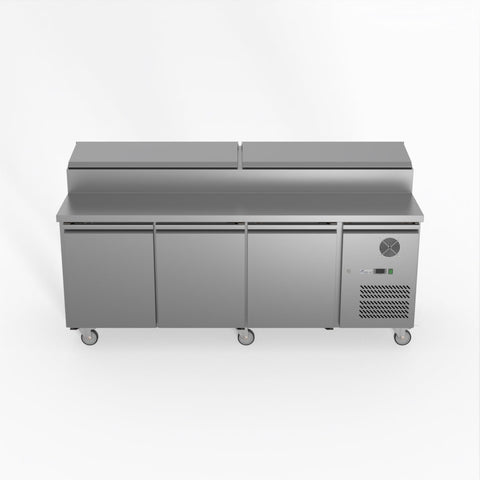
 FED-X S/S Three Door Sandwich Counter XSS8C20S3V
2020(W) x 800(D) x 1406(H)mm

 FED-X Three Door Salad Prep Fridge XGNS1300S
1368(W) x 700(D) x 898(H)mm

 AG 2 Door Saladette Fridge - Fits 7 x 1/3 GN Trays SH2000-700
1360(W) x 700(D) x 1085(H)mm


 Thermaster Cold Salad & Noodle Bar 4X1/1 GN Pans PG150FA-XG
1460(W) x 790(D) x 1280(H)mm

 FED-X S/S Two Door Sandwich Counter XSS8C15S2V
1510(W) x 800(D) x 1406(H)mm
 Thermaster Three Door Salad Marble Prep Top GNS1300E
1368(W) x 700(D) x 1195(H)mm

 AG 2 Saladette with G/N 1/3 GN trays x 8 SH2000-800
1510(W) x 800(D) x 1085(H)mm

 FED-X Two Door Salad Prep Fridge With Marble Top XGNS900E
903(W) x 700(D) x 1107(H)mm


 Polar U-Series Double Door Refrigerated Gastronorm Saladette Counter - CT393-A
1360(W) x 860(H) x 700(D)mm

 FED-X Three Door Salad Prep Fridge With Curve Glass Top XTHP3100SALGC
1795(W) x 700(D) x 1320(H)mm


 Commercial Salad Bar Fridges Two Door | Atosa | ESL3801
900(W) x 700(D) x 943(H)mm

 Thermaster Cold Salad & Noodle Bar 6X1/1 GN Pans - PG210FA-XG
2140(W) x 790(D) x 1280(H)mm

 FED-X Two Door Standard Saladette XPZ2600TN
1510(W) x 800(D) x 990(H)mm

 Thermaster Four Door Sandwich Bar SLB240
2400(W) x 750(D) x 1090(H)mm

 Skipio 432 Two Door Salad Prep Fridge with Hood Lid SHR12-2
1200(W) x 700(D) x 1028(H)mm
 Skipio 568 Three Door Salad Prep Buffet Fridge SSR18-3
1800(W) x 700(D) x 855(H)mm

 Turbo Air 3 Door Salad Prep Fridge KSR18-3-N
1800(W) x 700(D) x 850(H)mm

 Polar G-Series Saladette Counter Fridge 368Ltr - G607-A
1370(W) x 885(H) x 700(D)mm

 FED-X Six Drawer Salad Prep Fridge XSS7C18S3V-6D
1795(W) x 700(D) x 1406(H)mm

 FED-X One Door Salad Prep Fridge XGNS450S
435(W) x 700(D) x 898(H)mm
 Turbo Air 2 Door Hooded Salad Prep Fridge - 1200mm Width KHR12-2-N
1200(W) x 700(D) x 1028(H)mm

 Commercial Salad Bar Fridges 1530mm | Atosa | MSF8303
1530(W) x 762(D) x 1124(H)mm
 Commercial Salad Bar Fridges Three Door Sliding Lid | Atosa | ESL3850
1365(W) x 700(D) x 950(H)mm

 FED-X Two Door Salad Prep Fridge With Curve Glass Top XTHP2100SALGC
1360(W) x 700(D) x 1320(H)mm

 FED-X Three Door Standard Saladette XPZ3600TN
2020(W) x 800(D) x 990(H)mm

 Thermaster Two Large Door Deluxe Sandwich Bar SCB/18
1820(W) x 700(D) x 1255(H)mm

 Thermaster Two Door Sandwich Bar SLB120
1200(W) x 750(D) x 1090(H)mm

 Thermaster Two Door Deluxe Sandwich Bar SCB/15
1480(W) x 700(D) x 1255(H)mm

 Thermaster Three Door Deluxe Sandwich Bar SCB/21
2180(W) x 700(D) x 1255(H)mm
 Atosa Three Door Glass Top Sandwich Bar Fridge
1846(W) x 762(D) x 1420(H)mm
 Skipio 702 Three Door Salad Prep Fridge with Hood Lid SHR18-3
1800(W) x 700(D) x 1028(H)mm


 Skope ReFlex 3 Solid Door GN Compatible Salad Preparation Fridge 357L - RF7.PPS.3.SD
1800(W) x 1110(H) x 700(D)mm
 Turbo Air 1 Door Salad Prep Fridge KSR9-1-N
900(W) x 700(D) x 850(H)mm


 Williams Jade Sandwich - Three Door Stainless Steel Prep Counter Refrigerator With Blown Air Well HJ3SCBASS
2476(W) x 771(D) x 845(H)mm

 Williams Jade Sandwich - Two Door White Colorbond Prep Counter Refrigerator With Blown Air Well HJ2SCBA
1815(W) x 771(D) x 845(H)mm

 Williams Jade Sandwich - Two Door Stainless Steel Prep Counter Refrigerator With Blown Air Well HJ2SCBASS
1815(W) x 771(D) x 845(H)mm

 Williams Jade Sandwich - Three Door White Colorbond Prep Counter Refrigerator With Blown Air Well HJ3SCBA
2476(W) x 771(D) x 845(H)mm
 Commercial Salad Bar Fridges 1225mm | Atosa | MSF8302G
1225(W) x 762(D) x 1420(H)mm
Commercial Salad Bar Fridges 1530mm | Atosa | MSF8303G
1530(W) x 762(D) x 1420(H)mm

 Commercial Salad Bar Fridges Double Door | Atosa | MSF8302
1225(W) x 762(D) x 1124(H)mm

 Commercial Salad Bar Fridges Three Door | Atosa | ESL3851
1365(W) x 700(D) x 943(H)mm

 Commercial Salad Bar Fridges Two Door | Atosa | ESL3800
900(W) x 700(D) x 950(H)mm

 Polar U-Series GN Saladette Counter with Square Sneeze Guard 3 Door - UA018-A
1795(W) x 1360(H) x 700(D)mm

 Polar 2 Door Saladette Counter - FT281-A
1360(W) x 850(H) x 700(D)mm
A salad bar fridge holds prepared ingredients chilled in open trays at the counter, so staff or customers can build a salad straight from it. Open models are for customers serving themselves; models with a glass window and a sneeze guard are for staff service.
Our commercial salad bar fridges include small models for a cafe where salad is an add-on up to large refrigerated salad bars for a venue with salad as a main line, so you can buy the size that suits your business at its current size, then size up as your business grows. They sit alongside the rest of our kitchen appliances, and we ship anywhere in Australia.
Buying several or fitting out a whole site? Get a quote and we will price the commercial salad bar fridges you need together. Related ranges: commercial under counter fridges, commercial under bench fridges and commercial pizza prep fridges.
A salad bar fridge is a commercial fridge built to hold made-up salad ingredients at the counter rather than in the cold room, which is faster to serve from and easier to keep clean.
With both open, self-serve salad fridges for customers to use themselves and options with glass windows for staff-serving, they display your ingredient options in an appealing way. This design also helps to make serving faster, allowing you to get through greater customer numbers for those high-turnover lunch hours.
Commercial refrigerated salad bars hold ingredients at the temperature that keeps them crisp. At the end of each day the trays come out to be washed and sanitised, so the fridge is ready for the next morning.
Each model of Commercial Salad Bar Fridges will have slightly different features. However, there are a number of common elements that help to keep your produce crisp and fresh while also reducing the chances of contamination.
Automatic defrost keeps the temperature steady. Many models also come with hoods or lids to help keep the ingredients evenly surrounded by cool air, with easy access when you need to prepare food.
For hygiene, stainless steel wipes down and sanitises easily at the end of each shift. For models designed for staff to serve customers, sneeze guards protect the stock while still clearly displaying everything.
In order to choose the best-size salad fridge for your cafe or restaurant, you’ll need to consider three things. Look at your average turnover, how much storage space you need and what your menu looks like.
If salads are one of your main menu lines, you may want a larger salad bar fridge. Consider both where it’ll be placed and how many ingredients you want to stock on any given day. If salads are an add-on or used as a base for other meals you prepare, a smaller model may be adequate.
After a shift has ended, any remaining ingredients that you want to keep will be best stored in a fridge for the next day. It is important to account for adequate room in your fridge for any leftovers so you can reduce food waste.
Clean it at the end of every shift and it will last longer. At the end of each shift, remove any remaining ingredients and either store them or dispose of them. Then, sanitise all the containers or put removable, dishwasher-safe parts in to be cleaned. You’ll also need to change the water in the pans, preferably before use, so it can cool down adequately to hold everything fresh and properly chilled and at the right level of humidity.
To keep your greens fresh, crisp and looking and tasting their best, hold them at around 4℃, with a maximum of 5℃ before you start to compromise their quality. When you buy a Commercial Salad Bar Fridge, you’ll find a digital, easily adjustable thermostat that allows you to precisely adjust and control the temperature of your produce.
Yes. The trays suit cold-cut meats, desserts and fruit as well as salad, and a separate station is a simple way to handle particular dietary needs.
Depending on the size you choose and how many individual trays you have in the model you opted for, you can arrange your produce in a number of ways. We recommend laying it out in sequential order, starting with your base ingredients on one side, followed by additional vegetable ingredients, toppings and even sauces or protein like meat or tofu towards the end.
This creates a logical flow for customers or your staff to follow while also reducing the chances of accidentally mixing ingredients that you’d prefer to keep separate.
How long your produce will last will depend on how you’ve prepared it and the nature of the individual ingredients themselves. While your Commercial Salad Bar Fridges will offer a consistent and reliable temperature, more delicate things like leafy greens will usually last a maximum of three days before they need to be disposed of. Firmer vegetables, such as those that are usually served whole, like cherry tomatoes, or retain their shape and water content, will last longer. Check their condition before serving either way.
You will see commercial salad bars and refrigerated salad bars commercial used for the same kind of equipment. The name changes with the supplier and the region, not the job it does. Compare models on capacity, construction and the specification on each product page, and check the full commercial salad bar fridges range to see every option side by side.

We have a special page just for stock that's warehoused in Perth.
Click Here to see all WA stockWhat our customers say about us on Google, and how Google scores our store for things like shipping and returns.
Store scores from Google