


 03 9070 5784
 Help & Support
 Track My Order



Recently Viewed


 AG Free Standing Dough Sheeter JDR520
2550(W) x 880(D) x 1180(H)mm

 AG Bench Top Dough Sheeter JDR520B
2080(W) x 880(D) x 620(H)mm

 Tyrone Floor Model Dough Sheeter JDR-520/3N
2550(W) x 880(D) x 1180(H)mm

 Mecnosud Floor Standing Pastry Sheeter - PSM6120
3290(W) x 1060(H) x 1170(D)mm
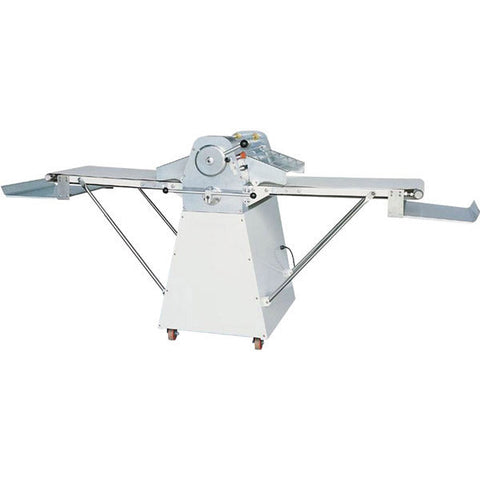
 Tyrone Floor Model Dough Sheeter JDR-650/3N
2950(W) x 1100(D) x 1180(H)mm
 Mecnosud Benchtop Pastry Sheeter - PSM0570
1520(W) x 700(H) x 920(D)mm
 Tyrone Bench Dough Sheeter JDR-520B
2080(W) x 880(D) x 620(H)mm


 BakerMax 370mm Benchtop Pastry & Dough Sheeter - BDS-300
597(W) x 728(D) x 514(H)mm
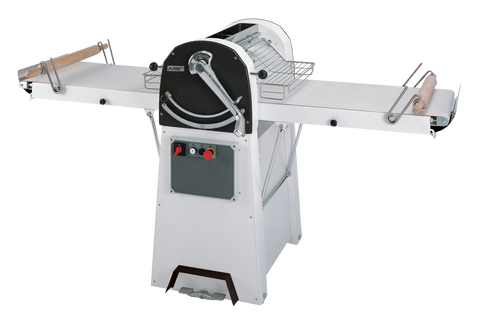

 Moretti Forni Freestanding Pastry Dough Sheeter - SF/P
1776-2797(W) x 864-1020(D) x 640-1145(H)mm
When you’re running a bakery producing pastry items like croissants and need to prep high volumes of pastry or dough, a pastry sheeter is an invaluable investment. Not only do they help you get through prepping higher volumes of dough with ease, they also ensure consistency and can help reduce waste. Get rid of the labour intensive job of rolling out dough yourself, and get something that’s more automated and efficient.
We have a range of models with useful features, all from the top brands in the commercial industry. Whether you’re a little boutique bakery, or run a large restaurant, you’ll find an option here to suit your needs. Explore the range now and order from Restaurant Equipment Online with comprehensive shipping options throughout Australia.
Pastry sheeters are designed to sheet pastry and dough to a flat, uniform thickness. You can get freestanding models or benchtop models, giving you the ability to choose one that fits in with the layout and footprint of your commercial kitchen.
They’re designed with a conveyor belt that carries your dough or pastry through the rollers, with the ability to sheet as thick as 40mm, all the way down to a 1mm thickness for ultra delicate pastry. Pastry sheeters also have adjustable speeds, allowing you gradually feed more dough or pastry through for a continuous supply. From there, you can cut up your pastry, fold it and put croissants into your combi steam oven for the perfect crisp to soft balance, assemble short pastry to make pies, or put shortbread dough into the fridge before baking it.
Commercial Pastry Sheeters do an incredible job of speeding up what’s otherwise a labour intensive and slow task. They come with variable speeds, allowing you to quickly and efficiently sheet dough or pastry to an even thickness. Once you’ve put your pastry onto the conveyor, the machine feeds, sheets and outputs dough automatically or semi-automatically. With wide conveyor belts, they can handle large volumes, especially when compared to hand-rolling or manual table methods.
Not only is it faster, but it also gives you greater consistency. You don’t need to readjust or worry about odd-shaped sheets, you’ll get more rectangular sheets which also results in less wastage.
Manual Commercial Pastry Sheeters, as the name suggests, require some input from staff to operate. You’ll still place your dough on the conveyor belt, but will need to crank a handle to sheet it. These models are still useful, though are generally more suitable for bakeries and establishments making smaller batches.
If you’re looking for something that’s faster to operate and capable of getting through bigger batches with less human intervention, automatic Commercial Pastry Sheeters are your best bet. They’re motorised and can even feature automatic feeding, removing the need for intervention from staff in that way too.
Generally, yes. Depending on the nature of your pastry and how oily or dry it is, you might need to clean it up a little between batches. All of our Commercial Pastry Sheeters come with comprehensive manufacturer guidelines, which include the recommended maintenance. This includes how to clean the conveyor belt, maintain the rollers and how to fix issues like flour build up or pastry sticking during operation.
Along with a clean down at the end of each shift, you’ll also need to do periodic checks on the roller alignment, tension of the belt if your model has one, and occasionally lubricate the bearings. A durable sheeter made with hard-wearing, food-safe materials may even have parts that are tolerant of going in the dishwasher.
It’s worth remembering that a pastry sheeter is a fundamentally mechanical machine, running motors and gears, and gears require lubrication. The oil used for this is food grade, so if any ever appears on your sheeted dough, it’s simply wiped off - it isn’t a fault with the machine.
There are a few factors to consider when you’re choosing the best commercial dough sheeter for your kitchen. You’ll need to account for the space you have available, and decide whether a freestanding or countertop model is best for you. From there, look at the belt width and length you want or need, and the range of thicknesses you’d like to be able to make, and how much dough or pastry you need to be able to run per hour. Finally, think about whether a manual model will be adequate, or if semi-automatic or automatic functionality would be useful. If you’re unsure, or want guidance to find the best possible model for your needs, please contact the team at REO, we’d be happy to help with a recommendation.
Dough and Commercial Pastry Sheeters are versatile for a number of different things, though they’re especially useful when you need consistent sheet thickness or lamination. This could include anything from when you’re prepping laminated pastries like croissants, or Danish pastries, puff pastry, shortcrust, pie crusts and flatbreads. This is especially true given that, along with needing even thickness, they also need to be handled carefully without damaging the lamination layers.
When you’re consistently getting even, uniform sheets of dough or pastry with Commercial Pastry Sheeters, you’ll be able to rely on the fact that each portion is the correct thickness, size and weight. You’ll also reduce the risk of getting under- or over-sheeted dough, uneven baking times or pieces that end up needing to be rejected. Uniformity means you’re less likely to scrap pieces due to uneven thickness and the speed and repeatability of the machine mean less dough is mishandled, stretched inconsistently or subjected to operator fatigue which can lead to waste. Over time this leads to better yield, cost savings in ingredients and more consistent final baked products.
While it can vary depending on which model you choose and how frequently you’re operating it, with proper maintenance, including regular cleaning and periodic servicing, a commercial pastry sheeter can last you for years. We’d predict that with proper care and choosing the right one for your needs, your pastry sheeter could last anywhere up to a decade, helping you save time and money during production, while also proving to be a good long term investment.

We have a special page just for stock that's warehoused in Perth.
Click Here to see all WA stock