


 03 9070 5784
 Help & Support
 Track My Order



Recently Viewed

 BakerMAX Pizza Dough Roller DMA310-1
480(W) x 355(D) x 430(H)mm


 AG Free Standing Dough Sheeter JDR520
2550(W) x 880(D) x 1180(H)mm

 Mecnosud Dough Roller 40cm Parallel - DRM1040
520(W) x 750(H) x 450(D)mm
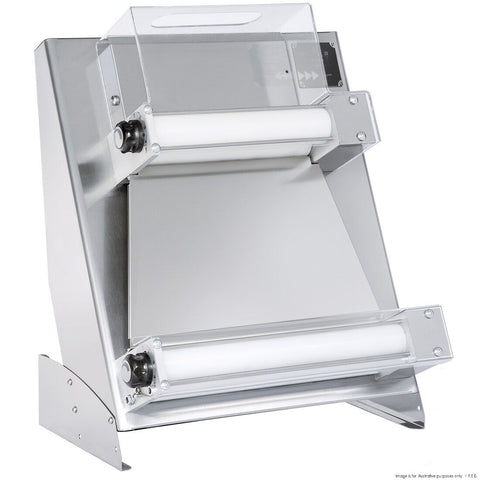
 BakerMAX Prismafood Pizza Dough Roller - DSA420RP
540(W) x 410(D) x 680(H)mm

 AG Bench Top Dough Sheeter JDR520B
2080(W) x 880(D) x 620(H)mm
 Mecnosud Dough Roller 30cm Single Pass - DRM0031
420(W) x 350(H) x 450(D)mm

 BakerMAX Prismafood Pizza Dough Roller - DSAT420
585(W) x 435(D) x 790(H)mm
 Mecnosud Dough Roller 40cm - DRM0040
520(W) x 712(H) x 450(D)mm

 Tyrone Floor Model Dough Sheeter JDR-520/3N
2550(W) x 880(D) x 1180(H)mm
 Mecnosud Dough Baller - DBM0800
436(W) x 838(H) x 738(D)mm
 Mecnosud Dough Roller 30cm - DRM0030
420(W) x 650(H) x 450(D)mm

 BakerMAX Prismafood Pizza Dough Roller DSA500RP
635(W) x 435(D) x 790(H)mm

 BakerMAX Automatic Pizza Dough Rounder - AR300P
510(W) x 510(D) x 750(H)mm
 Mecnosud Floor Standing Pastry Sheeter - PSM6120
3290(W) x 1060(H) x 1170(D)mm
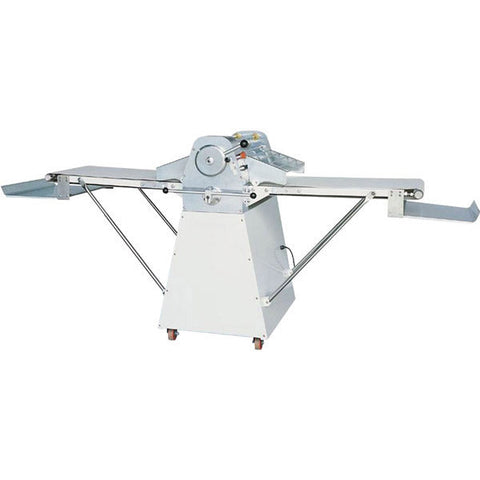
 Tyrone Floor Model Dough Sheeter JDR-650/3N
2950(W) x 1100(D) x 1180(H)mm


 BakerMax 50-350g Commercial Dough Rounder with 10 Variable Speeds - ADR-350P
420(W) x 585(D) x 804(H)mm
 Mecnosud Benchtop Pastry Sheeter - PSM0570
1520(W) x 700(H) x 920(D)mm


 Tyrone Tyron Round Dough Press – DP-18S
470(W) x 470(D) x 765(H)mm

 Prismafood Automatic Dough Divider PF-PO300
510(W) x 530(D) x 830(H)mm
 Tyrone Bench Dough Sheeter JDR-520B
2080(W) x 880(D) x 620(H)mm


 IGF 2300-B40P Pizza Roller - 931413
520W x 520D x 690Hmm


 Atlas Star ST-520 Dough Sheeter - 923407
1800W x 900D x 670Hmm

 FED JDR-520B Pastry Sheeter - 883079
2080W x 880D x 620Hmm
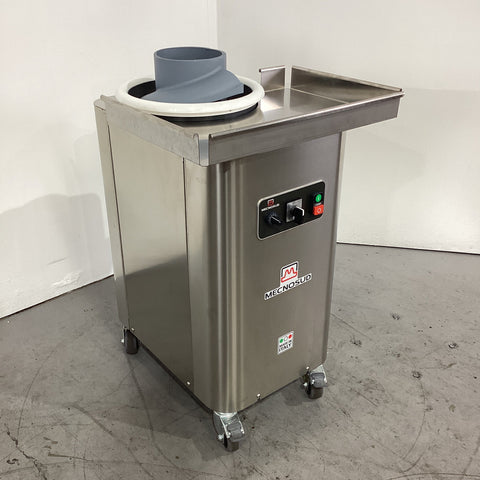
 Mecnosud DBM0800 Dough Baller - 927966
555W x 580D x 795Hmm

 Tyrone JDR-650/3N Dough Sheeter - 921840
3000W x 1040D x 1730Hmm

 BakerMax 370mm Benchtop Pastry & Dough Sheeter - BDS-300
597(W) x 728(D) x 514(H)mm


 Moretti Forni Angled Dough Roller - iF
420-520(W) x 450(D) x 650-750(H)mm
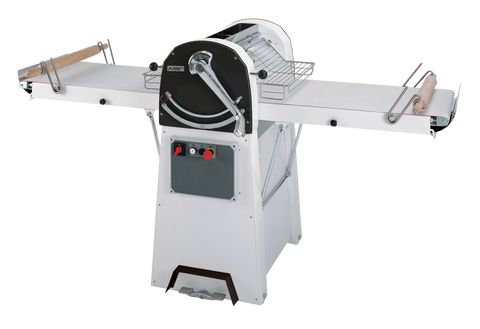
 Moretti Forni Freestanding Pastry Dough Sheeter - SF/P
1776-2797(W) x 864-1020(D) x 640-1145(H)mm
 Mecnosud Bun Divider/Rounder - BDM0030
604(W) x 1970(H) x 605(D)mm


 Bottene Pasta Machine PM96 - PMB1096
500(W) x 1350(H) x 720(D)mm
 Bottene Ravioli Maker - RMB0090
440(W) x 660(H) x 450(D)mm
 Bottene Pasta Machine PM80 3PH - PMB1080
500(W) x 1270(H) x 700(D)mm

 Bottene Lillodue Automatic Pasta Machine - PMB0002
250(W) x 250(H) x 530(D)mm
 Bottene Pasta Machine PM80 1PH - PMB0080
500(W) x 1270(H) x 700(D)mm
 Bottene Pasta Machine PM50 - PMB0050
680(W) x 550(H) x 420(D)mm
 Bottene Pasta Machine PM35 - PMB0035
560(W) x 540(H) x 400(D)mm
 Mecnosud Dough Divider - DDM0220
585(W) x 1693(H) x 800(D)mm
 Mecnosud Automatic Bun Divider - BDM0015A
653(W) x 1465(H) x 653(D)mm
 Mecnosud Dough Divider With Cutting Grids - DDM0220T
585(W) x 1732(H) x 800(D)mm
 Prismafood Pizza shaping machine - PRA33
470(W) x 590(D) x 830(H)mm

 CLEARANCE - Yasaki Tilting Head Removable Bowl 20L Spiral Mixer - HTD-20L-VIC1035
105(W) x 750(D) x 400(H)mm

 CLEARANCE - Pizza Dough Roller - DMA310-1-VIC1022
41(W) x 480(D) x 355(H)mm

 CLEARANCE - Tyrone Heavy Duty Planetary Mixer 60L - B60GX-VIC1003
380(W) x 816(D) x 823(H)mm

 CLEARANCE - Tyrone Heavy Duty Planetary Mixer 10L - B10GX-VIC1002
67(W) x 447(D) x 518(H)mm

 CLEARANCE - Pizza shaping machine - PRA33-VIC964
145(W) x 470(D) x 590(H)mm
 CLEARANCE - Automatic Pizza Dough Rounder - AR300P-VIC928
85(W) x 510(D) x 510(H)mm

 CLEARANCE - Yasaki 40 Litre Belt Drive Three Speed Mixer - B40KG-VIC929
140(W) x 620(D) x 630(H)mm

 CLEARANCE - Tyrone Heavy Duty Planetary Mixer 40L – B40GX-NSW2110
211(W) x 675(D) x 741(H)mm

 CLEARANCE - Tyrone 10 Litre Heavy Duty Mixer TS207-1/S
65(W) x (D) x (H)mm
 CLEARANCE - Tyrone 10 Litre Heavy Duty Mixer - TS207-1/S-VIC692
65(W) x (D) x (H)mm

 CLEARANCE - Tyrone 40 Litre Heavy Duty Mixer TS240-1/S-NSW1713
240(W) x (D) x (H)mm

 CLEARANCE - Pizza Dough Former Flat Edge PF33A-NSW1860
145(W) x (D) x (H)mm
Dough processing equipment covers everything that happens between the mixer and the oven: dividing a bulk mass into even pieces, rounding those pieces, rolling or sheeting them out, and cutting them to shape. Doing those steps by machine rather than by hand is what keeps every loaf, base and pastry the same, which is what your customers come back for.
The range here includes dough dividers for portioning, dough rounders for balling, dough rollers for pizza bases, pastry sheeters for laminated work and pasta machines for fresh noodles and sheets.
Upstream of all of it sits the commercial mixer, and downstream the bread provers and baking ovens that finish the job.
A dough line is a lot of machines to buy at once. Silverchef Rent-Try-Buy can fund the lot, with the option to upgrade or hand equipment back as things change.
Buy for whichever step is the bottleneck. In most bakeries that is scaling: hand-weighing hundreds of pieces is slow, tiring and never quite even, so a divider usually pays back soonest.
In a pizza shop it is more often shaping, because stretching bases by hand is the step that holds up service, and a dough roller fixes it. Watch where people queue in your own kitchen before you decide.
It can. Dividing and rounding handle developed dough, and rough handling degasses it, which shows up in the crumb. Equipment designed for the job works the dough as little as possible and with as little added flour as possible.
That matters more the longer your ferment is. A high-hydration, slow-proved dough is more fragile than a straight commercial dough, so if that is what you make, look for gentler machines and take the time to set them up properly.
Not always. Dividers and rounders are reasonably dough-agnostic, so a bakery running bread and rolls can share them. Sheeting is where the split happens: laminated pastry needs the controlled, repeated reduction of a pastry sheeter, while a pizza base is pressed out in one or two passes.
Pasta is a different machine again, since the dough is stiff and extruded or cut rather than shaped by hand. See the pasta machines range for that.
More than the machine's own footprint. Each of these pieces needs space for dough going in on one side and product coming out on the other, plus room for a person to stand and work without reaching across a moving part.
Plan the line in order — mix, divide, round, rest, shape — and keep it walkable. Trays of shaped product then need somewhere to go, which is what racking trolleys and oven racks are for.
Dough sticks, dries hard and traps flour, so anything that touches product has to come apart far enough to be cleaned properly. Look for contact parts you can remove without tools and surfaces with as few ledges and seams as possible.
Food contact surfaces in Australian commercial kitchens are normally 304 stainless steel, which resists corrosion and takes repeated cleaning. Where a part is plastic or coated, check that it is rated for food contact and replace it once it is scored, because scratches hold residue.
Up to a point. Dividers and rounders are designed so one baker can keep a line moving, and semi-automatic machines are built around a single operator feeding and clearing.
Where you need a second pair of hands is when two steps run at once, or when trays have to be moved to the prover while the next batch is being shaped. A bakery trolley and a sensible layout often save more labour than the next machine does.
It can be, for a startup watching cashflow. These machines are mechanically straightforward and a well-maintained one has plenty of life in it. Our refurbished bakery equipment range is where to look.
Check the contact surfaces and the safety interlocks before you commit, and ask what documentation comes with it. The specifications page explains what we hold on file for each model.
Consumables and handling equipment, which are easy to forget in a fit-out. Trays and pans to catch and carry product, dough scrapers for the bench and the bowl, baking mats where you want a non-stick surface, and baking trays in the size your oven takes.
Then delivery and install. Heavier machines are not a one-person lift, so check the delivery information for what is included and plan access through doorways before the truck arrives.
Between the mixer and the prover, in that order, with the shortest possible travel between them. Bulk dough is heavy and awkward, so every metre between the mixer and the divider is carried by someone.
Keep the chilled side close as well. Retarding dough overnight is standard practice, and that needs bakery fridges and freezers within reach of the shaping bench rather than across the room.

We have a special page just for stock that's warehoused in Perth.
Click Here to see all WA stockWhat our customers say about us on Google, and how Google scores our store for things like shipping and returns.
Store scores from Google