


 03 9070 5784
 Help & Support
 Track My Order



Recently Viewed
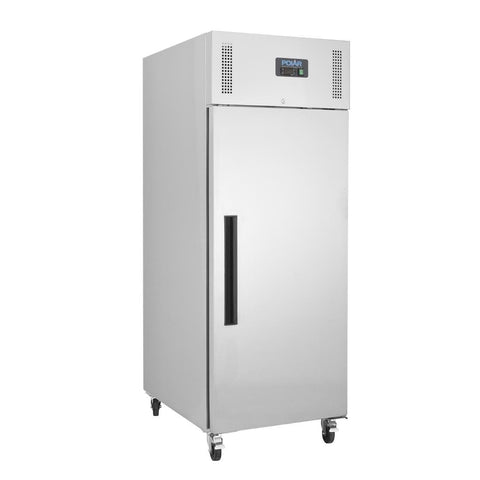

 Polar U-Series Single Door Bakery Fridge - GL180-A
740(W) x 2010(H) x 990(D)mm
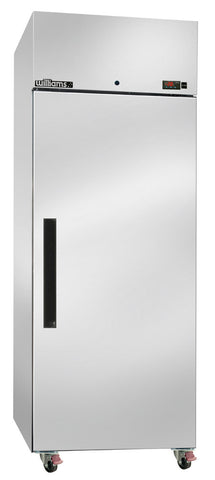

 Williams Crystal - One Door Stainless Steel Upright Bakery Retarder RC1TSS
737(W) x 922(D) x 2128(H)mm

 Everlasting Pastry Fridge - PFE2000
790(W) x 2050(H) x 1043(D)mm


 FED-X Bakery Freezer Cabinet XPA800BT
740(W) x 990(D) x 2000(H)mm
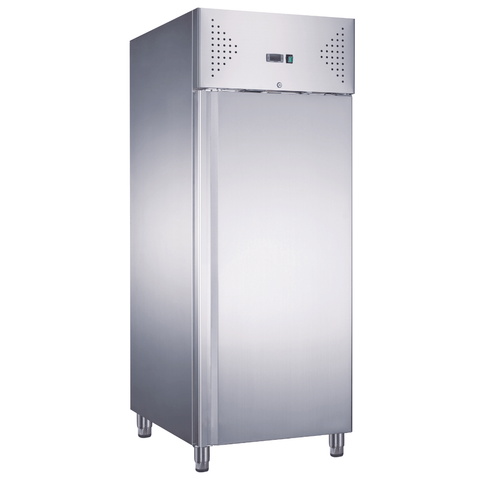
 FED-X Bakery Chiller Cabinet XPA800TN
740(W) x 990(D) x 2010(H)mm
 Williams Crystal - One Door Stainless Steel Upright Bakery Freezer LC1TSS
737(W) x 922(D) x 2128(H)mm

 Williams Crystal - Two Door Stainless Steel Upright Bakery Retarder RC2TSS
1466(W) x 922(D) x 2128(H)mm
 Williams Crystal - Two Door Stainless Steel Upright Bakery Freezer LC2TSS
1466(W) x 922(D) x 2128(H)mm
Retarding is what lets a bakery bake in the morning without starting at midnight: dough mixed in the afternoon is held cold overnight so fermentation slows, then baked at dawn. Commercial bakery fridges and freezers are the cabinets that do that job, built around trays and trolleys rather than shelves and specified to hold dough and pastry steadily rather than to chill a mixed load of ingredients quickly.
A commercial bakery fridge that holds a steady temperature does that reliably; one that cycles widely does not.
On the frozen side, a bakery freezer holds par-baked product, laminated pastry and portioned dough. See also pastry fridges and freezers and the wider commercial fridges range.
Refrigeration is one of the larger line items in a bakery fit-out. Silverchef Rent-Try-Buy is a practical way to stage it.
Internal layout and airflow. Bakery cabinets are sized for standard trays and in many cases for a whole trolley to roll in, and the air is moved so that it does not blow directly onto exposed dough, which would skin it.
A general-purpose upright fridge will keep product cold, but tray sizes and airflow usually make it a poor fit for dough. Match the cabinet to the trays you already use.
Retarding is holding shaped dough cold so fermentation slows and the bake can be scheduled. Some bakeries do it in a standard bakery fridge; others use a cabinet designed to hold dough cold and then bring it up to proving temperature on a timer.
Which you need depends on your production pattern. If you shape in the afternoon and bake at dawn, a dedicated retarder earns its place. If not, cold storage plus a bread prover covers it.
Most bakeries end up with both, because they are doing different jobs. Chilled space holds dough, fillings and dairy; frozen space holds pastry, par-baked product and portioned dough that is not needed this week.
If space is tight, look at how much of each you genuinely need before splitting a cabinet. A fridge freezer combo is one answer and a separate upright freezer is another.
For dough, very much. Dry cold air pulls moisture out of the surface and gives you a skin that will not expand properly in the oven, which shows as a dense crust and poor volume.
That is why bakery cabinets manage airflow the way they do, and why covering dough in a general-purpose fridge only partly solves the problem. Ask about airflow and humidity control rather than just temperature range.
Hot product does not belong in a storage cabinet: it raises the internal temperature, works the compressor hard and risks everything else in there. Cooling is a separate step.
For anything that needs to come down fast, a blast chiller is the right tool, and it is also what lets you freeze pastry without ice crystals forming through it.
Whether your existing trays fit, and whether a loaded trolley will roll in. This is the single most common mistake in a bakery fit-out, and it is not something you can fix afterwards.
Measure your baking trays and your racking trolleys first, then match the cabinet to them. Internal dimensions are listed on each product page.
That is a different cabinet again. Display refrigeration is built to show product and hold it at serving condition, not to store it, so it is specified on visibility and access.
For finished goods see cake display fridges, and for the rest of the shop front the food displays range. The delivery information page covers getting any of it to site.

We have a special page just for stock that's warehoused in Perth.
Click Here to see all WA stockWhat our customers say about us on Google, and how Google scores our store for things like shipping and returns.
Store scores from Google