


 03 9070 5784
 Help & Support
 Track My Order



Recently Viewed

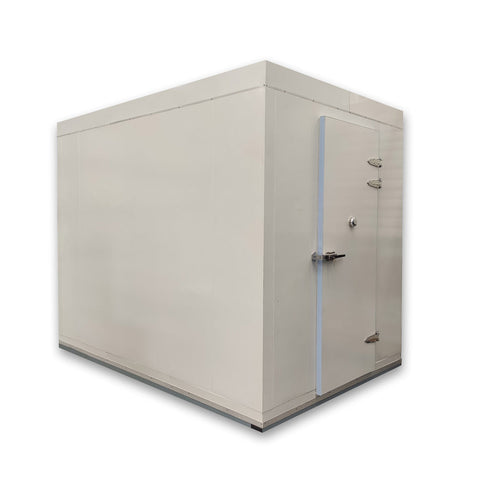
 Freezer Room 1500-4000(w) x 1500-2400(d) x 2400-2600(h)mm Coolrooms Plus CRP-F
1500-4000(W) X 1500-2400(D) X 2400-2600(H)Mm
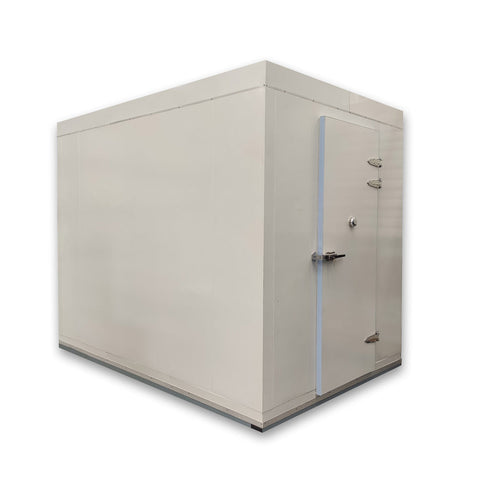
 Freezer Room 2400(w) x 2400(d) x 2400(h)mm Coolrooms Plus CRP-F4
2400(W) X 2400(D) X 2400(H)Mm
 Freezer Room 2000(w) x 2000(d) x 2400(h)mm Coolrooms Plus CRP-F2
2000(W) X 2000(D) X 2400(H)Mm
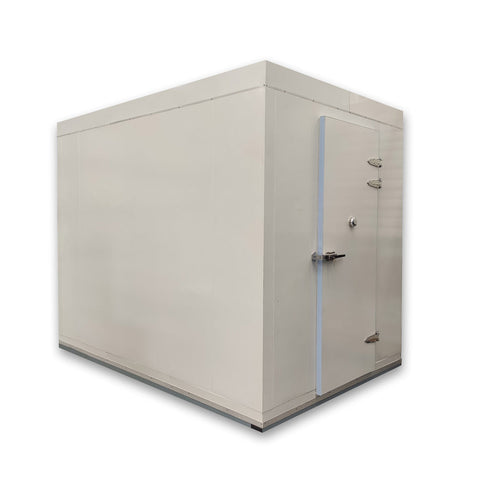
 Freezer Room 3000(w) x 2400(d) x 2400(h)mm Coolrooms Plus CRP-F7
3000(w) x 2400(d) x 2400(h)mm
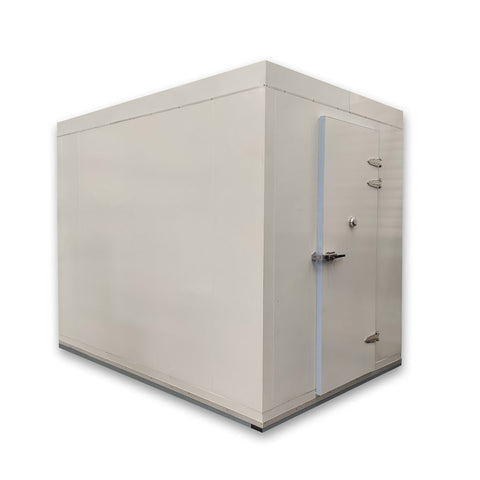
 Freezer Room 3000(w) x 2000(d) x 2400(h)mm Coolrooms Plus CRP-F5
3000(W) X 2000(D) X 2400(H)Mm
Freezer Room 2400(w) x 3000(d) x 2400(h)mm Coolrooms Plus CRP-F4.2
2400(W) X 3000(D) X 2400(H)Mm
 Freezer Room 1500(w) x 1500(d) x 2400(h)mm Coolrooms Plus CRP-F1
1500(W) X 1500(D) X 2400(H)Mm
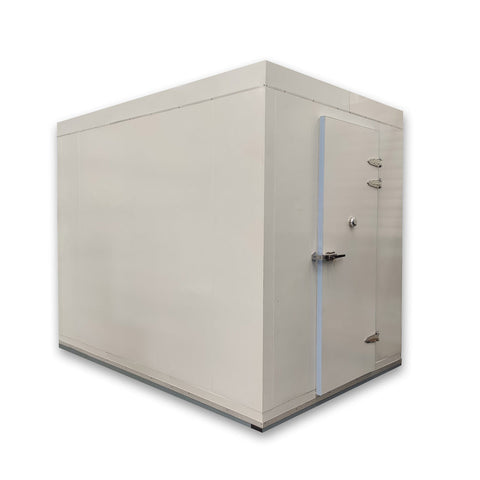
 Freezer Room 2400(w) x 1800(d) x 2400(h)mm Coolrooms Plus CRP-F3
2400(W) X 1800(D) X 2400(H)Mm
A freezer room gives you walk-in frozen storage on a scale no cabinet can match. Rather than working around a handful of upright units, you hold bulk proteins, seafood, frozen produce, pastry and prepped stock in one room you can walk into with a trolley. For venues doing volume — function centres, large restaurants, catering kitchens and food retail — that changes how the whole back of house runs, because a delivery gets broken down once and put away in one place instead of being shuffled between cabinets all week.
What separates a freezer room from a chilled one is more than the number on the controller. The room sits well below the air around it, and every part of the build answers that one problem: the panels, the floor, the doorway and the drainage all have to be specified for the difference in temperature. Get those details right and the room holds temperature quietly year after year. At Restaurant Equipment Online, our team can work through room size, layout and site conditions with you before you commit to a configuration.
A freezer room is walk-in frozen storage for businesses that buy and prepare in bulk. It holds long-term stock at frozen temperature: whole cuts and portioned proteins, seafood, frozen vegetables, ice cream tubs, par-baked goods and meals produced ahead of service. Because you walk into it rather than reaching into it, stock can be racked on shelving and rotated by date instead of being buried at the bottom of a basket.
It sits at the opposite end of the scale from a cool room, which holds fresh product just above freezing. Plenty of kitchens run both alongside each other, with the chilled room handling daily produce and the freezer room carrying reserve stock, seasonal buys and anything bought on contract.
Frozen storage is generally held around -18℃. At that point the water in food stays locked up as ice, and the changes that ruin texture, colour and flavour slow right down. Some operators run a little lower for stock that sits for months, such as seafood or ice cream, where a colder holding temperature protects texture over a long period.
What matters more than the exact figure is that it stays put. A room that drifts up and down puts stock through partial thaw and refreeze, and that is what draws moisture out of product, forms ice crystals on the surface of cartons and leaves you with freezer burn on the edges. Steady beats aggressive every time.
Yes. A cool room can often sit straight onto a sealed concrete slab, but a freezer room should not. Held below freezing, the room draws heat out of the slab beneath it, and over time the ground under that slab can freeze. Moisture in the ground expands as it freezes, which lifts and cracks the concrete, and that is an expensive fault to chase once the room is built and full of stock.
An insulated floor panel breaks that path. It sits on the slab and gives you a sealed, load-rated surface inside the room, so the cold stays in the room rather than working its way into the building. Raise it with the team when you are planning the room, because the floor panel affects finished floor height and you will usually want a ramp or threshold detail so trolleys and pallet jacks can get in and out cleanly.
Every time the door opens, warm humid kitchen air meets a doorway that is below freezing. That moisture condenses and freezes on the coldest surface it touches, which is the frame and the gasket. Left to build up, the seal ices over, the door stops sitting flush, and before long it either will not close properly or will not open without someone taking a bar to it.
A freezer room handles that with heating elements run through the frame and around the door perimeter, warming that narrow strip just enough that ice cannot get a hold on the seal. It is one of the clearest differences between a chilled room and a frozen one, and it is why converting a cool room to freezer duty is never simply a matter of winding the setpoint down.
Running an evaporator below freezing means the moisture in the air collects on the coil as frost. A frosted coil cannot shift heat, airflow through it drops off, and the room starts to struggle. Defrost cycles clear that frost on a schedule set by the controller, and in most rooms that means a few short cycles spread across the day rather than one long shutdown.
During a cycle the fans stop and the coil is warmed only as long as it takes to shed the ice, which is why you will see a small rise on the display. The thermal mass of the stock carries the room through it, so product is unaffected. If cycles start running longer, or the coil is still carrying frost when one finishes, that is the point to book a refrigeration technician rather than wait and see.
The evaporator normally sits high on a wall and throws air down the length of the room so it circulates and returns to the coil. That circuit is what brings every corner of the room to the same temperature, and it is very easy to break with a pallet parked in the wrong spot.
Keep the air path in front of the coil clear, hold stock off the back wall, and do not stack to the ceiling underneath the unit. A solid pallet of frozen cartons blocks air the same way a wall does, and anything sitting in a dead spot will run warmer than the reading on the controller suggests. Slotted shelving and a hand's width around each stack are worth more to you than the extra cartons you would fit by packing it tight.
Meltwater from the defrost cycle has to get out of the room, and inside a freezer room it will freeze on the way if the line is not dealt with. Condensate drains from a freezer room are heated and run with a fall, so the water is carried away while it is still liquid instead of setting up an ice plug in the pipe.
The line also needs to be trapped, with the trap sitting outside the room in warm space rather than inside where it would freeze solid, and it should discharge to a tundish or floor waste in the plant area. An untrapped line lets warm damp air track back up the pipe into the room, which is precisely what you were trying to avoid. This is work for the fitter at installation, not something to solve after the room is running.
A newly commissioned room pulls down from ambient over a good many hours, and it should be sitting at temperature and holding steady before the first carton goes in. After that, the pull-down that matters day to day is what happens when a delivery lands.
Frozen goods arriving at temperature barely move the room. What hurts is warm or partly thawed product, or a whole drop put away in one go with the door propped open the entire time. Break the load-in into stages where you can, get the door shut between runs, and leave air space around new stock. If you are regularly bringing product down from warm rather than holding it, that is a job for a blast freezer, not the storage room — and for daily picking it is easier to keep a working supply in an upright freezer in the kitchen and use the room as reserve.
Yes, and it is not an optional extra. Freezer room doors are fitted with a safety release on the inside that opens the door even when it has been latched or padlocked from the outside. Anyone who works in the room needs to know where that release is and be able to find it in poor light with cold hands.
Check it on the same round you use for the door seal and the temperature log. A release that has iced up, been painted over or been blocked by stock is no release at all. Where the room has an internal alarm or a light that stays on, test those as well, and cover the lot in your induction for new staff.
The panel is all that separates the room's air from everything outside it, so the larger the gap between the two temperatures, the more insulation you need to hold the room without the plant running flat out. A freezer room works against a far bigger gap than a chilled room does, which is why it is built with thicker panel. The same panel that comfortably holds a cool room a few degrees above zero would be working overtime at frozen storage temperature.
Site conditions push the same way. A room in a hot plant area, in a shed under a tin roof, or anywhere in the north of the country is facing a wider difference again than one inside an air-conditioned building. Tell us where the room is going and what you intend to hold in it, and we will match the panel and the plant to the site instead of leaving you to guess.

We have a special page just for stock that's warehoused in Perth.
Click Here to see all WA stockWhat our customers say about us on Google, and how Google scores our store for things like shipping and returns.
Store scores from Google