


 03 9070 5784
 Help & Support
 Track My Order



Recently Viewed


 Polar C-Series Countertop Ice Machine 15kg Output - CH479-A
365(W) x 415(H) x 420(D)mm
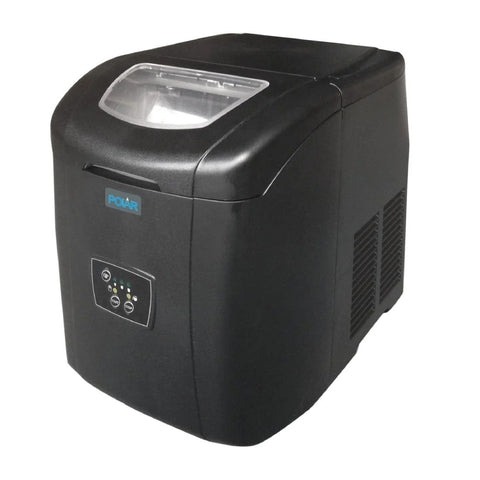
 Polar C-Series Countertop Ice Machine 11kg Output - CH478-A
305(W) x 380(H) x 380(D)mm

 Polar U-Series Countertop Ice Machine with UVC 20kg - UA039-A
A commercial countertop ice maker makes and holds a few extra kilos of ice right where the drinks go out, on the back bar or the coffee counter. Commercial counter top ice makers are small, portable and easy to maintain, so they suit a smaller venue, and they also cover the extra demand that comes with summer or a happy hour.
These units are fully self-contained, so there is no plumbing to put in and one can be set up where and when you want. Bars, cafes and restaurants run them, caterers take them to jobs, and they get used at home for parties too. Shop the range of bar benchtop ice machines and order from Restaurant Equipment Online with shipping anywhere in Australia.
A benchtop machine is a small buy next to the rest of a bar, so if you are putting one in alongside the bigger equipment, SilverChef Rent-Try-Buy can fund the whole lot together. Related ranges: commercial ice machines and nugget ice maker.
Benchtop ice makers are the smallest model and capacity of ice maker, creating around 10 to 15 kilos of ice every 24 hours. If you have an underbench ice maker and need a little extra on those busy days or rush hours, having a benchtop model can give you the extra bit of ice you need for your drinks. If you don’t need a constant supply, many of these small models can be switched to a passive mode, meaning they’ll pause making new ice and can quickly ramp back up again when you need them.
Any venue that needs a second ice supply without the space or the money a larger modular ice maker takes. That covers a menu that changes with the season, a small cafe, a pop-up bar, a food truck that serves drinks, and a catering business, because a commercial counter top ice maker is quick to set up and easy to move.
Benchtop ice maker units come with good insulation and can be used in a number of settings, including office spaces, small corners in your bar area or front of house in a cafe. Anything over 28 to 30 degrees will start to shorten how long the ice lasts, though the machine itself keeps making it. If you are working in a warmer spot, or aren’t regularly getting through all the ice you’re making, an ice caddy for the extra ice keeps you from ending up with slush or cubes stuck together. If you’re unsure whether the ice maker you’re looking at can handle certain locations or temperatures, you can contact the team at REO or check through the manufacturer guidelines.
Generally they produce hard, solid ice cubes with a hole through the centre, which helps stop them sticking together and makes them a good shape for cold drinks. Depending on the model you choose, you can adjust the cube size, using controls on the front panel.
Yes. They’re compact enough to sit on a back shelf, and they are a good substitute if you can’t accommodate the size or plumbing an underbench model needs. Near the main serving area, one cuts the trips back to the kitchen and gives your staff more time with customers.
Water quality is incredibly important when it comes to getting the best possible ice, both in terms of presentation but also flavour. Benchtop ice makers are fully self-contained, meaning you fill them with water and the machine will make ice until the reservoir is empty, or until you switch it off. Along with the quality of the ice itself, using filtered water can extend the lifespan of your machine by helping to protect the internal components from scale buildup.
Each ice maker will come with its own guidelines and recommendations regarding ongoing care, but there are a few general things you’ll need to do for a clean, steady supply of ice. First, using filtered water is a good idea to get out any minerals that can scale up the internal components. If you aren’t using filtered water, or are noticing it’s getting slower, doing a descaling now and again can help. Sanitising the water reservoir and tub that the ice falls into after each shift is also important. Some parts are often dishwasher safe, which makes that quick to do properly.
If you’re finding that a benchtop model alone isn’t enough, and having a second small countertop model isn’t going to solve the supply issue, adding an underbench model or even a modular ice maker may be needed. If you’re wanting to be proactive, upgrading before you expand your menu, add new service points, or if you simply want to have extra on hand for rush hours, it may be a good idea to upgrade before pushing ahead with a benchtop model alone.
Yes, because the ice is made right where the drinks are poured. Keep the machine next to the coffee machine or the mixology station and nobody is walking off to fetch ice mid-service. Fresh ice on hand keeps drink quality and speed up through a busy shift, from cocktails to cold brew and soft drinks.
You will see commercial countertop ice maker and commercial tabletop ice maker used for the same kind of equipment. The name changes with the supplier and the region, not the job it does. Compare models on capacity, construction and the specification on each product page, and check the full commercial counter top ice makers range to see every option side by side.

We have a special page just for stock that's warehoused in Perth.
Click Here to see all WA stockWhat our customers say about us on Google, and how Google scores our store for things like shipping and returns.
Store scores from Google