


 03 9070 5784
 Help & Support
 Track My Order



Recently Viewed


 AG Bench Top Dough Sheeter JDR520B
2080(W) x 880(D) x 620(H)mm

 AG Free Standing Dough Sheeter JDR520
2550(W) x 880(D) x 1180(H)mm


 BakerMax 370mm Benchtop Pastry & Dough Sheeter - BDS-300
597(W) x 728(D) x 514(H)mm
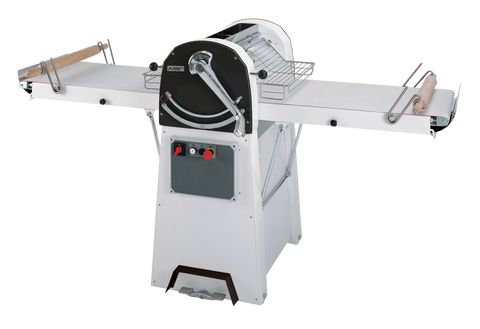

 Moretti Forni Freestanding Pastry Dough Sheeter - SF/P
1776-2797(W) x 864-1020(D) x 640-1145(H)mm

 Mecnosud Benchtop Pastry Sheeter - PSM0570
1520(W) x 700(H) x 920(D)mm
 Mecnosud Floor Standing Pastry Sheeter - PSM6120
3290(W) x 1060(H) x 1170(D)mm

 Tyrone Bench Dough Sheeter JDR-520B
2080(W) x 880(D) x 620(H)mm
 Tyrone Floor Model Dough Sheeter JDR-520/3N
2550(W) x 880(D) x 1180(H)mm
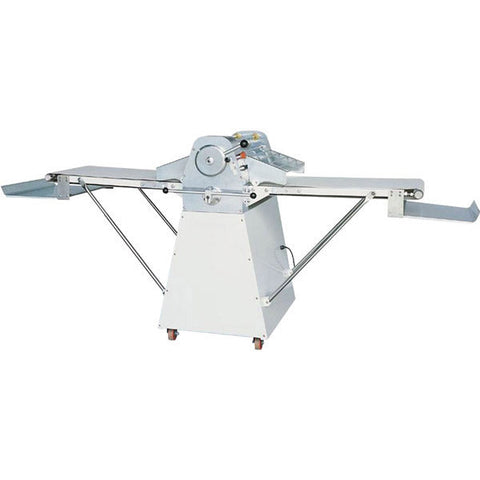
 Tyrone Floor Model Dough Sheeter JDR-650/3N
2950(W) x 1100(D) x 1180(H)mm
A pastry sheeter rolls dough and pastry out to a flat, even thickness, so croissants, Danishes, pie crusts and flatbreads come out the same every batch instead of depending on who is on the bench with a rolling pin. It is also sold as a dough laminator, a pastry lamination machine or a pastry laminator machine, and it is what makes laminated pastry work once you are past a certain volume.
Our commercial dough sheeter range includes small benchtop sheeters for a boutique bakery up to large freestanding models for a production kitchen, so you can buy the size that suits your business at its current size, then size up as your business grows. All from the top brands in the trade, and delivered anywhere in Australia.
Spread the cost of new commercial pastry sheeters with SilverChef Rent-Try-Buy. Related ranges: commercial dough processing equipment, commercial dough dividers and commercial dough rollers.
You put the dough on a conveyor belt, it passes through the rollers and it comes out flat at the thickness you have set. Freestanding and benchtop models both do the same job, so pick the one that fits the layout and footprint of your kitchen.
Most sheet as thick as 40mm and as thin as 1mm for delicate pastry, and the speed is adjustable so you can feed dough through steadily. From there, you can cut up your pastry, fold it and put croissants into your combi steam oven for the perfect crisp to soft balance, assemble short pastry to make pies, or put shortbread dough into the fridge before baking it.
Once the pastry is on the conveyor the machine feeds, sheets and outputs it automatically or semi-automatically, and the belt is wide enough to take batches that would take a long time on a bench. Variable speed lets you set how fast it runs.
Not only is it faster, but it also gives you greater consistency. You don’t need to readjust or worry about odd-shaped sheets, you’ll get more rectangular sheets which also results in less wastage.
A manual sheeter still takes the dough on a conveyor belt, but someone has to crank a handle to sheet it. That suits bakeries making smaller batches.
An automatic sheeter is motorised, and some models feed themselves as well, so bigger batches go through faster and without someone standing on the handle.
Depending on how oily or dry your pastry is you may want a quick clean between batches. Every sheeter comes with the manufacturer's guidelines, which cover cleaning the conveyor belt, looking after the rollers, and what to do about flour build-up or pastry sticking.
Along with a clean down at the end of each shift, check the roller alignment and the belt tension now and then, and lubricate where the manual tells you to. Some removable parts are safe to put through the dishwasher — check the manual before you do.
The oil used for lubrication is food grade, so if any ever shows up on your sheeted dough you wipe it off. It is not a fault with the machine.
There are a few factors to consider when you’re choosing the best commercial dough sheeter for your kitchen. You’ll need to account for the space you have available, and decide whether a freestanding or countertop model is best for you. From there, look at the belt width and length you want or need, and the range of thicknesses you’d like to be able to make, and how much dough or pastry you need to be able to run per hour. Finally, think about whether a manual model will be adequate, or if semi-automatic or automatic functionality would be useful. If you’re unsure, or want guidance to find the best possible model for your needs, please contact the team at REO, we’d be happy to help with a recommendation.
Anything that needs an even thickness or lamination: croissants, Danish pastries, puff pastry, shortcrust, pie crusts and flatbreads. Laminated doughs are the strongest case, because they need the even thickness and they need to be handled without damaging the layers.
Even sheets mean each portion is the right thickness, size and weight, so fewer pieces bake unevenly or get thrown out. You are also not relying on how tired the person rolling is by the end of a shift. Over time that shows up as better yield and less money spent on ingredients you did not sell.
While it can vary depending on which model you choose and how frequently you’re operating it, with proper maintenance, including regular cleaning and periodic servicing, a commercial pastry sheeter can last you for years. We’d predict that with proper care and choosing the right one for your needs, your pastry sheeter could last anywhere up to a decade, helping you save time and money during production, while also proving to be a good long term investment.
You will see dough laminator, pastry lamination machine, pastry laminator, pastry laminator machine, commercial dough sheeter machine, commercial sheeter and dough lamination machine used for the same kind of equipment. The name changes with the supplier and the region, not the job it does. Compare models on capacity, construction and the specification on each product page, and check the full commercial pastry sheeters range to see every option side by side.

We have a special page just for stock that's warehoused in Perth.
Click Here to see all WA stockWhat our customers say about us on Google, and how Google scores our store for things like shipping and returns.
Store scores from Google