


 03 9070 5784
 Help & Support
 Track My Order



Recently Viewed
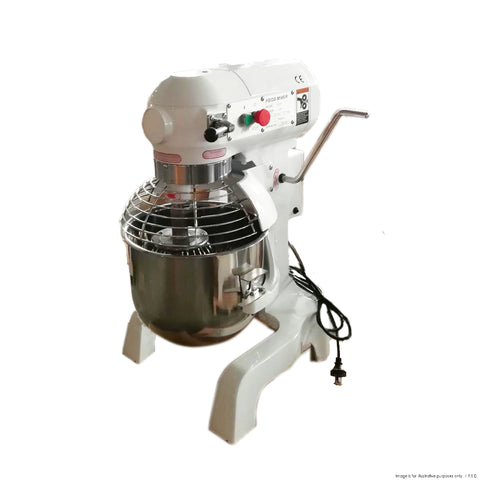

 BakerMAX 20 Litre Heavy Duty Mixer B20KG
530(W) x 496(D) x 780(H)mm
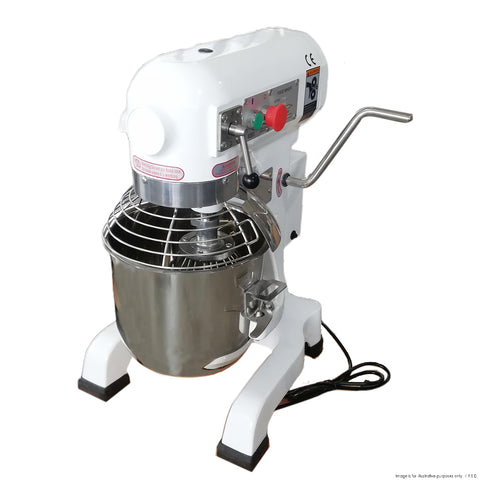
 Yasaki 10 Litre Heavy Duty Mixer B10KG
452(W) x 432(D) x 606(H)mm
 BakerMAX 7 Litre Heavy Duty Mixer B7B
429(W) x 240(D) x 425(H)mm


 Apuro Planetary Mixer White 7Ltr - DB266-A
 Yasaki Spiral Dough Mixers 54L- FS50M
520(W) x 882(D) x 1021(H)mm
 Yasaki Spiral Dough Mixers 35L FS30M
495(W) x 722(D) x 961(H)mm
 Yasaki Spiral Dough Mixers 64L FS60M
520(W) x 883(D) x 1021(H)mm

 Mecnosud Tilting Head Removable Bowl Spiral Mixer - SMM1044
860(W) x 790(H) x 550(D)mm
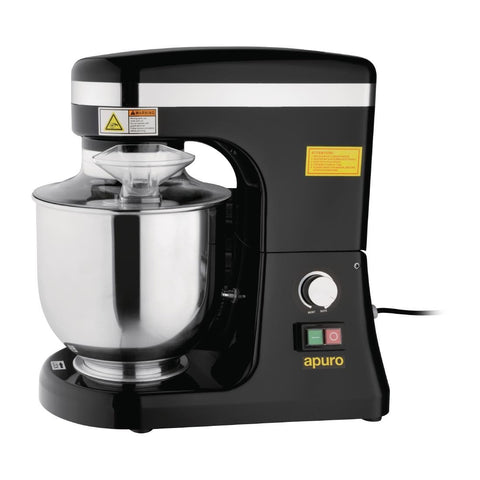
 Apuro Planetary Mixer Black 7Ltr - CP921-A
230(W) x 420(H) x 400(D)mm

 AG 30 Litre Commercial Spiral Mixer SPMF30
778(W) x 432(D) x 750(H)mm


 Tyrone Heavy Duty Planetary Mixer 60L B60GX/S
816(W) x 823(D) x 1472(H)mm

 Tyrone Fixed Head Heavy Duty 55L Spiral Dough Mixer SCP55
620(W) x 1020(D) x 1070(H)mm
 BakerMax Heavy Duty Professional Spiral Mixers 100L - FS100M
750(W) x 1080(D) x 1380(H)mm
 Yasaki Spiral Dough Mixers 21L FS20M
495(W) x 684(D) x 961(H)mm

 Anvil 10 Quart Planetary Mixer - PMA1010
350(W) x 530(H) x 450(D)mm

 Tyrone Fixed Head Heavy Duty 66L Spiral Dough Mixer SCP66
620(W) x 1020(D) x 1070(H)mm

 Tyrone Fixed Head Heavy Duty 34L Spiral Dough Mixer SCP34
520(W) x 850(D) x 860(H)mm

 Yasaki 40 Litre Belt Drive Three Speed Mixer B40KG
620(W) x 630(D) x 1011(H)mm
 Mecnosud Fixed Head/Bowl Economy Model Spiral Mixer - SMM9925
762(W) x 770(H) x 430(D)mm

 Mecnosud Tilting Head Removable Bowl Spiral Mixer - SMM0044
860(W) x 790(H) x 530(D)mm

 Apuro 10L Digital Planetary Mixer - FU137-A
475(W) x 635(H) x 475(D)mm
 AG 20 Litre Planetary Food & Dough Mixer P20
530(W) x 496(D) x 780(H)mm
 AG 15 Litre Planetary Food & Dough Mixer P15
465(W) x 444(D) x 676(H)mm
 Yasaki Spiral Dough Mixers 40L FS40M
495(W) x 722(D) x 961(H)mm

 Mecnosud Fixed Head/Bowl 2 Speed Single Phase Spiral Mixer - SMM3344
860(W) x 790(H) x 530(D)mm
 Mecnosud Fixed Head/Bowl Economy Model Spiral Mixer - SMM9944
860(W) x 790(H) x 530(D)mm
 Mecnosud Tilting Head Removable Bowl Spiral Mixer - SMM0018
700(W) x 702(H) x 390(D)mm

 Apuro 20L Digital Planetary Mixer - FU138-A
558(W) x 794(H) x 558(D)mm


 AG 20 Litre Commercial Spiral Mixer SPMF20
736(W) x 381(D) x 685(H)mm

 Tyrone Fixed Head Heavy Duty 45L Spiral Dough Mixer SCP45
520(W) x 850(D) x 930(H)mm

 Tyrone Heavey Duty Planetary Mixer 10L – B10GX
447(W) x 518(D) x 690(H)mm

 Yasaki Tilting Head Removable Bowl 20L Spiral Dough Mixer HTD-20L
750(W) x 400(D) x 730(H)mm

 Tyrone Heavy Duty Planetary Mixer 20L – B20GX
484(W) x 518(D) x 690(H)mm

 Tyrone Heavy Duty Planetary Mixer 40L B40GX
675(W) x 741(D) x 1154(H)mm
 BakerMax Heavy Duty Professional Spiral Mixers 130L - FS130M
762(W) x 1164(D) x 1380(H)mm


 Hobart Centerline 20 Quart Planetary Mixer - HMM20-90A
 Mecnosud Bakery Spiral Mixer - SMM1130
830(W) x 1460(H) x 1355(D)mm
 Mecnosud Bakery Spiral Mixer - SMM1080
730(W) x 1460(H) x 1305(D)mm
 Mecnosud Fixed Head Fixed Bowl Spiral Mixer - SMM0005
540(W) x 527(H) x 260(D)mm

 Mecnosud Tilting Head Removable Bowl Spiral Mixer - SMM0025
770(W) x 790(H) x 430(D)mm


 Hamilton Beach Planetary Mixer 8L - CPM0800
350(W) x 400(H) x 430(D)mm
 AG 40 Litre Planetary Food & Dough Mixer P40
630(W) x 562(D) x 1011(H)mm

 Moretti Forni Single Speed Fixed Bowl Spiral Mixer - 33L - iM25
430(W) x 748(D) x 760(H)mm
 Moretti Forni Double Speed Removable Bowl Spiral Mixer - 33L - iMR 25/2
450(W) x 750(D) x 760(H)mm

 Tyrone Heavy Duty Planetary Mixer 60L - B60GX
816(W) x 823(D) x 1472(H)mm

 Tyrone Fixed Head Heavy Duty 23L Spiral Dough Mixer SCP23
500(W) x 730(D) x 770(H)mm


 BakerMAX Prismafood Spiral Mixers SFM40
480(W) x 805(D) x 825(H)mm
 Hobart 20 Quart Planetary Mixer - A200-2251-E-D
484(W) x 722(H) x 514(D)mm
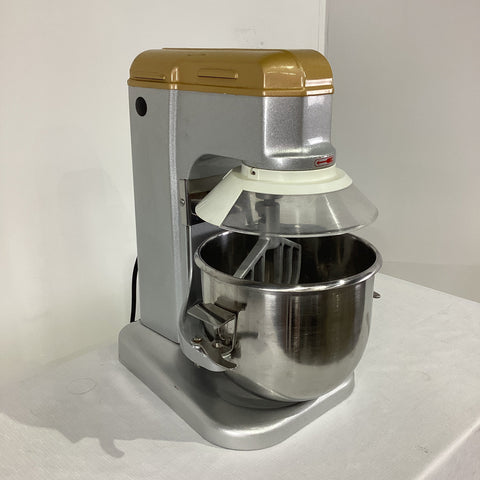
 Anvil PMA1010 Planetary Mixer - 787852
330W x 450D x 540Hmm
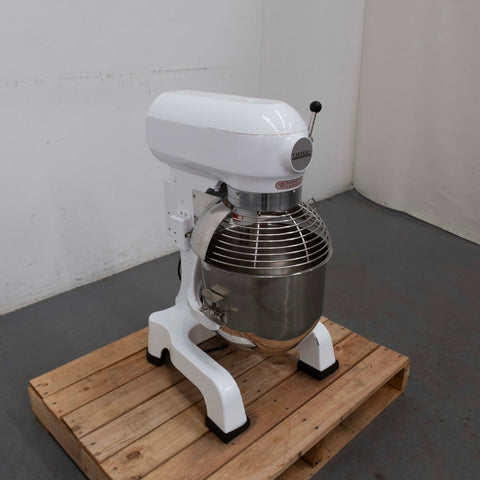

 Yasaki B20KG Mixer - Planetary - 877998
450W x 550D x 780Hmm
A commercial kitchen mixer does the kneading, beating and whipping in a kitchen: bread dough, cake batter, icing, mince and mash, depending on the tool you put in it. Choose one by the dough you make rather than by the price tag. Commercial mixers fall into a few clear families, and each one is built for a different job: a planetary mixer drives a single tool around a fixed bowl and handles almost anything, while a spiral mixer turns the bowl under a fixed hook and is made for bread.
Alongside those sit fork mixers for slack, traditional doughs, counter top mixers where bench space is the limit, and floor mixers for production volumes. Bakery mixers are also grouped by bowl capacity in this range, from small 20 litre machines for a cafe up to large 140 litre machines for a production bakery, so you can buy the size that suits your business at its current size, then size up as your business grows.
Everything here sits within the wider bakery equipment range, next to the dough processing equipment that takes over once the mix is done.
Fitting out a bakery is a lot of capital at once. Silverchef Rent-Try-Buy lets you rent the mixer first and buy it later if it suits the site.
Start with the dough. A planetary machine moves one tool around a stationary bowl, so with a hook, paddle and whisk it covers bread, cake batter, icing, mince and mash — that flexibility is why it is the usual first mixer in a kitchen that does a bit of everything.
A spiral machine turns the bowl while a fixed spiral hook works the dough, which develops gluten with less friction and less heat. If bread is the core of the business, that is the machine to buy. A commercial flour mixer of this type is effectively a commercial bread kneading machine and nothing else, so it is a poor choice for a venue that also needs whipped cream and buttercream.
Fork machines sit at the gentle end and suit wet, slow-fermented dough. There is more detail on each in the spiral mixers and fork mixers collections.
Size on your heaviest single batch, not on a daily total. A mixer that is too large will not work a small amount of dough properly, because the tool never gets enough contact with it, and a mixer that is too small gets overloaded and runs hot.
If you are between two sizes, the bigger one is usually the safer buy, since dough quantities grow with the venue. Bowl capacities are listed per model, and you can browse straight by size from 30 litre through 40 litre, 60 litre and 80 litre machines.
A planetary machine with a dough hook will knead bread, and plenty of cafes and restaurants run one that way. What limits it is stiff, low-hydration dough in large batches, which loads the gearbox far harder than cake batter does.
If bread is a daily line rather than an occasional one, a professional bread dough mixer built for the job will outlast a general-purpose machine doing the same work. A commercial bread mixer machine turns the bowl as well as the hook, so the dough is folded rather than dragged, and a commercial bread dough mixer of that design keeps the dough cooler through a long mix.
Once the dough is mixed it needs somewhere controlled to rise, which is what bread provers are for.
A floor-standing machine is the default for a bakery: it is bolted to the ground or heavy enough not to move, it takes the bigger bowls, and it is built to run for long stretches. Freestanding also means you are not giving up bench space you need for other prep.
A benchtop commercial mixer machine makes sense where volumes are modest or the kitchen simply has nowhere on the floor to put one. Look at the counter top mixers range for those, and remember the bench has to be solid — a light table will walk across the floor when the machine is working dough.
It varies by machine, and it is the first thing to check before you order. Smaller machines generally run on a standard single-phase socket, while larger production machines are commonly three phase. Each product page lists the electrical requirement for that model.
If the supply at your site is not certain, have it confirmed before delivery rather than after. Our installation service can take care of the connection, and the product documents page has the manufacturer paperwork for the specification.
For a planetary machine, the hook, paddle and whisk are the core three, and most work in a kitchen is covered by them. A second bowl is the attachment people wish they had bought first: it means you can start the next batch while the first one is being scaled off, which matters most in the morning.
A commercial cake mixer running buttercream and sponge all day benefits from a spare whisk, and a commercial pastry mixer doing both sweet and savoury work wants a second bowl simply to avoid flavour carry-over. Attachments are machine-specific, so check what fits before ordering, and see the bakery accessories range for the scrapers, trays and pans that go with the mixer.
Keep the bowl, the tools and the bowl lip clean and dry, and get flour paste off the column before it sets, because dried dough on a moving part is what wears the finish. Never scrape a bowl while the machine is turning.
Overloading is the main cause of trouble. Forcing a stiff dough in a machine sized for batter, or running a full bowl at high speed from a standing start, puts the load straight into the gearbox. Start slow, bring the speed up once the flour is taken in, and respect the capacity on the product page.
Belts, hooks and bowls are serviceable parts rather than throwaways. The spare parts request page is the quickest way to get the right one for your model.
Yes. Silverchef Rent-Try-Buy lets you rent the machine, use it in the business, and buy it out later if it is the right fit — which suits a new site where the real production volume is still a guess.
It is a sensible option for a restaurant mixer in particular, because a restaurant's mixing load is harder to predict than a bakery's. A restaurant dough mixer bought for a pizza line that then doubles in size is a machine you want to be able to trade up from.
The naming is inconsistent across suppliers and regions. You will see commercial bakery mixers, commercial food mixer machine, dough mixer commercial, commercial mixers for dough, commercial bread mixer and commercial food mixer used for the same group of machines, and none of those words changes what the equipment does.
Judge a machine on its type, its bowl capacity and its construction instead of its listing title. If you would rather talk it through than compare specifications, our team can book a consultation and walk through the options with you, or you can browse the full commercial mixers range side by side.

We have a special page just for stock that's warehoused in Perth.
Click Here to see all WA stockWhat our customers say about us on Google, and how Google scores our store for things like shipping and returns.
Store scores from Google