


 03 9070 5784
 Help & Support
 Track My Order



Recently Viewed

 BakerMAX 7 Litre Heavy Duty Mixer B7B
429(W) x 240(D) x 425(H)mm
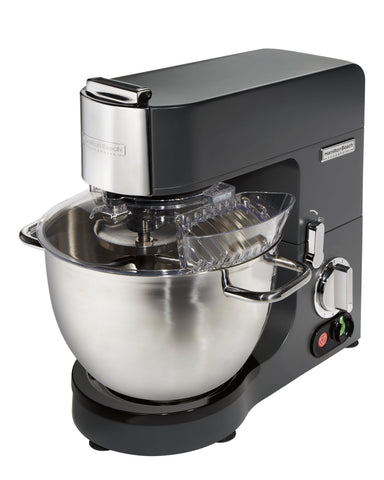

 Hamilton Beach Planetary Mixer 8L - CPM0800
350(W) x 400(H) x 430(D)mm

 Moretti Forni Single Speed Fixed Bowl Spiral Mixer - 8L - iM8
280(W) x 543(D) x 547(H)mm

 Yellow Mixer Commercial Planetary Mixer 409D x 236W x 421Hmm - MY7

 Hobart 5 Quart - N50-619
A commercial countertop mixer mixes dough, batter, cream and icing on the bench, without giving up any floor space. Commercial counter top mixers are the practical choice for cafes, patisseries, small kitchens and anywhere the mixer is used in bursts through the day rather than running continuously.
Most of them are planetary machines in a smaller size, so one machine with a hook, a paddle and a whisk covers all of it. For heavier daily bread production, step up to a floor-standing mixer or a dedicated spiral mixer, which is built for dough and will not whip or beat.
They sit in the wider commercial mixers range alongside the planetary and fork machines.
Not sure whether a bench machine will keep up with your volumes? request a callback and we will talk through what you are making.
A commercial table top mixer is built to a different standard than a domestic one and will take a full load of dough day after day. That is what you are paying for, and it is why they survive a kitchen.
What they are not built for is running flat out all day. Bench machines suit lighter duty and shorter runs, so if the mixer is working stiff dough several times a day or running almost continuously, a floor model is the right tool.
A solid one, fixed or heavy enough that it cannot shift. A mixer working stiff dough puts real sideways force into whatever it is standing on, and a light table will creep across the floor.
Allow headroom too — a tilting head needs clearance above, and you want to be able to lift the bowl out without catching it on a shelf. A stainless steel bench at working height is the usual answer.
Yes, within the stated capacity and with the hook fitted. Keep batches on the small side, start at low speed so the flour is taken in before the machine has to work, and let it rest between batches.
If you are mixing bread every morning rather than now and then, a table top commercial mixer will be working at its limit, and a spiral mixer is the better long-term buy.
The hook for dough, the paddle for batter and creaming, and the whisk for eggs and cream. Those three cover nearly everything a cafe or small bakery does.
After that, a second bowl is the most useful addition, because it lets the next batch start while the first is being scaled off. Attachments are specific to the machine, so confirm the fit before ordering, and browse the bakery accessories range for the pans and scrapers that go with it.
The bowl and tools come off and go to the sink or, where the manufacturer allows it, through a commercial dishwasher. Check the instructions first, since some coated and aluminium parts do not take machine washing.
The body wipes down with a damp cloth and a food-safe sanitiser. Pay attention to the underside of the head and the bowl seat, where flour paste collects and sets hard, and never hose a motor housing.
Bowl capacity against your largest batch, the overall height against the clearance you have, and the electrical requirement, which is listed on each product page along with the rest of the specifications.
Also check access for delivery, since these machines are heavy for their size. The delivery information page covers what to expect, and bakery equipment has the rest of the range if a bench machine turns out not to be enough.

We have a special page just for stock that's warehoused in Perth.
Click Here to see all WA stockWhat our customers say about us on Google, and how Google scores our store for things like shipping and returns.
Store scores from Google