


 03 9070 5784
 Help & Support
 Track My Order



Recently Viewed
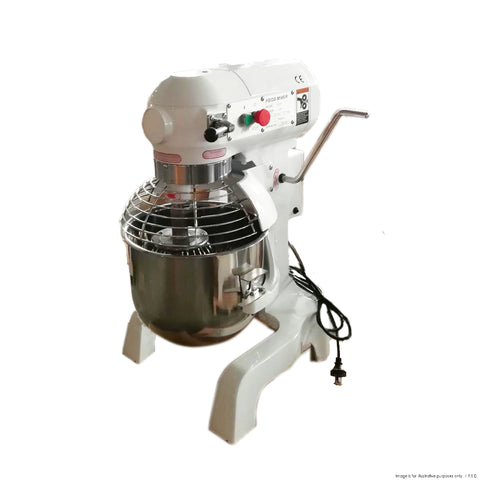

 BakerMAX 20 Litre Heavy Duty Mixer B20KG
530(W) x 496(D) x 780(H)mm
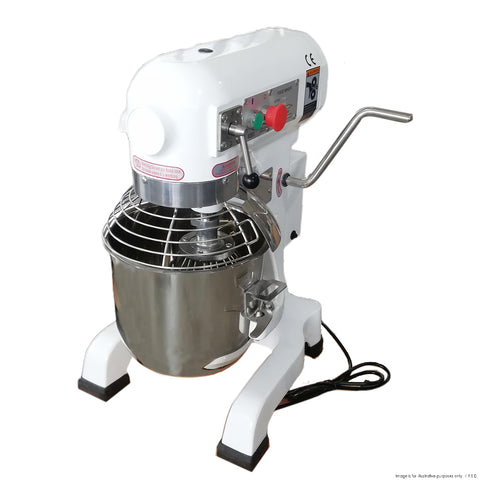
 Yasaki 10 Litre Heavy Duty Mixer B10KG
452(W) x 432(D) x 606(H)mm
 Yasaki Spiral Dough Mixers 54L- FS50M
520(W) x 882(D) x 1021(H)mm
 Yasaki Spiral Dough Mixers 35L FS30M
495(W) x 722(D) x 961(H)mm
 Yasaki Spiral Dough Mixers 64L FS60M
520(W) x 883(D) x 1021(H)mm

 Mecnosud Tilting Head Removable Bowl Spiral Mixer - SMM1044
860(W) x 790(H) x 550(D)mm


 Tyrone Heavy Duty Planetary Mixer 60L B60GX/S
816(W) x 823(D) x 1472(H)mm

 Tyrone Fixed Head Heavy Duty 55L Spiral Dough Mixer SCP55
620(W) x 1020(D) x 1070(H)mm
 Yasaki Spiral Dough Mixers 21L FS20M
495(W) x 684(D) x 961(H)mm
 BakerMax Heavy Duty Professional Spiral Mixers 100L - FS100M
750(W) x 1080(D) x 1380(H)mm

 AG 30 Litre Commercial Spiral Mixer SPMF30
778(W) x 432(D) x 750(H)mm

 Anvil 10 Quart Planetary Mixer - PMA1010
350(W) x 530(H) x 450(D)mm

 Tyrone Fixed Head Heavy Duty 66L Spiral Dough Mixer SCP66
620(W) x 1020(D) x 1070(H)mm

 Tyrone Fixed Head Heavy Duty 34L Spiral Dough Mixer SCP34
520(W) x 850(D) x 860(H)mm

 Yasaki 40 Litre Belt Drive Three Speed Mixer B40KG
620(W) x 630(D) x 1011(H)mm
 Mecnosud Fixed Head/Bowl Economy Model Spiral Mixer - SMM9925
762(W) x 770(H) x 430(D)mm

 Mecnosud Tilting Head Removable Bowl Spiral Mixer - SMM0044
860(W) x 790(H) x 530(D)mm
 Yasaki Spiral Dough Mixers 40L FS40M
495(W) x 722(D) x 961(H)mm

 Mecnosud Fixed Head/Bowl 2 Speed Single Phase Spiral Mixer - SMM3344
860(W) x 790(H) x 530(D)mm
 Mecnosud Fixed Head/Bowl Economy Model Spiral Mixer - SMM9944
860(W) x 790(H) x 530(D)mm
 Mecnosud Tilting Head Removable Bowl Spiral Mixer - SMM0018
700(W) x 702(H) x 390(D)mm

 Tyrone Fixed Head Heavy Duty 45L Spiral Dough Mixer SCP45
520(W) x 850(D) x 930(H)mm

 Tyrone Heavy Duty Planetary Mixer 20L – B20GX
484(W) x 518(D) x 690(H)mm

 Tyrone Heavey Duty Planetary Mixer 10L – B10GX
447(W) x 518(D) x 690(H)mm

 Yasaki Tilting Head Removable Bowl 20L Spiral Dough Mixer HTD-20L
750(W) x 400(D) x 730(H)mm

 Tyrone Heavy Duty Planetary Mixer 40L B40GX
675(W) x 741(D) x 1154(H)mm
 BakerMax Heavy Duty Professional Spiral Mixers 130L - FS130M
762(W) x 1164(D) x 1380(H)mm


 AG 20 Litre Commercial Spiral Mixer SPMF20
736(W) x 381(D) x 685(H)mm
 Mecnosud Bakery Spiral Mixer - SMM1130
830(W) x 1460(H) x 1355(D)mm
 Mecnosud Bakery Spiral Mixer - SMM1080
730(W) x 1460(H) x 1305(D)mm
 Mecnosud Fixed Head Fixed Bowl Spiral Mixer - SMM0005
540(W) x 527(H) x 260(D)mm

 Mecnosud Tilting Head Removable Bowl Spiral Mixer - SMM0025
770(W) x 790(H) x 430(D)mm


 Hamilton Beach Planetary Mixer 8L - CPM0800
350(W) x 400(H) x 430(D)mm

 Tyrone Heavy Duty Planetary Mixer 60L - B60GX
816(W) x 823(D) x 1472(H)mm

 Tyrone Fixed Head Heavy Duty 23L Spiral Dough Mixer SCP23
500(W) x 730(D) x 770(H)mm


 BakerMAX Prismafood Spiral Mixers SFM40
480(W) x 805(D) x 825(H)mm

 Moretti Forni Single Speed Fixed Bowl Spiral Mixer - 33L - iM25
430(W) x 748(D) x 760(H)mm
 Moretti Forni Double Speed Removable Bowl Spiral Mixer - 33L - iMR 25/2
450(W) x 750(D) x 760(H)mm

 Hobart 20 Quart Planetary Mixer - A200-2251-E-D
484(W) x 722(H) x 514(D)mm

 Moretti Forni Planetary Mixer with Variable Speed - MPV
500-680(W) x 700-1000(D) x 1200-1600(H)mm

 Moretti Forni Spiral Mixer - iM-C
280-575(W) x 543-1020(D) x 547-1010(H)mm

 Moretti Forni Double Speed Fixed Bowl Fork Mixer - iK/2
550-580(W) x 850-865(D) x 880(H)mm
 Mecnosud Fixed Head/Bowl Spiral Mixer - SMM9960
575(W) x 1010(H) x 1020(D)mm
 Mecnosud Bakery Spiral Mixer - SMM1060
630(W) x 1312(H) x 1180(D)mm
 Mecnosud Forked Mixer 25kg - SMF0025
870(W) x 890(H) x 560(D)mm
 Mecnosud Forked Mixer 35kg - SMF0035
885(W) x 890(H) x 590(D)mm
 Mecnosud Forked Mixer 80kg - SMF0080
1025(W) x 1110(H) x 744(D)mm
 Anvil 60 Quart Planetary Mixer - PMA3060
1039(W) x 1430(H) x 708(D)mm
 Anvil 20 Quart Planetary Mixer - PMA1020
417(W) x 802(H) x 486(D)mm
 Anvil 40 Quart Planetary Mixer - PMA1040
610(W) x 1215(H) x 660(D)mm
A commercial floor mixer mixes the dough for a pizza shop or a bakery, batch after batch, right through a day's production. A floor mixer stands on the ground, takes a bowl far larger than anything that fits on a bench, and is built to work dough rather than to whip cream. The whole mixer range is commercial mixers, with the smaller format in commercial counter top mixers.
A floor standing mixer puts the bowl at a working height without needing a bench under it, which is why pizza shops and bakeries use them for every batch. A commercial floor stand mixer is also easier to load, because a full bowl of dough is not something anyone should be lifting onto a bench.
The two shapes that matter are spiral and planetary. A spiral mixer has a fixed hook and a turning bowl and is built for bread and pizza dough. A planetary mixer takes interchangeable attachments and handles everything from dough to batter to meringue. Fork mixers are the traditional option for long-fermented pizza dough.
An industrial floor mixer is a significant capital item, and Silverchef Rent-Try-Buy is one way to approach it — read how it works on our Silverchef Rent-Try-Buy page. Related ranges: pizza shop equipment and bakery equipment.
Go to the floor when the batch size no longer fits the bowl, when the machine is mixing stiff dough several times a day, or when the mixer is running almost continuously. Benchtop machines are built for lighter duty and shorter runs, and a stiff dough is what kills them.
Floor mixers are the default in a pizza shop or bakery for that reason. If you are mixing sauces, batters and cream rather than dough, a bench machine from commercial counter top mixers is usually the better purchase.
Spiral for dough, nothing else. The fixed hook and turning bowl develop gluten faster and with less heat in the dough, which is why bread and pizza producers use them. A spiral mixer will not whip or beat.
Planetary if the machine has to do several jobs: dough, batter, cream, mince through an attachment. It is the versatile choice and the compromise choice — commercial planetary mixers cover it.
Size it to your normal batch, not your biggest one. A bowl run far under its capacity does not mix properly, and one run over capacity strains the machine and climbs out of the bowl. Capacities are stated on each product page in both volume and flour weight.
Tell us your batch in kilograms of flour and how many batches a day, and we will tell you which machines in the range suit it. Two batches in a smaller machine often beats one in a machine that is too big.
A level floor that can take the weight, clearance for the bowl to be removed and for a person to work around it, and the electrical supply the unit specifies. Larger machines are commonly three-phase, and that is the single item most likely to delay a fit-out.
Have an electrician confirm the supply against the unit's data plate before delivery. The power requirement is on the product page, and we will flag it when you ask about a specific model.
Measure the doorways, the corridor and any lift first, then measure the machine. Floor mixers are heavy, awkward and taller than people expect, and they are the appliance most often stopped by a doorway.
Plan a trolley or a pallet jack and the people to do it, and place it where it will stay — a floor mixer is not something you shuffle around later. Keep the dough handling next to it: commercial dough rollers and commercial dough dividers.
For a planetary machine: the hook, the paddle and the whisk as a minimum, and a second bowl if the machine runs back-to-back batches. A second bowl is the cheapest capacity increase there is. For a spiral machine there is nothing to swap, which is part of its appeal.
Check which attachments the specific model takes before buying extras, because they are not interchangeable between brands. The wider dough line is commercial dough processing equipment.
Keep the bowl, the hook and the guard clean, check the belt tension and the bowl locking mechanism on a schedule, and never run the machine with the guard off or defeated. The guard interlock is the part most often disabled and the one that matters most.
Listen to it. A mixer that labours, smells hot or walks on the floor is being asked to do too much or needs service, and ignoring it ends the machine. Tell us the model and we will point you at the right parts in spares and accessories.

We have a special page just for stock that's warehoused in Perth.
Click Here to see all WA stockWhat our customers say about us on Google, and how Google scores our store for things like shipping and returns.
Store scores from Google