


 03 9070 5784
 Help & Support
 Track My Order



Recently Viewed
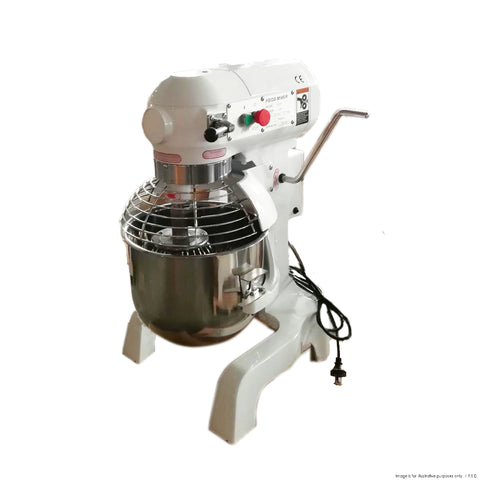

 BakerMAX 20 Litre Heavy Duty Mixer B20KG
530(W) x 496(D) x 780(H)mm
 Yasaki Spiral Dough Mixers 21L FS20M
495(W) x 684(D) x 961(H)mm

 AG 20 Litre Planetary Food & Dough Mixer P20
530(W) x 496(D) x 780(H)mm

 Mecnosud Tilting Head Removable Bowl Spiral Mixer - SMM0018
700(W) x 702(H) x 390(D)mm


 Tyrone Heavy Duty Planetary Mixer 20L – B20GX
484(W) x 518(D) x 690(H)mm

 Yasaki Tilting Head Removable Bowl 20L Spiral Dough Mixer HTD-20L
750(W) x 400(D) x 730(H)mm
 AG 20 Litre Commercial Spiral Mixer SPMF20
736(W) x 381(D) x 685(H)mm


 Hobart Centerline 20 Quart Planetary Mixer - HMM20-90A

 Mecnosud Tilting Head Removable Bowl Spiral Mixer - SMM0025
770(W) x 790(H) x 430(D)mm

 Tyrone Fixed Head Heavy Duty 23L Spiral Dough Mixer SCP23
500(W) x 730(D) x 770(H)mm
 Hobart 20 Quart Planetary Mixer - A200-2251-E-D
484(W) x 722(H) x 514(D)mm
 Mecnosud Forked Mixer 25kg - SMF0025
870(W) x 890(H) x 560(D)mm

 Anvil 20 Quart Planetary Mixer - PMA1020
417(W) x 802(H) x 486(D)mm

 Yasaki Tilting Head Dough Mixer - HRM-20
677(W) x 353(D) x 637(H)mm

 Moretti Forni Planetary Mixer with Variable Speed - 20L - MP20V
500(W) x 700(D) x 1200(H)mm
 Moretti Forni Single Speed Fixed Bowl Spiral Mixer - 15L - iM12
350(W) x 664(D) x 680(H)mm
 Moretti Forni Single Speed Fixed Bowl Spiral Mixer - 20L - iM18
380(W) x 680(D) x 680(H)mm

 Hobart 20 Quart Planetary Mixer With Bowl, Beater, Whip & Dough Hook - HL200-7STDA
490(W) x 740(H) x 580(D)mm
A 20 litre mixer handles the daily dough, batter and cream in a cafe or small bakery, and it is the size most of them settle on. It takes a worthwhile batch of dough without needing its own corner of the floor, and it is big enough that you are not mixing the same thing three times over. In quart-based listings the same machine appears as a 20 quart mixer.
If you are coming up from a 10 litre machine because batches have outgrown it, this is the usual next step. If bread volume is the reason, consider going straight to 30 litre.
Browse the whole commercial mixers range, or the bakery equipment collection for what comes after the mix.
Want a second opinion before you commit to a capacity? request a callback and we will go through your batch weights.
For a cafe baking its own rolls, focaccia or pizza bases, generally yes. For a bakery selling bread as its main line, it will be working hard, and the question becomes how many mixes you can fit into the morning before the oven becomes the limit.
A 20 qt dough mixer gives you a sensible dough batch per cycle; count how many cycles that is for your daily output and be honest about the time. If the answer is more than a few, size up or look at a spiral mixer.
Both exist. A benchtop machine at this capacity is heavy and needs a bench that will not move; a freestanding one is steadier, frees the bench and is the better choice where there is floor space for it.
If bench space is scarce but floor space is not, a freestanding machine or a stainless steel stand made for the job solves it. The counter top mixers range covers the bench options.
Many machines at this capacity run on a standard single-phase socket, but not all of them, and it depends on the model rather than the bowl size. The electrical requirement is listed on each product page.
Confirm the supply before the machine arrives rather than on delivery day. Our installation service can arrange the connection where one is needed.
A commercial mixer 20 quart and up normally has a hinged or sliding guard over the bowl with an interlock, so lifting it stops the machine. It is there because the tool is strong enough to take a hand with it.
Keep the interlock clean and never defeat it. A machine that suddenly will not start is very often a guard switch with flour packed into it, and that is a clean rather than a repair.
Not by much. What changes is how long the flour takes to be drawn in at the start and how long the dough takes to clear the bowl wall, and both are more about speed selection than about capacity.
They are two measuring systems describing the same bowl. A 20 qt mixer and a 20 litre machine sit in the same size bracket, so a 20 qt commercial mixer and a 20 quart dough mixer are both selling into the same part of the market.
Because the two units are close but not equal, use the dough capacity on the product page as the real comparison. The specifications page explains what we hold on file, and dough scrapers are worth adding to the order whatever the size.

We have a special page just for stock that's warehoused in Perth.
Click Here to see all WA stockWhat our customers say about us on Google, and how Google scores our store for things like shipping and returns.
Store scores from Google