


 03 9070 5784
 Help & Support
 Track My Order



Recently Viewed
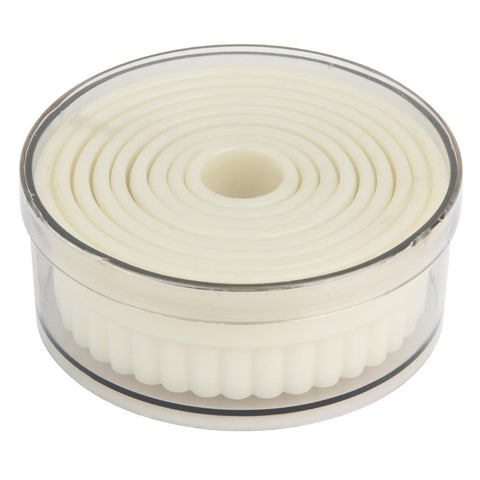

 Vogue Serrated Round Pastry Cutters Nylon (9 Pack) - JA523
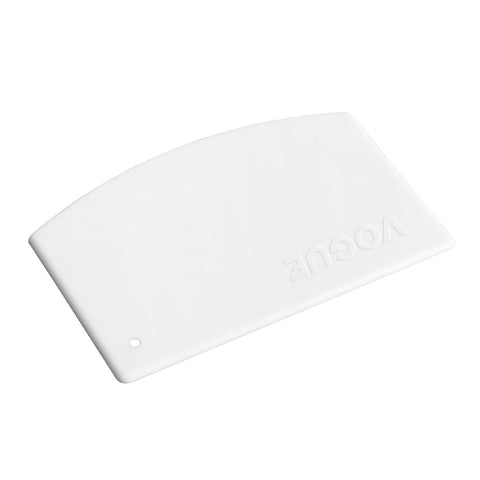

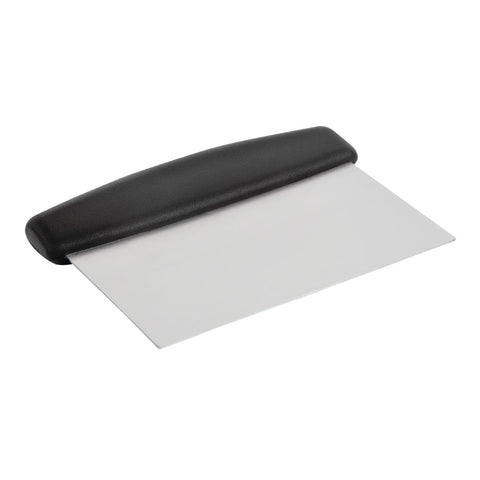


A dough scraper gets the dough out of the bowl and moves it around the bench without tearing it. Dough scrapers come in two patterns here: flexible plastic bowl scrapers that clear a mixing bowl far more completely than a hand or a spatula, and rigid bench scrapers that lift, divide and move dough. Delivered anywhere in Australia.
The two do different jobs and most bakers keep both within reach. A pastry scraper with a straight edge also doubles as a bench cleaner, which is what keeps a flour-covered bench workable through a shift.
Scrapers sit in the bakery accessories range alongside pastry brushes and measuring jugs.
Buying scrapers across a whole bakery? get a quote and we will price the order properly.
A bowl scraper is flexible plastic with one curved edge and one straight edge, so the curve follows the inside of a mixing bowl and the straight edge works on a flat surface. It is the tool for getting the last of a wet dough out of a bowl.
A bench scraper is a rigid blade with a handle along the top. It cuts, lifts and turns dough on the bench, and it scrapes the bench down afterwards. A bread dough scraper of this type is what you use for portioning by hand.
Plastic for bowls, because it flexes to the curve and will not mark the bowl surface. Stainless for the bench, because you want a rigid edge that will cut through dough and lift it cleanly.
Stainless blades in Australian commercial kitchens are normally 304 grade, which resists corrosion and takes repeated washing. Plastic scrapers should be rated for food contact and replaced once the edge is nicked.
Both, and you will use them constantly. A sourdough scraper in flexible plastic gets slack dough out of the bowl and tub, and a rigid blade is what lets you lift and fold it on the bench without it welding itself to the surface.
A sourdough bread scraper used wet rather than floured works better on very slack dough, because water releases where flour just absorbs. Keep a bowl of water next to the bench for it.
More than seems reasonable, because they disappear. They end up in the sink, in a tub of dough, in a pocket. A box of plastic scrapers and a few bench blades per station is the usual answer, kept with the baking trays and baking mats.
They are cheap enough that running out is the only real cost. A bakery scraper that has gone missing mid-mix costs more in lost time than a dozen replacements.
Washed with everything else and dried. Plastic scrapers go through a commercial dishwasher without trouble; check that a wooden or composite handle on a bench blade is rated for it, since many are not.
Inspect the edges when you wash them. A nicked plastic edge drags instead of scraping and the nick holds residue, which is a food-safety issue as much as a performance one.
Several things, depending on who is selling it. You will see bread scraper, scraper bread, bread scraper tool, pastry scrapers, bakery scrapers and baking dough scraper used for the same two or three basic tools.
Judge them on the material, the flex and the edge rather than the name. For cutting and shaping rather than scraping, see pastry cutters and rollers and the rest of the bakery equipment range.

We have a special page just for stock that's warehoused in Perth.
Click Here to see all WA stockWhat our customers say about us on Google, and how Google scores our store for things like shipping and returns.
Store scores from Google