


 03 9070 5784
 Help & Support
 Track My Order



Recently Viewed
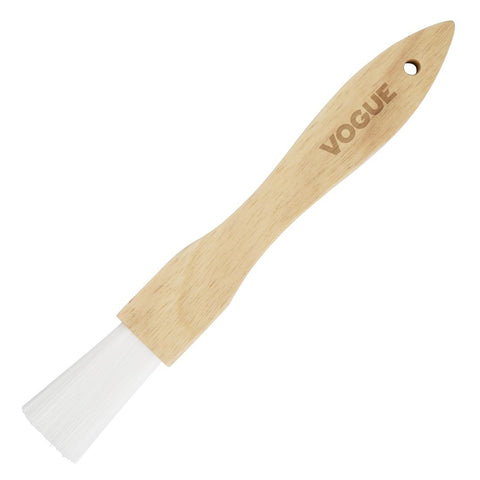

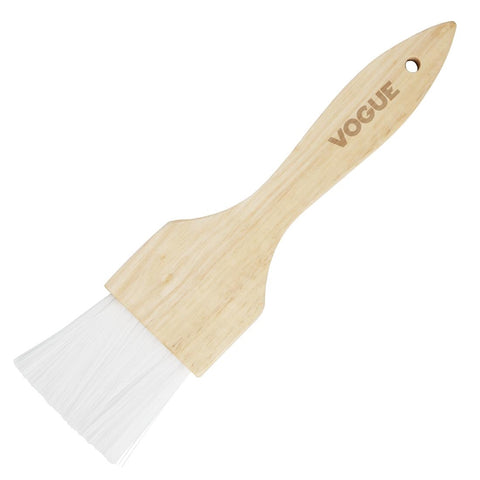

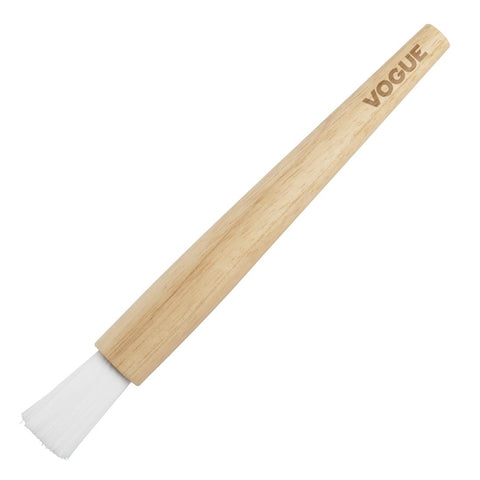

 Vogue Wooden Handle Round Pastry Brush 235mm - JA524
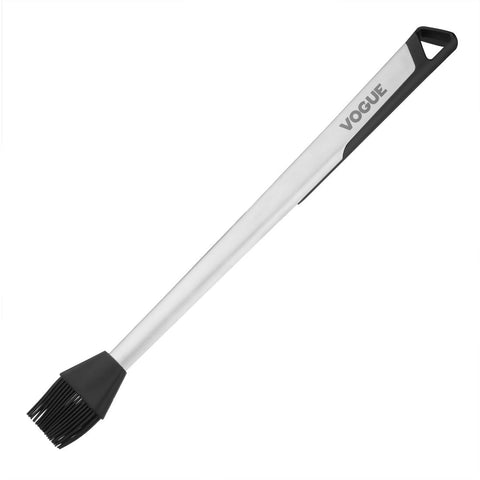

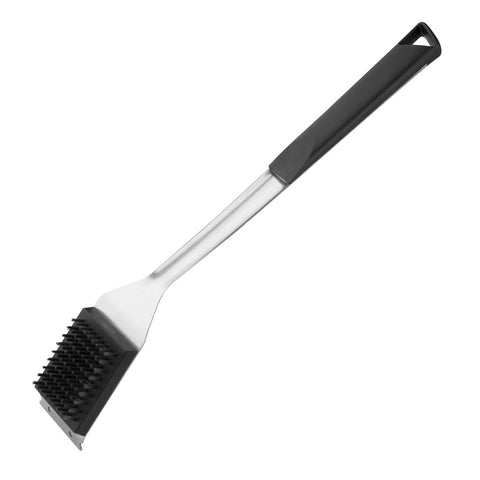

A pastry basting brush does two jobs: laying a thin, even glaze on pastry before it goes in the oven, and basting meat with hot fat. Commercial pastry brushes are chosen on bristle material and on whether the brush survives a commercial wash.
The failure most kitchens know is shedding. A brush that leaves bristles in the glaze has to be thrown out, and a loose bristle in a finished product is a complaint. That is what separates a professional pastry brush from a cheap one.
Brushes sit in the bakery accessories range alongside dough scrapers and baking mats.
Buying brushes across a whole kitchen? get a quote and we will price the order.
Silicone does not shed, washes clean, takes heat and handles hot fat, which is why basting brushes for the hot side are usually silicone. The trade-off is that it lays glaze less finely, so it can leave visible strokes on delicate pastry.
Natural and fine synthetic bristles hold more liquid and lay a thinner, more even film, which is what you want for egg wash on laminated pastry. They need more care and they are the ones that shed if they are poor quality.
No, and it is worth being strict about it. A cooking basting brush used on raw meat and hot fat should never go near a tray of pastry, both for cross-contamination and because fat residue ruins a glaze.
Keep separate brushes for sweet, savoury and raw work, and make it obvious which is which. Colour-coded handles are the simplest way to stop it happening in a rush.
Load lightly and work in one direction. Most unevenness comes from too much liquid on the brush, which pools at the edges and runs down the side of the product, then burns in the oven.
Keep the glaze in a shallow container rather than a deep one so the brush only picks up what it needs. A small measuring jug or a shallow gastronorm tray works well for it.
Silicone brushes, generally yes, and a commercial dishwasher is the easiest way to get fat out of the head. Natural-bristle brushes usually should not: the heat and detergent loosen the binding and that is what starts the shedding.
Wash bristle brushes by hand in warm soapy water, rinse thoroughly, shake out and hang or stand them bristles-up to dry. A brush left to dry lying in a drawer holds moisture in the ferrule.
When it sheds, when the bristles splay so it no longer lays an even film, or when the head loosens from the handle. All three are reasons to bin it rather than persevere.
Treat them as consumables and hold spares. A kitchen that is down to one usable brush ends up using the wrong one for the job.
Almost anything with brush in it. You will see basting brushes, cooking brushes, food brushes, baking brushes, brush for pastry, dough brush, kitchen pastry brush, kitchen basting brush, kitchen food brush, basting brush for cooking and pastry and basting brush used for essentially the same tool.
Compare the bristle material, how the head is fixed and the heat rating rather than the name on the listing. The rest of the pastry and baking supplies and bakery equipment ranges cover what goes with them.

We have a special page just for stock that's warehoused in Perth.
Click Here to see all WA stockWhat our customers say about us on Google, and how Google scores our store for things like shipping and returns.
Store scores from Google