


 03 9070 5784
 Help & Support
 Track My Order



Recently Viewed


 GasMAX Stand Suits Gg-12/ Lpg GG-12-SEN
334(W) x 650(D) x 689(H)mm


 ConvectMAX Convection Oven Stand YXD-6A-S
802(W) x 615(D) x 800(H)mm

 ConvectMAX Oven Stand - YXD-APE-8-SN
860(W) x 730(D) x 790(H)mm

 GasMAX Stand Suits Gg-36/lpg GG-36-SEN
912(W) x 650(D) x 689(H)mm

 GasMAX Stand Suits Rb-4e Or Rb-4elpg RB-4-SEN
599(W) x 600(D) x 659(H)mm

 GasMAX Stand Suits Gg-24/lpg GG-24-SEN
607(W) x 650(D) x 689(H)mm

 BakerMAX Stainless Steel Stand - TP-2-SD-S
1113(W) x 1219(D) x 860(H)mm

 GasMAX Stand Suits Rb-6e Or Rb-6elpg RB-6-SEN
899(W) x 600(D) x 659(H)mm
 GasMAX Stand RB-4-SE
600(W) x 600(D) x 650(H)mm
 BakerMAX Stainless Steel Stand TP-2-1-S
1111(W) x 960(D) x 1100(H)mm

 GasMAX Stand Suits Qr-24e / Elpg & Rgt-24e QR-24-SEN
352(W) x 600(D) x 659(H)mm
 GasMAX Stand Suits Qr-14e / Elpg QR-14-SEN
352(W) x 600(D) x 659(H)mm

 ConvectMAX Oven Stand - YXD-APE-6-SN
860(W) x 730(D) x 650(H)mm
 GasMAX Stand QR-24-SE
609(W) x 600(D) x 650(H)mm
 GasMAX JUS600 Stand Cabinet
598(W) x 512(D) x 555(H)mm
 BakerMAX Stand For Ep - EP-1-SD-S
1190(W) x 710(D) x 860(H)mm


 CookRite Stainless Steel Stand
615-1225(W) x 711(D) x 610(H)mm

 BakerMAX Stainless Steel Stand TP-2-S
1111(W) x 975(D) x 860(H)mm

 Modular Systems Stand For Fast Line Oven Range SOFF-90TS
750(W) x 580(D) x 900(H)mm

 GasMAX Stand Suits Rb-2e Or Rb-2elpg RB-2-SEN
299(W) x 600(D) x 659(H)mm
 GasMAX JUS600E Stand Cabinet
605(W) x 512(D) x 557(H)mm
 GasMAX Stand GG-36-SE
900(W) x 650(D) x 650(H)mm
 BakerMAX Stand For Ep - EP-1-1-SD-S
1190(W) x 710(D) x 960(H)mm
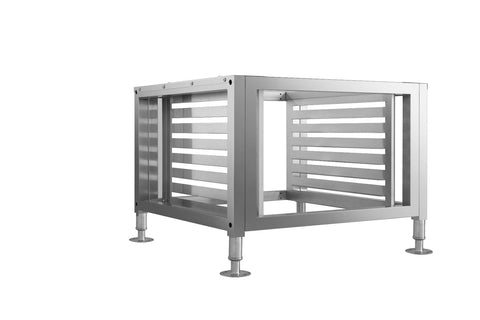

 Atosa 310 Atosa Combi Oven Stand with tray holders for EPC-0511E1 and 0711E2
811(W) x 751(D) x 581(H)mm
 Cookrite 1225mm Stainless steel Stand ATSE-2848
1225(W) x 711(D) x 610(H)mm

 Cookrite 915mm Stainless Steel Stand ATSE-2836
915(W) x 711(D) x 610(H)mm
 BakerMAX Stainless Steel Stand TP-2-1-SD-S
1113(W) x 1219(D) x 960(H)mm
 Modular Systems Stand For Fast Line Oven Range SOFR-90TS
620(W) x 580(D) x 900(H)mm
 GasMAX Stand RGT-16-SE
403(W) x 600(D) x 650(H)mm
 GasMAX Stand QR-48-SE
1219(W) x 600(D) x 650(H)mm
 GasMAX Stand Suits Qr-48e / Elpg & Rgt-48e QR-48-SEN
1217(W) x 600(D) x 659(H)mm

 GasMAX Stand Suits Qr-36e / Elpg & Rgt-36e QR-36-SEN
912(W) x 600(D) x 659(H)mm
 GasMAX Stand QR-14-SE
356(W) x 600(D) x 650(H)mm
 GasMAX JUS600S Stand Cabinet For Jus-tr-4
605(W) x 561(D) x 557(H)mm
 GasMAX JUS400E Stand Cabinet
405(W) x 512(D) x 557(H)mm

 GasMAX Stand Suits Gg-48/lpg GG-48-SEN
1217(W) x 650(D) x 689(H)mm
 GasMAX Stand GG-12-SE
336(W) x 650(D) x 650(H)mm
 BakerMAX Stand For Ep - EP-2-1-S
890(W) x 710(D) x 960(H)mm


 Brenner Ember Stainless Steel Cabinet Stand for CFO2-100R - CFO2-100-S
900(W) x 603(D) x 600(H)mm

 Brenner Ember Stainless Steel Cabinet Stand for CFO1-50R - CFO1-50-S
614(W) x 603(D) x 600(H)mm

 Brenner Ember Stainless Steel Cabinet Stand for CFO1L-70R - CFO1L-70-S
762(W) x 603(D) x 600(H)mm
 Brenner Forge 800 Series 1200mm width Stainless Steel Cabinet Stand - BREG8-1200E
1200(W) x 660(D) x 713(H)mm
 Brenner Forge 800 Series 900mm width Stainless Steel Cabinet Stand - BREG8-900E
900(W) x 660(D) x 713(H)mm
 Brenner Forge 800 Series 600mm width Stainless Steel Cabinet Stand - BREG8-600E
600(W) x 660(D) x 713(H)mm
 Brenner Forge 800 Series 300mm width Stainless Steel Cabinet Stand - BREG8-300E
300(W) x 600(D) x 713(H)mm
 Atosa Combi Oven Low Height Stand And Stacking Kit For EPC-0621E2 ASK-21
931(W) x 945(D) x 227(H)mm
 Atosa Combi Oven Stand With Tray Holders For EPC-0621E2 And 1021E3 ASR-62
931(W) x 959(D) x 690(H)mm
 Atosa Combi Oven Stand For EPC-0511E1 And 0711E2 AS-5171
811(W) x 751(D) x 581(H)mm
 Atosa Combi Oven Low Height Stand And Stacking Kit ASK-11
931(W) x 945(D) x 227(H)mm
 Atosa Combi Oven Stand For EPC-1011E2 AS-101
811(W) x 751(D) x 410(H)mm


 Mixrite Stainless Steel Equipment Stand for AT80G Series
308-1218(W) x 640(D) x 712(H)mm

 MixRite Stainless Steel Stand - Gas Series
308-1218(W) x 640(D) x 712(H)mm
A benchtop fryer, griddle or combi oven needs something to sit on that holds it at a working height, takes its weight without flexing and gives you the space underneath back as storage. That is the job a stainless steel kitchen stand does, and it is why the stand is usually ordered at the same time as the appliance rather than afterwards.
Suppliers name them inconsistently. You will see the same item sold as a stainless steel equipment stand, a stainless steel utility stand or an equipment stand stainless steel listing, and some trade catalogues shorten it to ss kitchen stand. A bare stainless equipment stand description without the grade spelled out is the same product again.
The range splits by what goes on top. Pizza oven stands are built for deck ovens, combi oven stands for combi steamers and their tray runners, convection oven stands for bakery ovens, and the gas and electric cooking equipment stands cover cooktops, griddles and fryers on either fuel.
Not sure which stand matches the appliance you have chosen? request a callback and we will check the footprint and the height with you before anything ships.
A bench is a work surface and a stand is a base for a machine. Benching is sized for prep, chopping and plating; a stand is sized to the appliance that sits on it, so the top matches the appliance footprint rather than the length of the room.
Benches will carry a benchtop appliance — many of ours are rated to 300kg — so this is not a rule against standing equipment on a bench. It is about what each one is sized for. Where you want both, run stainless steel benching along the prep side and a stand under the equipment, and check the rating on whichever one takes the load.
Work backwards from the appliance. Add the height of the unit to the height of the stand and check that the controls, the door and the cooking surface land somewhere a cook can use safely all shift. Too low and you are bending over a hot surface; too high and you cannot see into a pan.
The dimensions for each stand and each appliance are on their own product pages, and our specifications page explains how we list them. Measure the gap you have before you order, not after.
Most of them are built with an undershelf or an open base, so the space becomes working storage for pans, trays and containers rather than dead air. Pans in reach of the cook is the point.
If the stand you want has no shelf, a separate undershelf or a low modular shelving bay next to it does the same job. Keep anything stored under a cooking appliance clear of the burner line.
Fixed feet for anything connected to gas, a flue or plumbing, and for heavy equipment that you want to stay exactly where it was commissioned. Adjustable feet matter more than people expect, because very few commercial kitchen floors are level and an unlevel stand puts a twist through the appliance above it.
Castors suit light, portable equipment and anything you need to pull out to clean behind. If the equipment really needs to move through service, look at a purpose-built kitchen trolley instead of a stand on wheels.
That is set by the individual stand, not by the category, so the figure on the product page is the one to work to. Match it against the appliance weight, which the appliance product page lists, and leave yourself headroom rather than buying to the limit.
Two practical rules hold regardless: put the load over the frame rather than cantilevered off one end, and do not treat a stand rated for a benchtop griddle as a base for a full oven range.
Often yes, and it is about access rather than strength. A gas appliance needs the hose, isolation tap and connection reachable, which usually means an open back and a clear path to the wall; that is what the gas cooking equipment stands range is set up for.
An electric appliance needs the lead routed somewhere it will not be dragged across a hot surface, and the power point positioned to suit. The electric cooking equipment stands range allows for that. Where the appliance is a free-standing unit on its own legs, you may not need a stand at all.
Only if the top is long enough for both footprints with clearance between them, and the combined weight is inside what the stand is rated for. Two appliances pushed together also means two sets of controls competing for the same space, which slows a cook down.
A longer run of equipment is usually better handled by matching stands side by side so each appliance can be isolated, serviced or replaced on its own. Our team can map that out on a cooking equipment layout if you send through the list.
Like the rest of the stainless in the kitchen: wiped down with a cloth and a neutral detergent, in the direction of the grain, and dried rather than left wet. 304 stainless steel is the food-safety grade used in Australian commercial kitchens and it copes with daily washdown without pitting.
The part people miss is underneath and behind. Grease migrates down from the appliance above, so the undershelf and the legs need the same attention as the top. Keep a set of cleaning supplies at the cooking line so it happens at the end of each shift.
Yes, almost always. Ordering both together means the footprint, the height and the weight rating are checked once, by us, rather than after a stand has arrived and the oven does not sit on it.
It also keeps the delivery to one consignment, which matters when both items are heavy and need a tail-lift. Send us the appliance model you are looking at along with the stainless steel equipment you need around it.

We have a special page just for stock that's warehoused in Perth.
Click Here to see all WA stockWhat our customers say about us on Google, and how Google scores our store for things like shipping and returns.
Store scores from Google