


 03 9070 5784
 Help & Support
 Track My Order



Recently Viewed

 FryMAX 10 Conical Cooking Oil Filter Holder FM-CF

 FryMAX 50 × 10 Filter Paper Cones FM-PFC50

 FryMAX 42l Electric Oil Filter Machine EOF-42
457(W) x 727(D) x 914(H)mm

 Jantex Food Grade Surface Sanitiser Concentrate 5Ltr - FL857
190(W) x 270(H) x 130(D)mm
 Fry Essentials Fryer Cleaner And Boil Out Powder - AS-BOILOUT5KG
 Jantex Food Grade Surface Sanitiser Ready To Use 750ml - FL856
70(W) x 260(H) x 70(D)mm
 FryMAX Oil Filter Powder 90 × 135g Satchels FM-PD90/135G
 FryMAX Oil Filter Powder 50 × 250g Satchels FM-PD50/250G
 Jantex Medicated Hand Soap Soft Scent Liquid 5Ltr - FL866
190(W) x 270(H) x 130(D)mm

 Jantex Dual Bucket Mop Wringer with Frame - M880
410(W) x 860(H) x 995(D)mm

 FryMAX 25l Electric Oil Filter Machine - EOF-25
457(W) x 727(D) x 914(H)mm

 FryMAX Oil Filter Paper 100 Pcs AF-EOF100

 Jantex Green Floor Cleaner Concentrate 5Ltr - DU815


 Grilla Mate Stainless Steel Hangle Wire Brush Grill Scraper - GBP0001


 Filters for Vogue Oil Filter Cone (50 Pack) - CN958
 Jantex Soft Washable Broomhead Blue 457mm - DN832


 Jantex Oven & Grill Cleaner Ready To Use 5Ltr - FL955
190(W) x 270(H) x 130(D)mm
 Jantex Glass & Stainless Steel Cleaner Concentrate 5Ltr - FL860
190(W) x 270(H) x 130(D)mm
 Jantex Limescale Remover Concentrate 5Ltr - FL840
190(W) x 270(H) x 130(D)mm
 Jantex Surface Cleaner Concentrate 5Ltr - FL854
190(W) x 270(H) x 130(D)mm
 Jantex Bathroom Cleaner Concentrate 5Ltr - FL846
190(W) x 270(H) x 130(D)mm

 Jantex Yellow Duster Cloths (Pack of 10) - E943
 Jantex Soft Washable Broomhead Yellow 300mm - DN831

 Jantex 2-ply Jumbo Toilet Roll - DL919
86(W) x 240(H) x 62(D)mm

 Jantex Z Fold Paper Hand Towels Green 1-Ply 250 Sheets (Pack of 12) - DL923


 Jantex Colour Coded Spray Bottles Blue 750ml - CD817


 Jantex Colour Coded Spray Bottles Red 750ml - CD815


 Jantex Green Compostable Cleaning Cloth Blue (Pack of 200) - HT495

 Jantex Green Compostable Cleaning Cloth White (Pack of 200) - HT496

 Jantex Automatic Stainless Steel Hand Dryer 2500W - GD847-A


 3Monkeez Stainless Steel Soap Dispenser - Vertical - WA-SD-V

 CombiCLEAN DISHWASHER PACK (Clear Wash 2L + Rinse Aid 2L) - DH-PACK

 VITO® X Vacuum Filtration System - up to 30L/min filtration power & 75L Tank - 553mm x 1044mm x 883mm - XM

 Brenner 6-inch Heavy Duty Aluminium Grill Scraper with 16-inch Handle - GS-16AL
 3Monkeez Slimline Paper Towel Dispenser - WA-PTD
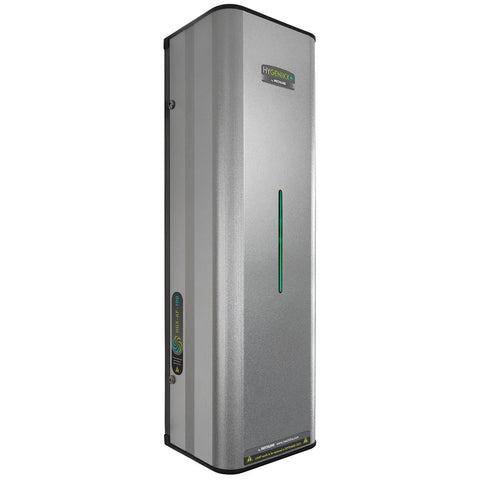

 HyGenikx Air & Surface Sanitiser 10m²-100m² Range Cover
135(W) x 400(D) x 110(H)mm

 HyGenikx HGX-T-25-O Small Area Air & Surface Sanitiser - Titanium
135(W) x 400(D) x 110(H)mm
 HyGenikx HGX-AF-100 Large Area Air & Surface Sanitiser 100m²
130(W) x 430(D) x 100(H)mm

 HyGenikx HGX-W-05-O Small Area Air & Surface Sanitiser - White
135(W) x 400(D) x 110(H)mm
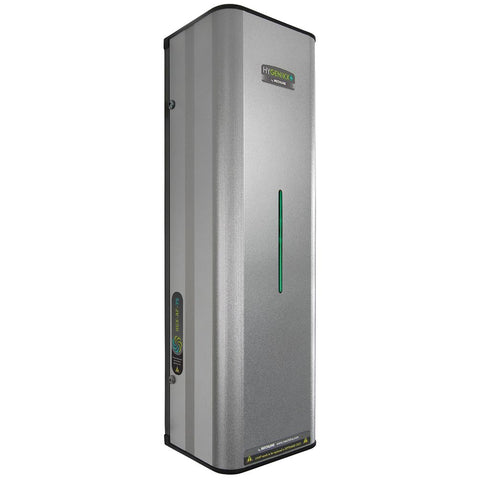
 HyGenikx HGX-AF-75 Large Area Air & Surface Sanitiser 75m²
130(W) x 430(D) x 100(H)mm
Commercial kitchen cleaning supplies cover every surface a kitchen has to get clean each day: degreasers for the cooking equipment, a general cleaner and a sanitiser for benches and floors, hand products for staff, and the machine chemicals that go into the dishwasher. They are bought on a cycle rather than once, so what you want is a set of commercial kitchen cleaning products that covers the whole kitchen and can be reordered as one list every month.
Commercial kitchen equipment cleaning is the part a general cleaner will not do, because carbonised fat needs a degreaser or an oven and grill product. Machine chemicals for dishes and glasses are different again, dosed into the machine rather than applied by hand. You can start with the areas that need covering now and add more as your business grows.
The second thing to get right is the tools, because a product is only as good as what applies it. Commercial kitchen washing equipment — mops, buckets, brushes, scrapers and cloths — wears out faster than the chemicals do and is the part most often run down to nothing.
The range covers cooking equipment cleaners, grill and griddle cleaners, surface and floor cleaners, disinfectant and sanitisers, dishwashing liquids and hand soaps and sanitisers.
Setting up a standing monthly order? Build it off the price guide, which prices the chemicals and the mops, cloths and brushes in the one place.
With the cleaning schedule, then buy to it. Work out what has to be cleaned daily, weekly and monthly, and which surface each job touches, and the product list falls out of that.
A bundle is a reasonable starting point if you would rather not build it from nothing. See cleaning kits and bundles and adjust once you know what gets used.
Cleaning removes soil and grease so a surface is physically clean. Sanitising reduces the microorganisms on an already clean surface. They are two steps, and sanitiser applied over grease does neither job.
That is why kitchens hold both a detergent and a sanitiser rather than one combined product for food contact surfaces.
A dedicated oven and grill degreaser, which is far more aggressive than a general surface cleaner and is formulated for carbonised fat. General cleaner on a grill plate is wasted effort.
Those products need the right protective equipment and ventilation. Rubber gloves are not optional with a strong degreaser, and the product label states what else is required.
In their original labelled containers, away from food, and separately from food-contact items. Decanting cleaning chemicals into unlabelled bottles is both a safety risk and an audit finding.
Keep the safety data sheets where staff can reach them. That is a requirement rather than a nicety, and it is the first thing an inspector asks for.
Mop heads, cloths and scouring pads, in that order. They are cheap and they are the items that quietly disappear, after which staff use a tea towel to do a mop's job.
Build mops and brushes, tea towels and cloths and squeegees and scrapers into the standing order rather than buying them when they run out.
It is the simplest way to stop a washroom mop being used in the kitchen, and most audited kitchens use it. Colour-coding buckets, cloths and mop heads by area removes the judgement call.
The washroom products should be separate too, not a stronger dose of the kitchen cleaner. See washroom and toilet cleaner.
They are dosed automatically into the machine rather than applied by hand, and the detergent and rinse aid are matched to the machine and the local water hardness. Using a hand dishwashing liquid in a machine will foam and can damage it.
Get the dosing set up with the machine. See dishwashing chemicals and the commercial dishwashers they go into.
Different surfaces and different soils, so different products. Beer lines, glassware and bar tops are their own set, and bar cleaning supplies covers them.
Front of house also needs its own cloths and sanitiser kept at the section rather than carried from the kitchen, which is how cross-contamination between areas happens.
Concentrates, where the kitchen has the dispensing set up for them, and bulk sizes on the lines you use constantly. Industrial kitchen cleaning supplies in concentrate cost substantially less per use than ready-to-use bottles.
The catch is dilution discipline. Industrial kitchen cleaning products dosed by eye are either ineffective or wasteful, so a concentrate only saves money where there is a dosing system or a marked bottle for it.
Paper, gloves and bin liners, because they are the items that stop a kitchen when they run out. Professional kitchen cleaning products get the attention; the consumables around them are what actually halt a shift.
See paper towel and dispensers, mop buckets and wringers and the commercial kitchen rubbish bins range.

We have a special page just for stock that's warehoused in Perth.
Click Here to see all WA stockWhat our customers say about us on Google, and how Google scores our store for things like shipping and returns.
Store scores from Google