


 03 9070 5784
 Help & Support
 Track My Order



Recently Viewed
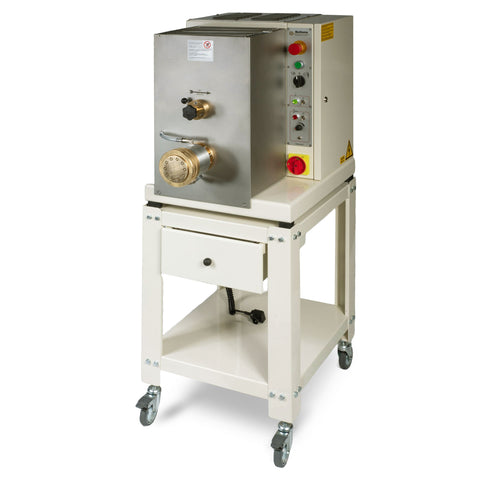

 Bottene Pasta Machine PM96 - PMB1096
500(W) x 1350(H) x 720(D)mm
 Bottene Ravioli Maker - RMB0090
440(W) x 660(H) x 450(D)mm
 Bottene Pasta Machine PM80 3PH - PMB1080
500(W) x 1270(H) x 700(D)mm
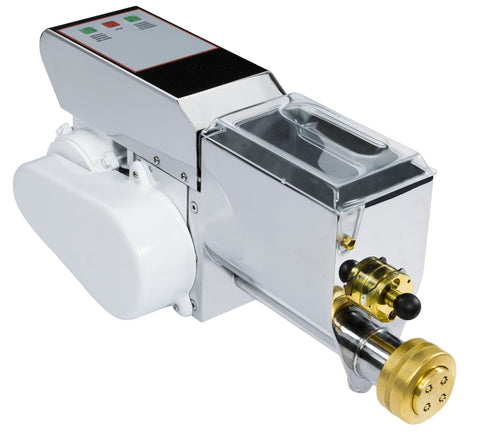
 Bottene Lillodue Automatic Pasta Machine - PMB0002
250(W) x 250(H) x 530(D)mm
 Bottene Pasta Machine PM80 1PH - PMB0080
500(W) x 1270(H) x 700(D)mm
 Bottene Pasta Machine PM50 - PMB0050
680(W) x 550(H) x 420(D)mm
 Bottene Pasta Machine PM35 - PMB0035
560(W) x 540(H) x 400(D)mm
Making pasta in-house puts the shape, the thickness and how fresh it is in your hands instead of a supplier's. There are two ways to do it and we sell both kinds of commercial pasta machine. A roller pasta machine sheets a stiff egg dough to the thickness you want and cuts it into ribbons, or leaves it as sheets for filled pasta and lasagne. An extruder pushes a firmer dough through a die, which is how you get tubes, spirals and short shapes. Delivered anywhere in Australia.
Buy the rest of the pasta section at the same time — pastry sheeters, dough rollers and the wider dough processing equipment range — so it is one order to track and one number to call if something goes wrong, instead of chasing several suppliers.
Silverchef Rent-Try-Buy can fund a commercial pasta maker now, with the option to upgrade or hand equipment back as things change.
Look at your menu. If it is tagliatelle, pappardelle, ravioli and lasagne, you need sheets, and a roller machine is the tool. If it is penne, rigatoni, fusilli or orecchiette, you need an extruder and a set of dies.
Kitchens that want both usually buy the roller first, because sheets and ribbons cover more classic dishes and the dough is easier to get right. Extruded shapes are less forgiving of a dough that is slightly too wet or too dry.
More than people expect in the first month and less than they fear after that. The dough has to be made, rested, sheeted and cut, and fresh pasta has a short life, so production has to match what you actually sell.
The practical answer for most kitchens is a daily or second-daily production run, with the finished pasta held in bakery fridges and freezers or frozen in portions.
A dedicated pasta cooker is the usual answer, because boiling pasta in a stockpot on a range ties up a burner and a pair of hands. See benchtop pasta cookers for the compact option.
At minimum you need a large pot, a basket and somewhere to drain. Commercial stock pots in a size matched to your burner are the starting point.
No. Dies and cutter heads are made for a specific machine, so the range available for a given model is part of what you are buying. Check what is supplied and what else can be fitted before you order.
It is worth planning two or three shapes you will definitely sell and confirming those are available, rather than buying a machine and discovering the shape you wanted is not an option.
Dry, mostly. Pasta dough is stiff and comes off far more easily once it has dried for a while, so many manufacturers specify brushing and dry cleaning rather than washing, particularly for extruder dies.
Follow the manufacturer's instructions exactly on this one, because washing a part that was meant to be brushed can ruin it. Food contact surfaces that are washable are normally 304 stainless steel.
A commercial pasta maker will sheet some pastry and noodle doughs, but it is made for a stiff pasta dough and it is not a substitute for a laminating sheeter. Using it for butter-laminated pastry will disappoint you.
Keep the right tool for each job: a pastry sheeter for laminated work, a commercial mixer for the dough itself, and the pasta machine for pasta. The wider bakery equipment range covers all three.

We have a special page just for stock that's warehoused in Perth.
Click Here to see all WA stockWhat our customers say about us on Google, and how Google scores our store for things like shipping and returns.
Store scores from Google