


 03 9070 5784
 Help & Support
 Track My Order



Recently Viewed

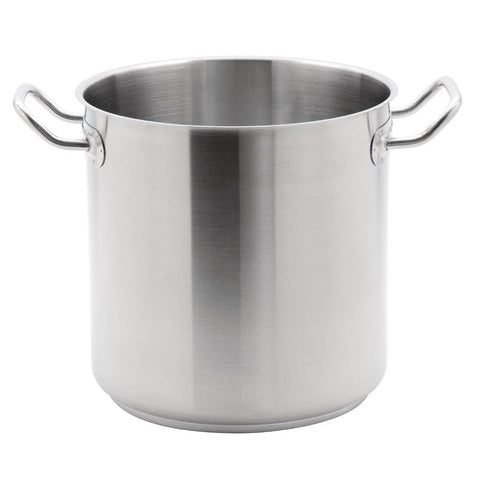

 Vogue Deep Stock pot 20.5Ltr - T193
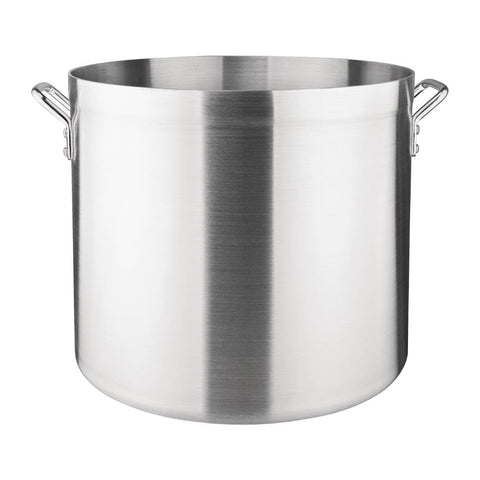

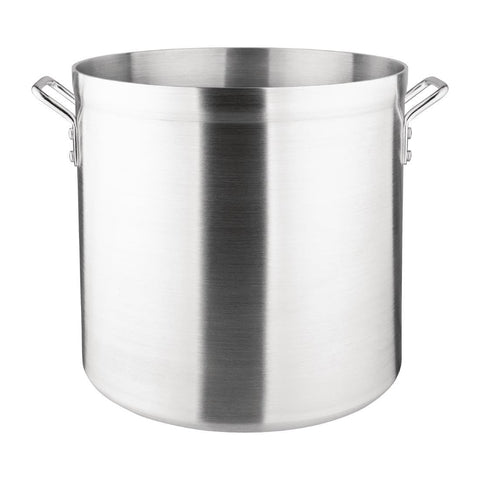

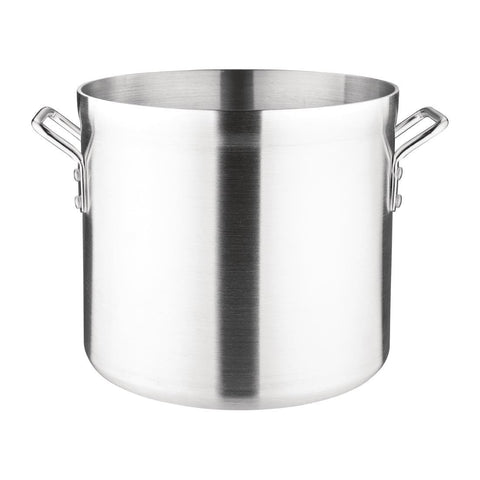


 Vogue Deep Stock pot 10.5Ltr - T192
 Vogue Deep Stock pot 35.5Ltr - T555
360(W) x 360(H) x 360(D)mm


 Vogue Deep Stock pot 49Ltr - T556
400(W) x 400(H) x 400(D)mm

 Luus WZ-17SP 650mm Commercial Gas Waterless Stockpot Boiler WZ-17SP-LPG
650(W) x 800(D) x 1300(H)mm
 Luus WZ-17SP 650mm Commercial Gas Waterless Stockpot Boiler WZ-17SP-NG
650(W) x 800(D) x 1300(H)mm


 Vogue Deep Boiling Pot Lid 285mm - S358
285(W) x 20(H) x 285(D)mm


 Vogue Aluminium Double Boiling Pot 10Ltr - K645

 Vogue Aluminium Double Boiler 4Ltr - K643
Stock pots are the tall, straight-sided pots a kitchen uses for stock, soup, braising liquid and pasta. Commercial stock pots are built for volume and for the long, slow simmering that a thin pot cannot do without scorching the base.
Tall and narrow is deliberate: it reduces the surface area so a stock reduces slowly over hours instead of boiling away.
They sit in the bakery accessories range and in the wider commercial cookware collection, alongside sauce pans.
Fitting out a kitchen across several pot sizes? get a quote and we will price them as a set.
By the batch you make and the burner you have, in that order. A pot wider than its burner heats unevenly at the edges, and a pot much narrower than the burner wastes heat up the sides.
Measure the burner and match the base diameter to it. For anything larger than a standard range burner, a gas stock pot burner is the right base, and for volume production an induction stockpot boiler or boiling pan takes over.
Thickness and construction. A heavy, clad or encapsulated base spreads heat across the bottom so a reducing stock does not catch in a ring over the burner. A thin base is the single biggest cause of scorched stock.
Check also that the base is flat and stays flat. A pot that rocks on the burner will heat unevenly from the first use.
Aluminium is lighter and conducts heat faster, which suits boiling water and pasta. Stainless is more durable, does not react with acidic ingredients, and 304 is the food-safety grade used in Australian commercial kitchens.
Most kitchens run stainless for stock and sauce work where long contact times and acidity are involved, and keep aluminium for pasta and water.
Lids, yes — they control evaporation and speed up coming to the boil, and they are often sold separately. Pasta baskets are worth having if the pot is used for service rather than production.
A draw-off tap is a feature on larger pots and it saves ladling a full pot of hot stock. If you are decanting hot liquid regularly, it is worth the money, as are measuring jugs rated for heat.
Two people, or not at all. A full stock pot is heavy, the contents move, and the handles are hot. The safest answer is to decant rather than carry, which is why taps and ladles exist.
Keep the route clear and never carry a full pot up or down a step. A kitchen trolley at the right height removes most of the risk.
Quickly, and not in the pot. Hot stock left to cool on the bench spends hours in the temperature range where bacteria grow, so it should be broken into shallow containers and chilled hard.
A blast chiller is the proper tool, with gastronorm trays or food storage containers to hold it afterwards.

We have a special page just for stock that's warehoused in Perth.
Click Here to see all WA stockWhat our customers say about us on Google, and how Google scores our store for things like shipping and returns.
Store scores from Google