


 03 9070 5784
 Help & Support
 Track My Order



Recently Viewed


 FED-X Thermaster Stainless Steel Upright Static Display Freezer XF400SG
600(W) x 585(D) x 1850(H)mm


 Polar C-Series Curved Door Display Fridge White 235Ltr - CB509-A
515(W) x 1690(H) x 485(D)mm


 Bonvue Bench Top Gelato / Ice Cream Display Showcase CGD-03B
670(W) x 750(D) x 360(H)mm


 Thermaster 1500L 3 Door Supermarket Freezer Black LG-1500BGBMF
1880(W) x 740(D) x 2039(H)mm

 Bonvue Chilled Cake Showcase Food Display SL840V
1200(W) x 740(D) x 1350(H)mm

 FED-X S/S Two Full Glass Door Upright Freezer XURF1200G2V
1340(W) x 840(D) x 2000(H)mm

 FED-X S/S Full Glass Door Upright Freezer XURF600G1V
680(W) x 840(D) x 2000(H)mm
 Thermaster Heavy Duty Supermarket Glass Sliding Lid Freezers 406L SD-406K
1216(W) x 745(D) x 845(H)mm

 Bonvue Chilled Cake Showcase Food Display SL830V
900(W) x 740(D) x 1350(H)mm

 FED-X 555L Single Glass Door Freezer - XF600SG
777(W) x 695(D) x 1890(H)mm

 Bonvue Pre-Assembled Two Layer Ambient Showcase AD2-550
550(W) x 398(D) x 381(H)mm

 Bonvue Pre-Assembled Two Layer Ambient Showcase AD2-830
827(W) x 368(D) x 366(H)mm

 Polar C-Series Glass Door Display Freezer 365Ltr White - CB921-A
600(W) x 1855(H) x 585(D)mm


 Bromic Display Chest Freezer - 670L - Flat Glass Top CF0700FTFG-NR
2055(W) x 629(D) x 892(H)mm

 Bonvue Chilled Cake Showcase Food Display SL860V
1800(W) x 740(D) x 1350(H)mm

 Thermaster 800L Upright Double Glass Door Freezer – LG-800PF
1220(W) x 693(D) x 2008(H)mm

 Thermaster 1500L 3 Door Supermarket Freezer LG-1500GBMF
1880(W) x 760(D) x 2003(H)mm

 Thermaster Display Freezer With Glass Door HF600G S/S
777(W) x 695(D) x 1890(H)mm

 Bonvue Modern 3 Shelves Cake Showcase Food Display GAN-1800RF3
1800(W) x 730(D) x 1350(H)mm
 Thermaster Heavy Duty Supermarket Glass Sliding Lid Freezers 666L SD-666K
1846(W) x 745(D) x 845(H)mm

 Thermaster 1006L Black Upright Double Glass Door Freezer LG-1006DF
1253(W) x 750(D) x 2092(H)mm
 Thermaster Heavy Duty Supermarket Glass Sliding Lid Freezers 306L SD-306K
1006(W) x 745(D) x 845(H)mm

 Anvil Square Glass Display 3 Tier - NDSV3740
1200(W) x 1200(H) x 680(D)mm

 Bonvue Pre-Assembled Two Layer Ambient Showcase AD2-900
920(W) x 398(D) x 381(H)mm

 Bromic Cake Display - 1500mm - 4 Tier FD4T1500C-NR
1500(W) x 740(D) x 1360(H)mm
 Bromic Gelato / Ice Cream Display Freezer - 7 Basket GD0007S-NR
1298(W) x 615(D) x 1296(H)mm
 Thermaster Supermarket Panorama 2 Door Chiller Display DC-125B
1310(W) x 740(D) x 2060(H)mm
 Anvil Square Glass Display 4 Tier - NDSV4750
1500(W) x 1350(H) x 680(D)mm
 Anvil Square Glass Display 3 Tier - NDSV3730
900(W) x 1200(H) x 680(D)mm

 Bonvue Chilled Cake Showcase Food Display SL850V
1500(W) x 740(D) x 1350(H)mm

 Bonvue Ambient Benchtop Display AD1-550KW
550(W) x 390(D) x 200(H)mm

 Polar G-Series Countertop Display Freezer - GC889-A
620(W) x 718(H) x 590(D)mm

 Polar G-Series 2 Door Upright Display Freezer 920Ltr White - GH507-A
1370(W) x 2022(H) x 720(D)mm

 Bromic Display Chest Freezer - 401L - Flat Glass Top CF0400FTFG-NR
1298(W) x 629(D) x 892(H)mm

 Thermaster Double Door Supermarket Freezer LG-1000BGBMF
1253(W) x 760(D) x 2003(H)mm


 AG Sliding Glass Door Chest Freezer - 445 Litre SD520Q

 Bromic Cake Display - 1800mm - 4 Tier FD4T1800C-NR
1800(W) x 740(D) x 1360(H)mm

 Bromic Display Chest Freezer - 191L - Flat Glass Top CF0200FTFG-NR
719(W) x 629(D) x 892(H)mm
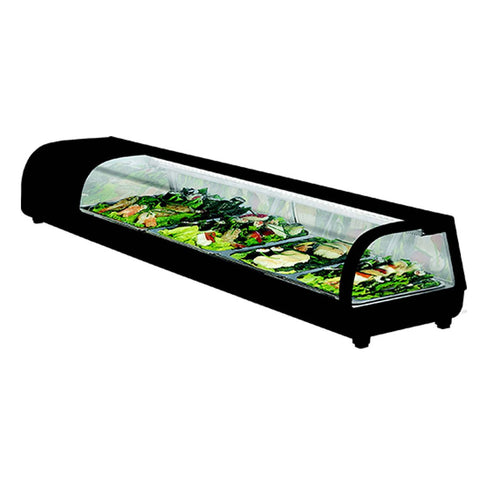
 Thermaster Sushi Showcase SSS4
1199(W) x 391(D) x 289(H)mm
 Thermaster Supermarket Panorama 3 Door Chiller Display DC-187B
1935(W) x 740(D) x 2060(H)mm
 Anvil Freezer Undercounter Glass Door - FBFG2204
598(W) x 838(H) x 679(D)mm
 Thermaster Heavy Duty Chest Freezer With Glass Sliding Lids WD-520F
1500(W) x 700(D) x 903(H)mm
 Thermaster Heavy Duty Supermarket Glass Sliding Lid Freezers 576L SD-576K
1656(W) x 475(D) x 845(H)mm

 Thermaster 2248L 4 Door Supermarket Fridge Black LG-2200BGBM
2508(W) x 740(D) x 2039(H)mm

 Bonvue Pre-Assembled Single Layer Ambient Showcase AD1-1200
1200(W) x 330(D) x 200(H)mm

 FED-X S/S Two Full Glass Door Upright Freezer XURF1410G2V
1480(W) x 860(D) x 2000(H)mm

 Thermaster 400L Gelato Display - SD-415P
1350(W) x 838(D) x 1270(H)mm

 Bromic Display Chest Freezer - 491L - Flat Glass Top CF0500FTFG-NR
1548(W) x 629(D) x 892(H)mm

 Bromic Upright Display Freezer - 300L - 1 Door - Flat Glass UF0374S-NR
595(W) x 620(D) x 1925(H)mm

 Thermaster Four-Sided Upright Beverage Display Fridge Ivory-White LSC235
515(W) x 485(D) x 1618(H)mm

 Thermaster 400L Upright Single Glass Door Freezer – LG-400PF
670(W) x 693(D) x 2008(H)mm
 Anvil Square Glass Display 4 Tier - NDSV4740
1200(W) x 1350(H) x 680(D)mm
Cold food displays hold prepared food at a safe chilled temperature while customers see exactly what is on offer. A cold food display works hardest in the places where people buy with their eyes: a cafe counter at lunch, a bakery cabinet, a deli window, a self-serve fridge in a food court.
The category covers several formats. A commercial cold food display can be a countertop cabinet beside the till, a serve-over case with staff behind it, or an open multideck the customer reaches straight into. A chilled food display of any format is doing two jobs at once: food safety and merchandising.
This is the parent category. Sitting under it are deli display fridges, cake display fridges, cold bain marie displays, commercial open display fridges, counter top food displays, sushi bar displays, seafood displays, ice cream displays and display freezers, along with supermarket fridges and freezers for full-store refrigeration.
Working out a full counter layout? Get a quote and we will price the formats that fit your space.
Visibility. A standard fridge is built to hold stock at temperature behind a solid door, where nobody sees it. A cold food display is built to hold food at temperature while it is on show, with lighting, glass and shelf layouts designed around presentation.
For bulk storage behind the scenes, commercial upright fridges and commercial under bench fridges do that job better and more cheaply.
Serve-over cases suit staff-served food such as meats, cheeses and salads, and that is what deli display fridges are built for. Countertop display fridges suit pre-packed items beside the till.
For self-serve volume, commercial open display fridges move the most stock per metre. For sweets, cake display fridges control humidity so icing and cream hold their finish.
Cold food safety requirements are set by your local food authority, and the cabinet has to hold that temperature through service rather than only when it is full and undisturbed. Each product page lists the operating range for that model.
Two practical points matter as much as the number: do not load above the marked line, and keep the cabinet out of direct sun and away from heat-producing equipment.
They need the same clear airflow path as any refrigerated unit. The condenser sheds heat, and if it cannot breathe, the cabinet runs hot and fails early. Manufacturer clearances are on the product page and are a minimum, not a target.
This catches people out most often when a cabinet is built into new joinery. Check whether the model is specified for built-in or free-standing use before the cabinetry is made.
Yes, and most venues do, but keep a gap between them. A hot unit radiates heat and steam into the cold cabinet, which makes it work harder and can fog the glass.
For the hot side, hot food displays and bain marie displays cover the same counter positions, and ambient food displays suit bread and packaged goods that need neither.
Only as long as your food safety plan allows. The cabinet holds temperature; it does not extend shelf life. Rotate through the day and discard what is past time.
Check temperatures with food thermometers.
Curved glass gives a softer look and slightly better visibility from the side; square glass is easier to clean and usually cheaper to replace.
Open cabinets benefit most: a blind or cover after close cuts compressor load overnight. Glass door cabinets do not need one.

We have a special page just for stock that's warehoused in Perth.
Click Here to see all WA stockWhat our customers say about us on Google, and how Google scores our store for things like shipping and returns.
Store scores from Google