


 03 9070 5784
 Help & Support
 Track My Order



Recently Viewed
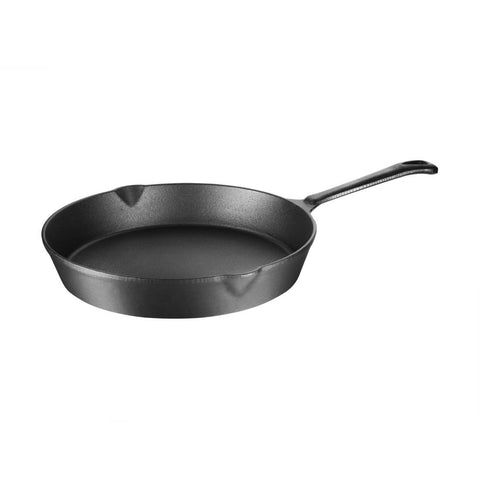

 Vogue Round Cast Iron Skillet Pan 255mm - M655
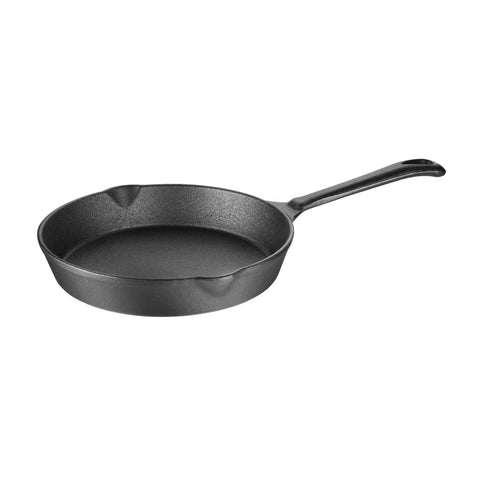
 Vogue Round Cast Iron Skillet Pan 203mm - M654
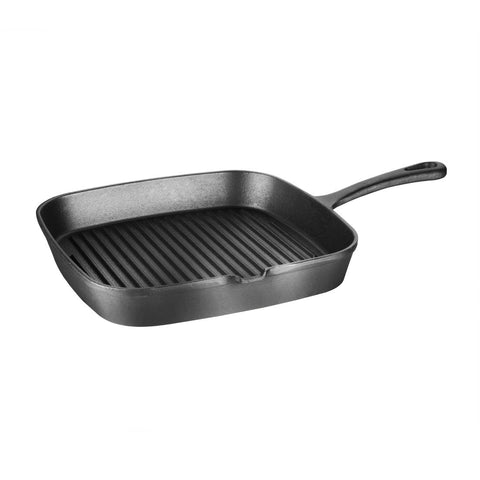
 Vogue Square Cast Iron Ribbed Skillet Pan - M653
241(W) x 50(H) x 241(D)mm
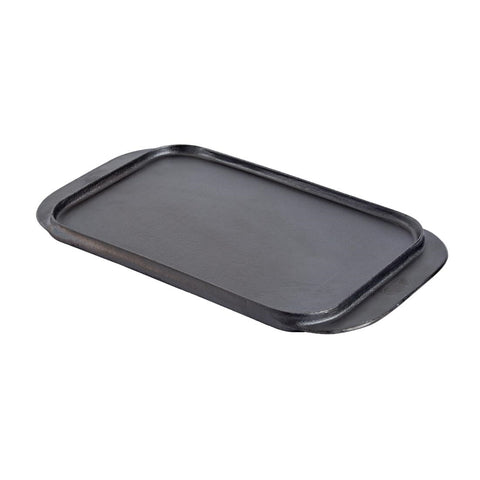
 Vogue Reversible Cast Iron Double Griddle Pan - M650
482(W) x 10(H) x 260(D)mm
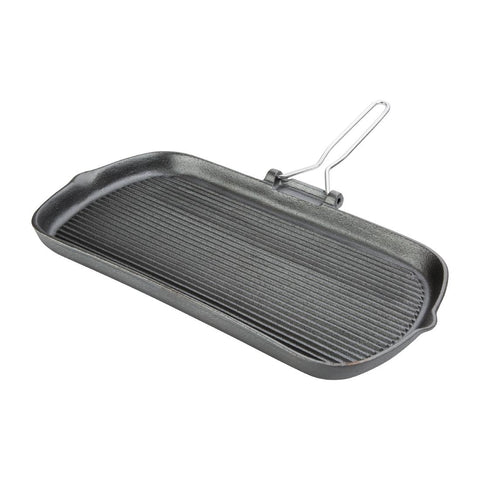
 Vogue Cast Iron Grill Pan - K417
229(W) x 37(H) x 381(D)mm
A commercial skillet is a heavy, flared pan built for high heat: searing, finishing in the oven, and in a lot of venues going straight to the table as the serving dish. Commercial skillet pans earn their place because one pan covers all three jobs.
A professional skillet pan is heavier than a domestic one, which is what keeps it searing when cold food hits the surface instead of dropping its heat, and its handle is made to go in the oven.
They sit in the bakery accessories range alongside roasting pans, and in the wider commercial cookware collection.
Buying skillets across several sizes for a new kitchen? get a quote and we will price the set.
Cast iron holds heat best, which is what you want for searing and for a pan that goes to the table still sizzling. It needs seasoning, it does not like being left wet, and it is heavy. See cast iron cookware.
Stainless steel is lighter, easier to maintain and dishwasher-friendly, and a good one has a heavy clad base to make up for the lower thermal mass. 304 stainless is the food-safety grade used in Australian kitchens. See stainless steel cookware.
Cast iron and magnetic stainless will; aluminium and some stainless grades will not unless they have a magnetic base layer. The product page states compatibility.
If your range is induction, check every pan before you buy, because a pan that does not couple simply does not heat. Browse the frying pans range for induction-rated options.
A small one for single portions and sauces, a mid-size one for most à la carte work, and a large one for batch cooking. Most kitchens use the mid-size for the majority of service and hold several of them.
Count how many go on the range at once during a rush, not how many you own. That is the number that matters.
Usually, and that is a large part of the point: sear on the range, finish in the oven, serve in the pan. The limit is the handle, so check its stated oven rating.
Riveted metal handles generally take oven heat; any handle with a plastic or composite grip has a temperature limit that will be on the product page. Treat that limit seriously.
Stainless washes normally and will take a commercial dishwasher unless the manufacturer says otherwise. Cast iron is washed by hand, dried on the heat and wiped with a little oil, and it should never be left to sit wet.
Avoid thermal shock in both cases: no cold water into a screaming hot pan. That is what warps bases and cracks iron.
Many venues do it, and it keeps the food hot right through the meal. What it needs is a board or trivet for the table and staff who know the handle is hot, because a pan that comes off the heat stays dangerous for a long time.
Service boards, trivets and serving trays are the usual accompaniment. The rest of the bakery equipment range covers the pans and trays around them.

We have a special page just for stock that's warehoused in Perth.
Click Here to see all WA stockWhat our customers say about us on Google, and how Google scores our store for things like shipping and returns.
Store scores from Google