


 03 9070 5784
 Help & Support
 Track My Order



Recently Viewed

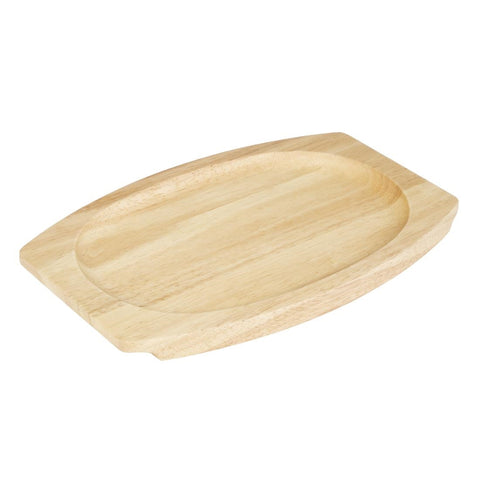

 Olympia Hevea Board for Cast Iron Oval Sizzler 335x205mm (GJ557) - FW979
205(W) x 19(H) x 335(D)mm
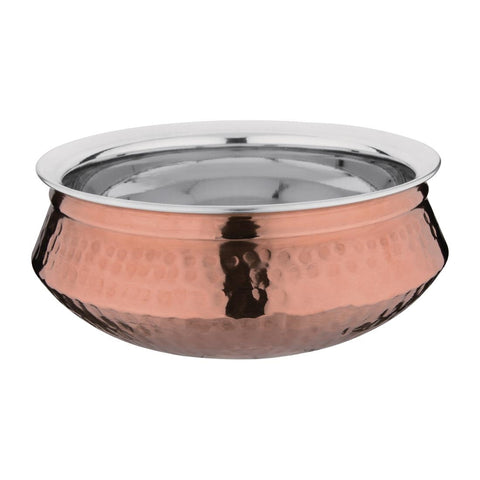
 Olympia Large Handi Serving Dish Copper 200(Ø)mm - FE299
200(W) x 83(H) x 200(D)mm
 Olympia Flat Bottomed Medium Balti Serving Dish - F470
170(W) x 48(H) x 170(D)mm
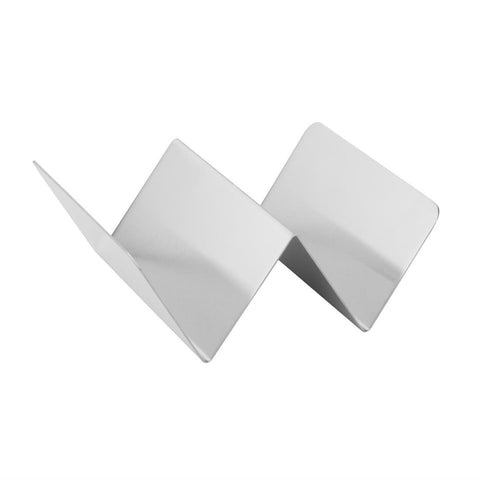
 Olympia Taco Holder Stainless Steel - CK912
135(W) x 55(H) x 115(D)mm

 Olympia Kristallon Polypropylene Round Non-Slip Trays (6 Pack) - S658
356(W) x 20(H) x 356(D)mm

 Olympia Footed Bowl Mango Wood 280mm - HY758
280(W) x 120(H) x 280(D)mm

 Olympia Round Handled Display Stand Mango Wood with Metal Legs 400x300x80mm - HY754

 Olympia 3-Tier Stand Mango Wood for 200mm Plates - HY751

 Olympia Round Display Stand Mango Wood with Metal Legs 250x80mm - HY753

 Olympia Round Display Stand Mango Wood with Metal Legs 300x80mm - HY752

 Olympia Round Handled Display Stand Mango Wood with Metal Legs 350x250x80mm - HY755

 Olympia 3-Tier Stand Mango Wood for 150mm Plates - HY750

 Olympia Table Presentation Stainless Steel Mini Sauce Pan 70x45mm - HY131
70(W) x 45(H) x 160(D)mm

 Olympia Copper Kadai Dish Stainless Steel Brass Handles 660ml - HY129
164(W) x 49(H) x 200(D)mm

 Olympia Table Presentation Square Dish Stainless Steel 115x115mm - HY123
116(W) x 45(H) x 169(D)mm

 Olympia Hammered Stainless Steel Round Tray 320x35mm - HY125
320(W) x 39(H) x 320(D)mm

 Olympia Table Presentation Handled Dish Stainless Steel Hammered 125mm - HY110

 Olympia Table Presentation Double Handle Dish Stainless Steel 180mm - HY102
180(W) x 34(H) x 180(D)mm

 Olympia Table Presentation Mini Paella Pan Stainless Steel 150mm - HY104

 Olympia Table Presentation Handled Dish Stainless Steel Hammered 180mm - HY112
180(W) x 46(H) x 180(D)mm

 Olympia Table Presentation Hammered Kadai Dish Stainless Steel 150mm - HY105
150(W) x 60(H) x 193(D)mm

 Olympia Table Presentation Double Handle Dish Stainless Steel 125mm - HY100
125(W) x 48(H) x 179(D)mm

 Olympia Table Presentation Mini Paella Pan Stainless Steel 120mm - HY103

 Olympia Table Presentation Hammered Kadai Dish Stainless Steel 170mm - HY106
170(W) x 64(H) x 210(D)mm

 Olympia Table Presentation Double Handle Dish Stainless Steel 150mm - HY101
150(W) x 47(H) x 204(D)mm

 Olympia Rectangular Paddle Board Acacia Wood With Metal Handle 575x152mm - HX391
152(W) x 20(H) x 575(D)mm

 Olympia Round Paddle Board Acacia Wood Metal Handle 458x305mm - HX389

 Olympia Kristallon Anti-Slip Fibreglass Rectangular Tray Black - 455x655mm - HY139

 Olympia Kristallon Handled Fast Food Tray Black 435x305mm - HY809

 Olympia Kristallon PC Round Non Slip Tray with Handles 300mm - DP664
300(W) x 42(H) x 300(D)mm

 Olympia Medium Handi Serving Dish Copper 150(Ø)mm - FE298
150(W) x 60(H) x 150(D)mm
 Special Offer Olympia Kristallon Polypropylene Non-Slip Trays Combo (12 Pack) - S440


 Olympia Kristallon Polypropylene Fast Food Tray White Large 450mm - GF997

 Olympia Kristallon Polypropylene Fast Food Tray White Medium 415mm - GF996

 Olympia Kristallon Polypropylene Fast Food Tray White Small 345mm - GF995


 Olympia Whiteware Serving Rectangular Platters 250x 150mm (4 Pack) - CC894


 Olympia Kristallon Polypropylene Foodservice Tray 350 x 450mm Blue - P512

 Olympia Kristallon Polypropylene Foodservice Tray 350 x 450mm Green - P511

 Olympia Kristallon Polypropylene Foodservice Tray 350 x 450mm Red - P510

 Olympia Kristallon Polypropylene Foodservice Tray 305 x 415mm Red - P504

 Olympia Kristallon Polypropylene Foodservice Tray 305 x 415mm Blue - P506

 Olympia Kristallon Polypropylene Foodservice Tray 305 x 415mm Brown - P503

 Olympia Kristallon Polypropylene Foodservice Tray 350 x 450mm Grey - P508

 Olympia Kristallon Polypropylene Foodservice Tray 305x415mm Grey - P502

 Olympia Kristallon Polypropylene Foodservice Tray 350 x 450mm Brown - P509

 Olympia Kristallon Polypropylene Foodservice Tray 305 x 415mm Black - P501

 Olympia Kristallon Polypropylene Foodservice Tray 305 x 415mm Green - P505

 Olympia Oval Vegetable Dish 300mm - P180
300(W) x 45(H) x 208(D)mm
A serving tray carries drinks out from the bar and plates back in from the table, so it is bought on grip and balance rather than looks. A tray that slides under a wet glass is a spill and a broken glass.
Commercial serving trays split by what they carry. A round non-slip tray for drinks, carried on one hand from below. A rectangular tray for plates and clearing, carried two-handed. And a larger oval for room service and function work. Kitchens that purchase serving trays in bulk usually standardise on one round and one rectangular size.
Surface finish does most of the work. A rubberised or textured non-slip top holds a wet glass base; a smooth laminate does not. Weight matters too, because the tray's own weight is carried all night. Keep them with the waiter accessories and bar mats the floor team already uses.
Standardising on one round and one rectangular size? The price guide has the sizes priced so you can settle on the pair.
Round for drinks, because a round tray balances on a flat hand and the load can be centred. Rectangular for plates, clearing and anything carried two-handed.
Most venues need both and the round one gets used more. See commercial drinkware for what the round tray is carrying.
A textured or rubberised surface that grips a wet glass base, not just a raised lip. The lip stops a glass leaving the tray; the surface stops it moving in the first place.
Test it with a wet glass before buying a dozen. A smooth tray plus a cloth is the common workaround and the cloth slides too — keep tea towels and cloths for wiping.
On the flat palm and fingertips from underneath, at shoulder height for drinks, with the heaviest items nearest the body. Gripping the rim puts all the weight on the wrist.
Loaded centred, not evenly spread to the edges. A tray is stable when the load is over the hand and unstable the moment it is not.
Many can, and the product page states it. The ones to check are rubberised surfaces and anything with a bonded non-slip layer, because repeated high-temperature cycles can lift it.
Hand wash and air dry is safer for a textured tray. See commercial dishwashers and dishwashing liquids.
For table-side service and for function work, yes. A stand turns a tray into a temporary surface and takes the weight off the server while a table is cleared.
For a bar run they are in the way. See buffet and table service and catering trolleys for moving more than one tray at a time.
A round tray that fits through the gap between tables and holds a full round without crowding. Bigger is not better: an oversized tray catches on chairs and gets put down.
Dimensions are on each product page. Match it to the glass sizes you pour — see beer glasses and wine glasses.
Stacked flat and dry, at waist height near the service point, so one can be taken without lifting a pile. Trays stored above head height do not get used.
A shelf at the pass or a slot under the bar is the usual answer — see commercial kitchen wall shelves and commercial undershelves.

We have a special page just for stock that's warehoused in Perth.
Click Here to see all WA stockWhat our customers say about us on Google, and how Google scores our store for things like shipping and returns.
Store scores from Google