


 03 9070 5784
 Help & Support
 Track My Order



Recently Viewed

 Yasaki Spiral Dough Mixers 54L- FS50M
520(W) x 882(D) x 1021(H)mm

 Mecnosud Tilting Head Removable Bowl Spiral Mixer - SMM1044
860(W) x 790(H) x 550(D)mm
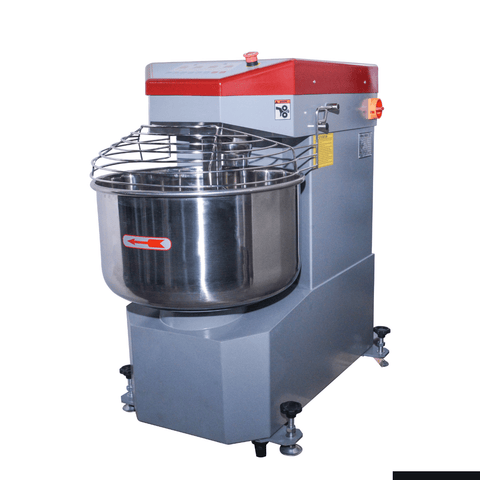

 Tyrone Fixed Head Heavy Duty 55L Spiral Dough Mixer SCP55
620(W) x 1020(D) x 1070(H)mm
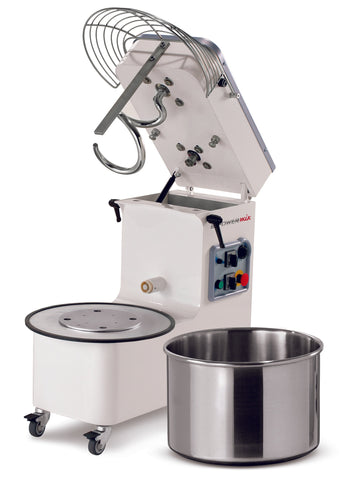
 Mecnosud Tilting Head Removable Bowl Spiral Mixer - SMM0044
860(W) x 790(H) x 530(D)mm

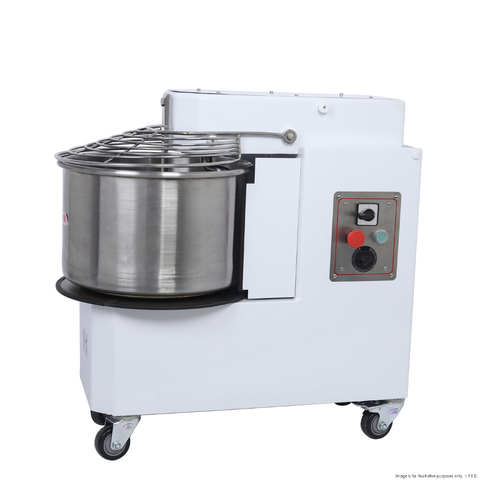
 Yasaki Tilting Head Dough Mixer - HRM-50
820(W) x 485(D) x 726(H)mm

 Moretti Forni Double Speed Removable Bowl Spiral Mixer - 50L - iMR 44/2
530(W) x 831(D) x 760(H)mm
 Moretti Forni Double Speed Fixed Bowl Spiral Mixer - 50L - iMSP 44/2
530(W) x 831(D) x 760(H)mm
 Moretti Forni Single Speed Fixed Bowl Spiral Mixer - 50L - iM44
530(W) x 831(D) x 760(H)mm
A 50 litre mixer mixes dough by the batch, so a bakery, a pizzeria or a production kitchen gets the morning's work through in fewer mixes. It sits in the gap between a bakery machine and a wholesale one, and a commercial 50 litre mixer is the capacity to look at when a 40 litre bowl means one mix too many every morning.
These are floor-standing production machines. Compare them against 40 litre below and 60 litre above before deciding, since the right answer is usually set by your batch weights.
They form part of the wider commercial mixers range, alongside spiral and planetary machines.
Scaling up without tying up capital is what Silverchef Rent-Try-Buy is for — rent the machine, prove the volume, then buy it.
Divide your daily dough weight by each machine's dough capacity and count the mixes. Then ask what the smallest batch you ever make looks like in the bigger bowl, because a tool that cannot reach a small amount of dough is a real limitation.
If the counts are close, the deciding factors are usually floor space, the supply you have available and whether you expect volume to grow. Buying one size up is easier than buying twice.
Not dedicated, but it does need someone's attention at the start and end of each mix. The loading and the scrape-down are the hands-on parts; the mix itself runs on its own.
What saves the most labour at this size is organising the space around it — ingredients within reach, a tub or trolley at the right height, and racking trolleys for whatever comes next.
Level, solid floor, and a clear path from the loading dock to the spot. These machines are heavy and do not come apart, so measure doorways, corners and any step or lift on the route before you order.
Our delivery information page sets out what the delivery includes, and it is worth reading before a large machine is on a truck rather than after.
Bowl, tool and bowl seat first, while anything stuck is still soft. Then the column, the guard and the underside of the head, where flour and water make a paste that sets hard.
Use a food-safe sanitiser on the stainless surfaces and keep water away from the motor housing and the electrical enclosure. Food contact surfaces are normally 304 stainless steel, which takes repeated cleaning without pitting.
Yes. Hooks and paddles wear at the tip with use and are replaceable, as are the other wearing parts on a machine of this class, which is why a well-maintained production mixer stays in service for a very long time.
Order replacements through the spare parts request page, and use the service request form for anything that needs a technician.
The dough has to go somewhere. Dough dividers and rounders handle scaling and balling, bread provers control the rise, and baking ovens finish it.
On the consumables side, budget for scrapers, tubs and baking trays in the size your oven takes. The rest of the bakery equipment range covers it.

We have a special page just for stock that's warehoused in Perth.
Click Here to see all WA stockWhat our customers say about us on Google, and how Google scores our store for things like shipping and returns.
Store scores from Google
