


 03 9070 5784
 Help & Support
 Track My Order



Recently Viewed
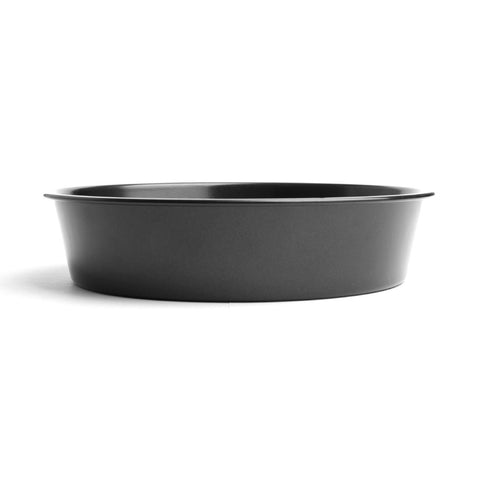

 Vogue Non-Stick Deep Cake Tin 200mm - GC996
200(W) x 47(H) x 200(D)mm

 Vogue Non-Stick Springform Tin 257mm - GD019
257(W) x 70(H) x 257(D)mm

 Vogue Non-Stick Springform Tin 214mm - GD017
214(W) x 70(H) x 214(D)mm


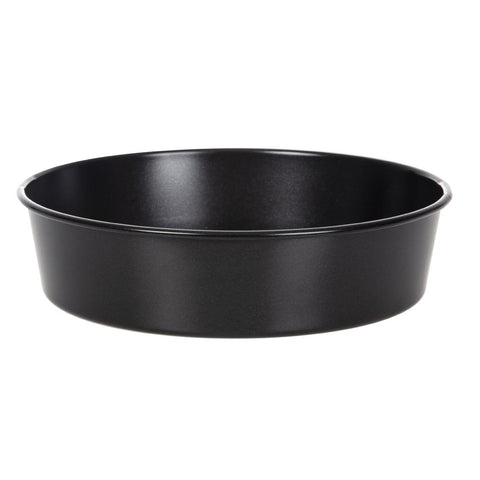
 Vogue Non-Stick Deep Cake Tin 165mm - GC995
165(W) x 40(H) x 165(D)mm

 Vogue Mousse Ring 35 x 70mm - E891
70(W) x 35(H) x 70(D)mm

 Vogue Spring Form Cake Tin 220mm - E846
220(W) x 75(H) x 220(D)mm

 Vogue Spring Form Cake Tin 260mm - E848
260(W) x 75(H) x 260(D)mm

 Vogue Spring Form Cake Tin 200mm - E845
200(W) x 75(H) x 200(D)mm
Cake tins come in two builds. A springform has a clip on the side that releases the ring from the base, so the cake never has to be turned upside down to get it out. A solid deep tin is one piece, and the cake comes out by turning the tin over onto a rack. Vogue is one of many brands that offer many options and designs to choose from.
Diameters run from 165mm up to 260mm, and a 200mm is the usual tin for a cake going into a display cabinet, which is the size most recipes are written around. The springform tins come in 200mm, 214mm, 220mm, 238mm, 257mm and 260mm, and the solid deep tins in 165mm and 200mm. There's also a mousse ring at 35 x 70mm, a bottomless ring set on a tray or a board for individual desserts.
Most of the tins are non-stick coated pressed steel. The coating saves greasing and lining on a plain cake and it makes the wash-up quick, but it's a wear part rather than a permanent surface. Cutting a cake while it's still in the tin, scraping with a metal palette knife and scouring with an abrasive pad all take it off, and once it starts to flake the tin is finished.
A tin has to survive the oven, the cooling rack and the wash-up several times a week. Pressed steel dents if it's dropped or stacked badly, and a dented ring won't seal against the base of a springform. Quiche tins, baking trays and the rest of the pastry and baking supplies go on the same order.
Springform for anything you can't turn upside down. Cheesecake, mousse cake, a torte on a crumb base and any tall sponge that would break under its own weight all come out of a springform, because the ring unclips and lifts away while the cake stays sitting on the base. That's also why they suit a cake decorated in the tin.
Solid deep tins seal properly, so they're better for thin batters and for anything cooked in a water bath. They need greasing and lining, and the cake has to be turned out onto a rack, which is fine for a firm sponge or a fruit cake. Most kitchens keep both, springforms for the display cakes and solid tins for the everyday sponges.
A 200mm is the one to buy first, because it's the diameter most recipes are written for and it cuts into a sensible number of slices for a display cabinet. Add a 165mm for small cakes and test batches, and a 238mm or 257mm springform for the larger cheesecakes and celebration cakes.
Buy two or three of each size you bake weekly rather than one. A single tin means one cake at a time and a wash-up between batches, and a baker waiting on a tin to cool is the slowest part of a morning. Sizes within a millimetre or two of each other bake much the same, so a 257mm and a 260mm are interchangeable for most recipes.
Three things take it off: metal, abrasion and dry heat. Cutting or portioning a cake while it's still in the tin scores straight through the coating. Metal scrapers, wire wool and abrasive pads sand it away in a few washes. Running an empty tin in a hot oven or leaving one under a grill breaks the coating down.
Line the base with a disc of baking paper even in a non-stick tin, take the cake out before you cut it, and wash with a soft cloth and warm water. Once the coating starts to lift, throw the tin out, because flakes of coating in a cake are a food safety problem and not a cosmetic one.
Hand wash them. Commercial machine detergent is harsh enough to dull and lift a non-stick coating within months, and a springform clip and its spring will rust if it comes out of a machine wet and gets stacked away. Warm soapy water and a soft cloth is all it takes.
Rust starts at the seam where the base meets the ring and around the clip, because that's where water sits. Dry each tin properly before it goes on the shelf and stack them with paper between, and they'll last years longer than tins thrown wet into a pile.
Thin batter finds the join between the ring and the base. A springform seals well enough for a set cheesecake mix but not for a runny sponge batter, and a dented ring or a base clipped in on an angle won't seal at all.
Sit the tin on a flat baking tray before it goes in the oven so anything that escapes lands on the tray instead of the oven floor. If the recipe uses a water bath, wrap the outside of the base and the bottom of the ring in foil before you clip it together, because a springform will let water in from underneath.
For most things, yes. Non-stick makes releasing easier and it doesn't make a tin release-proof. Anything with sugar against the metal, a caramel, a sticky fruit cake or a meringue, will grab regardless of the coating.
Grease with butter or a spray, then put a disc of baking paper in the base and a collar round the side for tall cakes. Lining also protects the coating from the knife that eventually goes in anyway, and it makes the tin quicker to wash.
Deep tins are for cakes you want to cut into layers, so you bake one tall cake and split it instead of baking three thin ones and stacking them. They also suit rich fruit cakes that need a long slow bake without the top drying out.
Fill any tin to about two thirds and no further, or the batter climbs over the rim as it rises. A batter that only just covers the base of a deep tin bakes dry at the edges before the middle sets, so match the tin to the recipe instead of using the biggest one on the shelf.
Pressed steel takes oven heat without any trouble. What damages a tin is handling. Dropped on a hard floor, stacked badly so a rim goes oval, or a springform clip bent by being forced shut, and the tin is never the same again. A ring that isn't perfectly round won't clip onto its own base properly and it leaks from then on.
Store the tins nested with a sheet of paper between them, keep each springform base with its own ring, and don't stack heavy trays on top. Handle a hot tin with a dry cloth, because a wet cloth on hot metal turns to steam and burns straight through.
It has no base, so there's nothing to release from. Set the ring on a lined tray or a board, build the dessert inside it, chill it, and lift the ring off. That's how individual mousses, tortes, stacked salads and plated desserts get their clean straight sides.
A ring also works as a cutter for sponge discs to build a dessert on. Warm it in your hands for a moment before lifting and a set mousse releases cleanly instead of tearing.
Baking paper and a cooling rack first, then a palette knife and a plastic scraper so nothing metal goes near the coating. Quiche tins cover tarts and savoury bakes, and baking trays are what the tins sit on in the oven and what the finished cakes come out onto.
Buy the tins in the diameters your recipes actually call for, and buy them for the whole bakery section in one order. REO prices are sharp, and a single delivery of tins, trays and baking papers costs less in freight and time than topping up one size at a time through the first months of trading. Delivery goes anywhere in Australia.

We have a special page just for stock that's warehoused in Perth.
Click Here to see all WA stockWhat our customers say about us on Google, and how Google scores our store for things like shipping and returns.
Store scores from Google