


 03 9070 5784
 Help & Support
 Track My Order



Recently Viewed
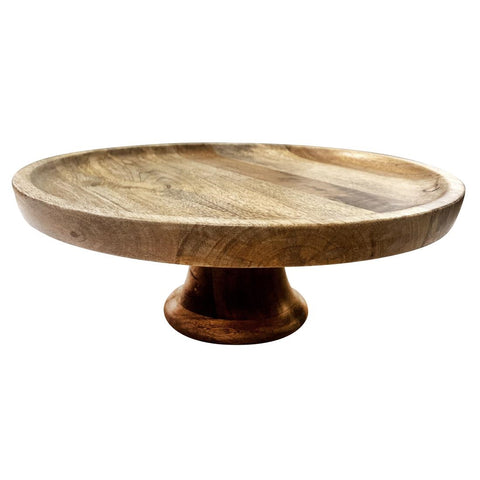

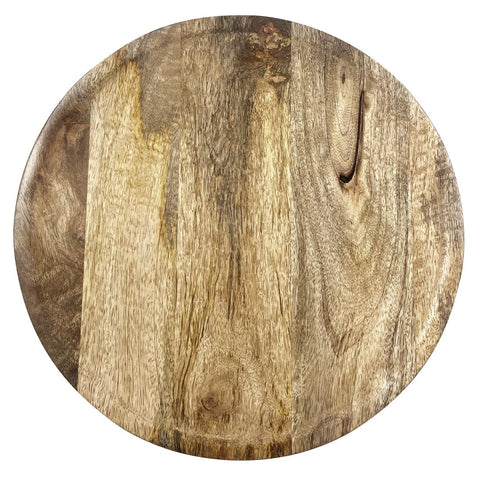
 Olympia Cake Stand Mango Wood 330x120mm - HY757

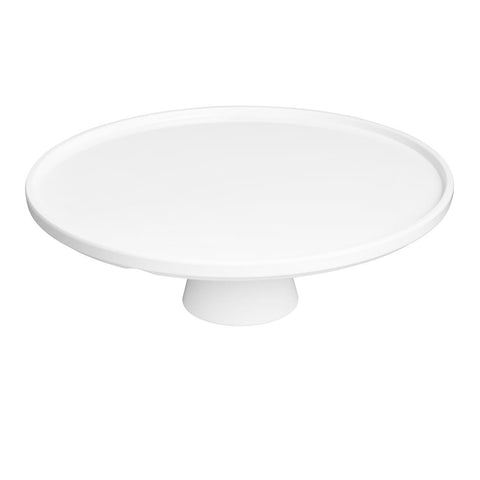
 Olympia Kristallon Melamine Round Cake Stand 330x140mm - CU988
300(W) x 140(H) x 300(D)mm
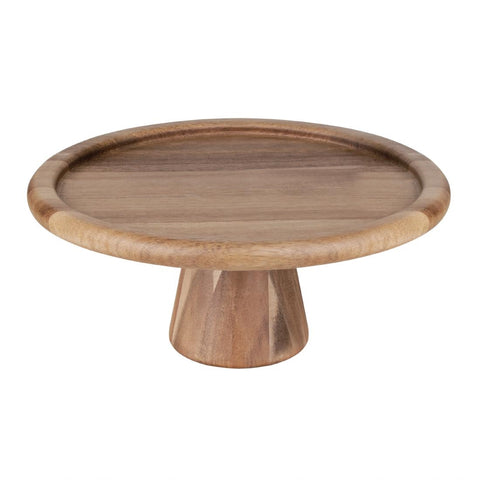
 Olympia Acacia Cake Stand 305(Ø)x127(H)mm - FE150

 Olympia Glass Cake Stand Base - CS013
300(W) x 95(H) x 300(D)mm
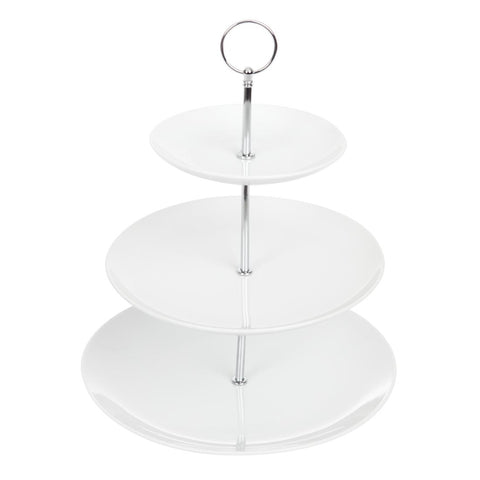
 Olympia 3 Tier High Tea Stand - GG881
270(W) x 355(H) x 270(D)mm
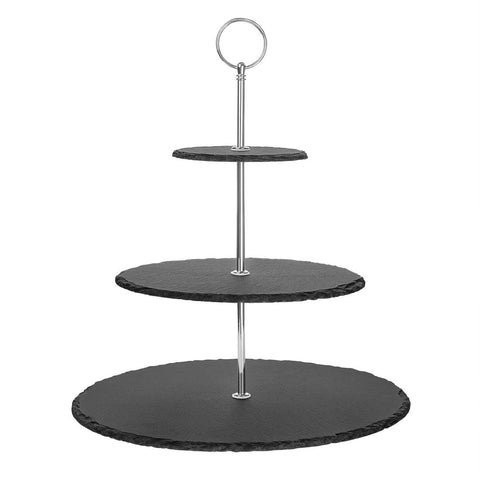
 Olympia 3 Tier Slate High Tea Stand - GF991
300(W) x 345(H) x 300(D)mm
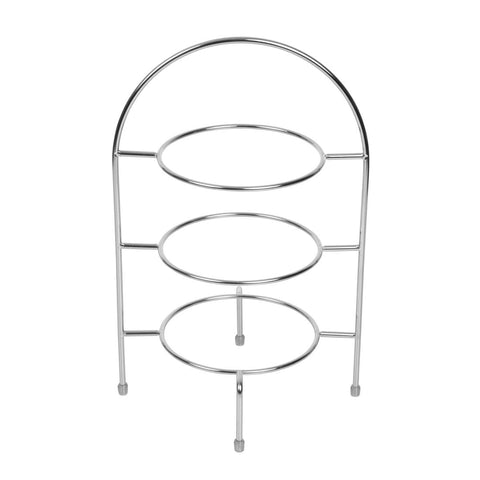
 Olympia High Tea Stand for Plates Up To 270mm - CL572
295(W) x 490(H) x 290(D)mm
 Olympia High Tea Stand for Plates up to 210mm - CL571
240(W) x 380(H) x 205(D)mm


Cake stands lift a cake off the counter so it's seen from across the room, and the shape splits three ways: footed pedestals, flat plates and revolving stands. Olympia offers a mango wood stand at 330mm across and 120mm high, an acacia stand at 305mm across and 127mm high, and a Kristallon melamine stand at 330mm across and 140mm high.
A revolving stand turns on its base, so a cake can be cut, iced or finished without being lifted, and a bakery counter uses that all day. Olympia offers a mango wood revolving stand at 330mm and Vogue offers a stainless steel rotating stand at 30cm, which doubles as a decorating turntable. There's also an Olympia glass stand base if you want a clear pedestal under the cake.
High tea stands are the other half of it. The Olympia 3 tier stand and the 3 tier slate stand come with their own tiers, so they're ready to load. The two high tea frames work differently: one takes plates up to 210mm and the other up to 270mm, so the tiers are your own plates and the service matches the dinnerware plates already on the table.
Material decides how a stand is cleaned and how long it looks new. Melamine and stainless steel go through a machine, so they suit a counter that turns stands over every day. Mango wood, acacia and slate are hand wash only, and timber needs oiling now and then to stop it drying out. The cake stands for sale at REO come from Olympia, Olympia Kristallon and Vogue.
Match the top diameter to the cake and leave a border. Most of the stands sold at REO are 305mm or 330mm across, which takes a standard round cake with enough clear edge to get a server underneath and to hold the stand without touching the icing.
Height decides how much the cake gets noticed. The stands run from 120mm to 140mm high, which brings a cake up near eye level on a counter and clear of the trays and boxes around it. A tall stand on a low counter works well, but the same stand on a high bench puts the top of the cake above where a customer looks.
Footed is the display piece. The pedestal raises the cake, throws a shadow line under the plate and separates it from everything else on the counter, which is why a cabinet display or a wedding table uses one. It also makes a cake easier to cut, because the plate sits above the bench and a knife clears the edge.
A flat stand or a board sits lower and is more stable under a heavy cake, and it's easier to slide onto a shelf or into a display fridge. Bakeries that carry cakes around usually run flat stands in the back and footed stands out the front.
Turning a cake without touching it. Icing, piping, glazing and putting a border on all need the cake to move rather than the decorator, and a stand that spins on its base does that smoothly. The Vogue stainless rotating stand at 30cm is the one that works as a decorating turntable, since the top is a flat steel plate that wipes down.
It's worth having at the counter as well. A revolving stand lets staff cut even slices by turning the cake to the knife, and it lets a customer see the whole cake without anyone lifting it.
Timber for a bakery or cafe counter. Mango wood and acacia look warm under lights, they don't ring or chip like glass, and each piece has its own grain. They can't go in a machine, they mark if a knife lands on the surface, and they need a wipe of food safe oil now and then.
Kristallon melamine doesn't smash, so it's the sensible pick for functions, buffets, aged care and anywhere a dropped stand is a hazard. Stainless steel takes the hardest use and washes in a machine. Slate suits a cheese course or a dessert plating as much as a cake, and glass gives the cleanest look under a dome, but both are the easiest to break.
Melamine and stainless steel can, and that's the reason a busy counter buys them. They come out of a machine every day for years without changing colour or losing their shape.
Timber and slate can't. A dishwasher will lift the grain, dry the timber out and crack it, and a slate stand will dull. Wash those by hand in warm water, dry them straight away instead of leaving them wet on a sink, and treat the timber ones with a food safe oil when they start to look pale. A stand that has gone grey through the middle has usually been left to soak.
Not if the base is wide and the cake is centred. Check the base against the top before you buy, because a wide top on a narrow foot is the shape that goes over, and it goes over when someone bumps the counter or drags the stand across it instead of lifting it.
Load it in place. A heavy fruit cake or a tall tiered cake is much easier to tip while it's being carried, and a stand placed near the edge of a counter will eventually be caught by an apron. Keep the stands back from the edge, put them on a flat part of the bench, and use a flat stand instead of a pedestal for anything genuinely heavy.
Two of them do. The Olympia 3 tier high tea stand and the 3 tier slate stand come with their own tiers, so they're used straight out of the box.
The two high tea frames don't. One takes plates up to 210mm and the other takes plates up to 270mm, and you supply the plates, which means the stand matches the crockery already on the table and a broken tier is replaced with another plate instead of a whole stand. Measure the plates you own before you order a frame, since a plate wider than the frame allows won't seat properly.
It depends on what's on the cake. A mud cake, a fruit cake, a banana bread or anything covered in fondant sits happily on a counter for a day under a dome. Cream, custard, cheesecake, fresh fruit and anything with a dairy filling has to be held cold, and a stand on the counter can't do that.
For those, use a cake display fridge, which holds temperature and still shows the cake through glass. Plenty of venues run both, with the cream cakes in the fridge and one whole cake on a stand beside the register as the thing customers see when they walk in.
One per cake on display, plus two spares. Stands get taken out of service for washing, they get carried to functions and they get broken, so keep a couple in reserve.
Buy them matching and buy them together. A counter with five different stands on it looks accidental, and REO prices on them are sharp when the whole order is placed in one lot rather than a stand at a time. Buying one line deep from one supplier also means a stand broken in a year is replaced with the same piece instead of the nearest thing available.
A dome or cover for anything left out, a cake server and a long knife, and boards for the cakes that go out the door. Cake stands in Australia are sold as single pieces rather than as a set, so work out the whole counter at once instead of adding to it a piece at a time.
On the production side, cake tins and bakery accessories cover the tins, scrapers, palette knives, piping bags and turntable work that gets the cake to the stand in the first place. Plates and cake forks for service go with them.

We have a special page just for stock that's warehoused in Perth.
Click Here to see all WA stockWhat our customers say about us on Google, and how Google scores our store for things like shipping and returns.
Store scores from Google
