


 03 9070 5784
 Help & Support
 Track My Order



Recently Viewed

 Anvil Vertical Bun Toaster - VCT1001
702(W) x 568(H) x 327(D)mm

 Hatco High Watt 4 Slot Pop-Up Toaster up to 160 toast slices / hour - TPT-230-4-10
346(W) x 313(D) x 204(H)mm
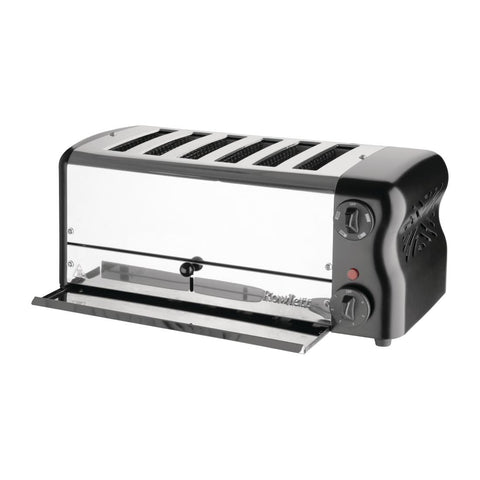

 Rowlett Esprit 6 Slot Toaster Jet Black w/2x Additional Elements & Sandwich Cage - HW917-A
508(W) x 207(H) x 237(D)mm
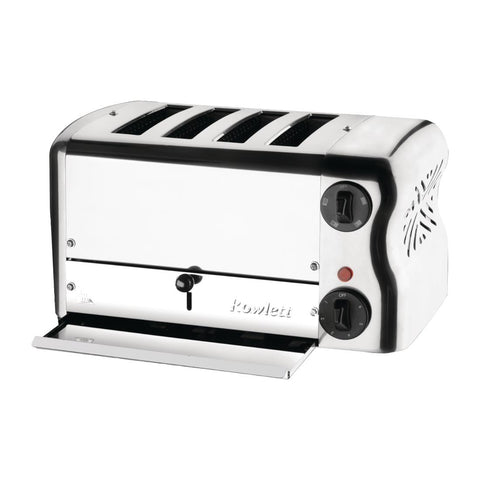
 Rowlett Esprit 4 Slot Toaster Chrome w/2x Additional Elements & Sandwich Cage - HW911-A
398(W) x 207(H) x 237(D)mm

 Benchstar Electric Vertical Bun Toaster - EBT-1400
630(W) x 485(D) x 528(H)mm


 Prince Castle Slim-Line Vertical Bun Toaster 515mm x 590mm x 206mm - 750buns per hour - 297-SW16
Pop up toasters are the slot toasters a cafe or a canteen uses for bread, raisin toast and English muffins, one or two slices at a time as the orders come in. A commercial pop up toaster is specified for repeated cycles all morning rather than a few slices a day.
The choice comes down to slot count, slot width and whether the bread you serve actually fits. Thick-cut sourdough and bagels need a wide slot, and a toaster that will not take your bread is no use however good it is.
Where volume is continuous rather than bursty, a conveyor toaster runs bread through without anybody watching it, and a toaster oven or a sandwich press handles anything with a filling. The full range sits under benchtop appliances.
If you are working out whether a breakfast counter needs slots or a conveyor, request a callback and we will go through the volume with you.
Slots for low to moderate volume where someone is at the counter anyway, and for the flexibility to toast one item on demand. A conveyor toaster for a breakfast service where bread is going through continuously and nobody has time to watch it.
The crossover is the point at which staff are queueing at the toaster. If the slots are full all morning and orders are waiting, the conveyor is the answer; if the toaster idles between orders, it is not.
Only if the slot is wide enough, and that varies by model. This is the specification to check first, because it is the one that makes a toaster unusable in a cafe that serves thick sourdough.
Measure the bread you actually serve rather than assuming, and check the slot dimensions on the product page for the model you are looking at. Our specifications information covers how to read them.
Because the duty cycle is different. A domestic toaster is designed for a handful of cycles a day, and a cafe will do that before nine o'clock, so it wears out early.
A trade unit is also built to be cleaned out and serviced rather than replaced, and the body is specified for a commercial bench.
Count the toast orders in the busiest fifteen minutes, not the day. Two slots is enough for a cafe where toast is a side; four or more where raisin toast and sourdough are menu items in their own right.
Two smaller units are often better than one large one, because one can be cleaned or can take a different bread while the other runs, and a single failure does not stop breakfast.
Crumb tray out daily and the slots cleared, because crumbs are both a fire risk and the reason a toaster starts smoking. Never put anything metal into a slot with the unit plugged in.
Wipe the body cold and keep the carriage clear of butter and jam, which is what seizes the mechanism. Keep the bread and the spreads on a separate part of the stainless steel bench so the toaster stays dry.
A standard outlet for most counter models, but multi-slot units draw more and that is a per-model answer rather than an assumption. The electrical details are on each product page.
The practical question in a cafe is how many heated appliances share the circuit at the breakfast peak. If a toaster is going onto a bench that already runs a press and a griddle toaster, request a callback before you order.
Near the bread and the spreads, out of the main service path, with clearance above and behind it so the heat is not trapped against a wall or a shelf. Toasters are hot at the top and that is where people reach.
Allow a landing space for the plate or the board the toast goes onto, and keep it away from anything wet. The rest of a breakfast counter sits across our cafeteria appliance range, and a bread slicer earns its place if you are cutting your own loaves.

We have a special page just for stock that's warehoused in Perth.
Click Here to see all WA stockWhat our customers say about us on Google, and how Google scores our store for things like shipping and returns.
Store scores from Google
