


 03 9070 5784
 Help & Support
 Track My Order



Recently Viewed
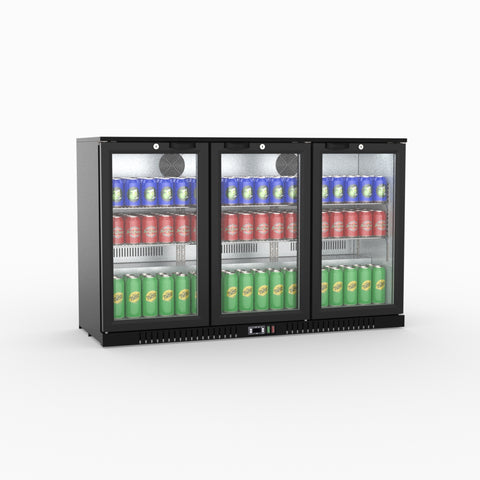

 Thermaster Under Bench Three Door Bar Cooler LG-330HC
1350(W) x 530(D) x 835(H)mm
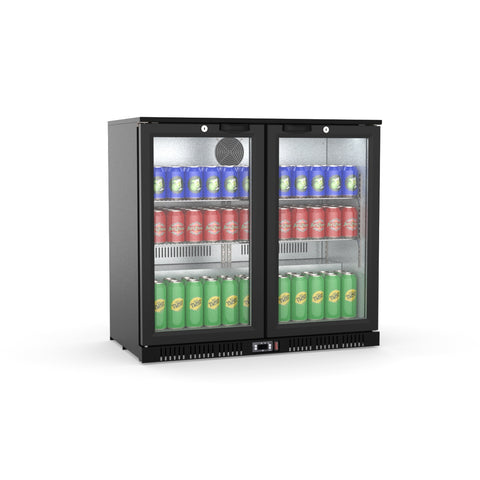
 Thermaster Under Bench Two Door Bar Cooler LG-208HC
900(W) x 530(D) x 835(H)mm
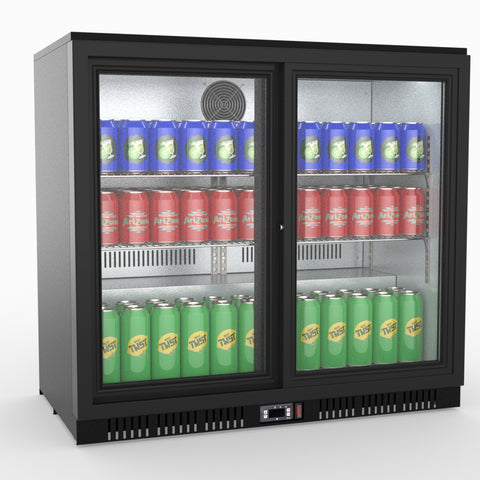
 Thermaster Under Bench Two Sliding Door Bar Cooler LG-208SC
900(W) x 530(D) x 835(H)mm
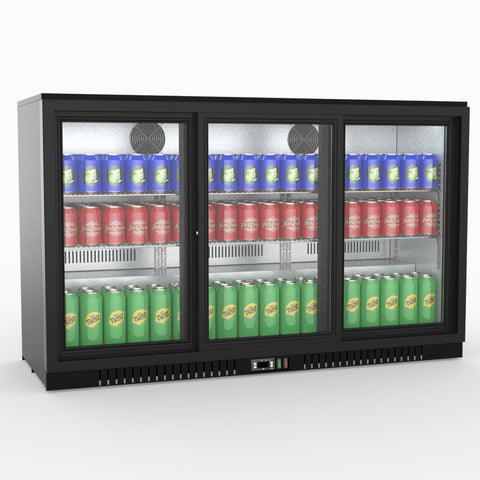
 Thermaster Under Bench Three Sliding Door Bar Cooler LG-330SC
1350(W) x 530(D) x 835(H)mm
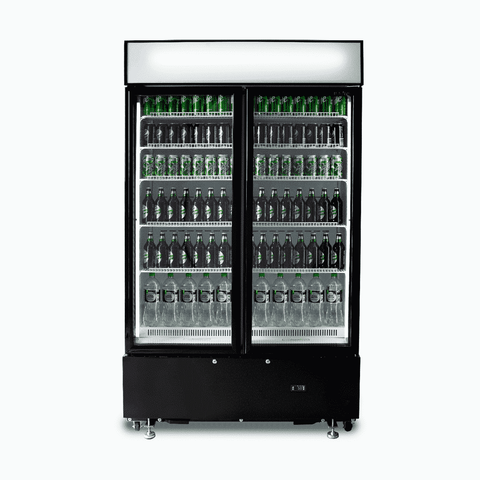

 Bromic Upright Display Fridge - 960L - 2 Doors - Flat Glass - Cassette - Black GM1000LBCAS
1200(W) x 690(D) x 2080(H)mm
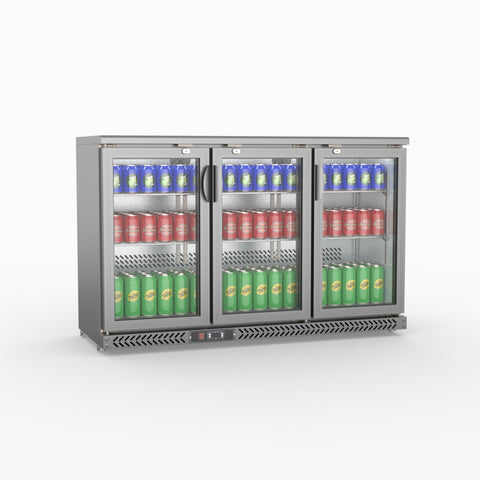
 Thermaster Three Door Stainless Steel Bar Cooler SC316SG
1350(W) x 535(D) x 900(H)mm
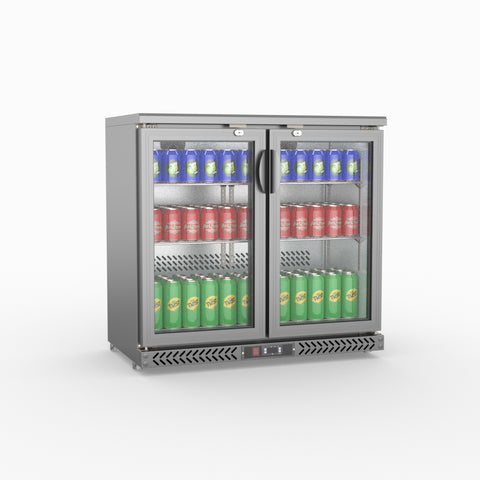
 Thermaster Two Door Stainless Steel Bar Cooler SC248SG
900(W) x 535(D) x 900(H)mm
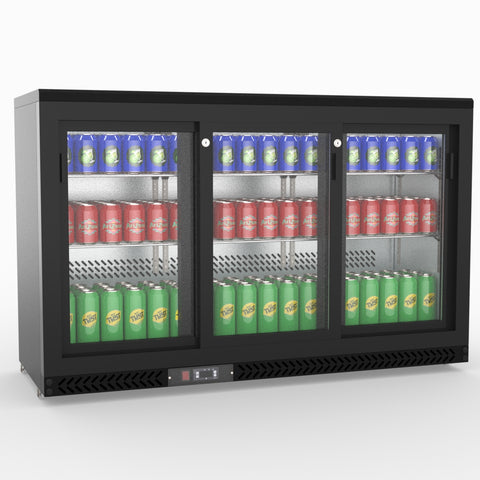
 Thermaster Three Sliding Door Bar Cooler SC316SD
1350(W) x 535(D) x 900(H)mm
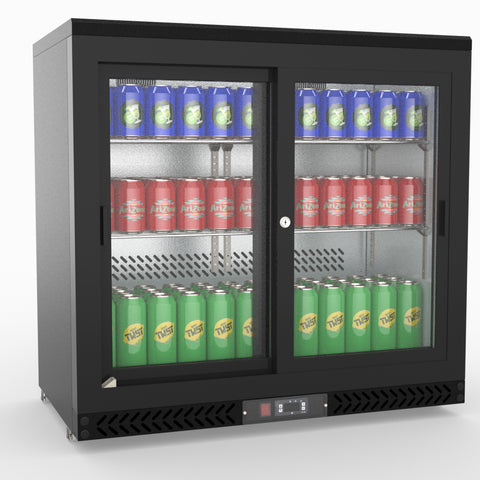
 Thermaster Double Sliding Door Drink Cooler SC248SD
900(W) x 535(D) x 900(H)mm


 2 Door Drink Fridges Double Glass Door | Atosa | P1000WB-A
1130(W) x 720(D) x 2023(H)mm


 FED-X Thermaster Stainless Steel Upright Static Display Fridge XR400SG
600(W) x 585(D) x 1850(H)mm

 Bromic Upright Display Fridge - 372L - 1 Door - Flat Glass - White with Silver Trim GM0374-NR
595(W) x 640(D) x 1950(H)mm
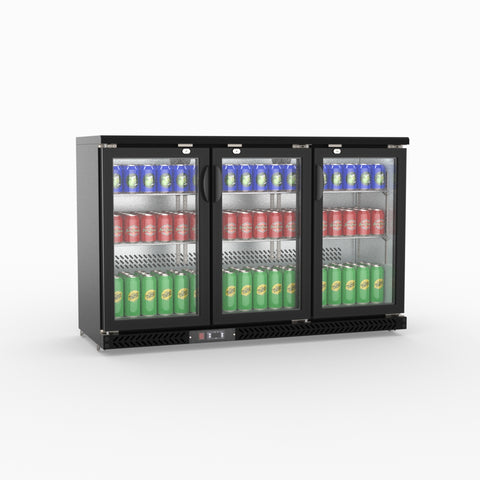
 Thermaster Three Door Drink Cooler SC316G
1350(W) x 535(D) x 900(H)mm
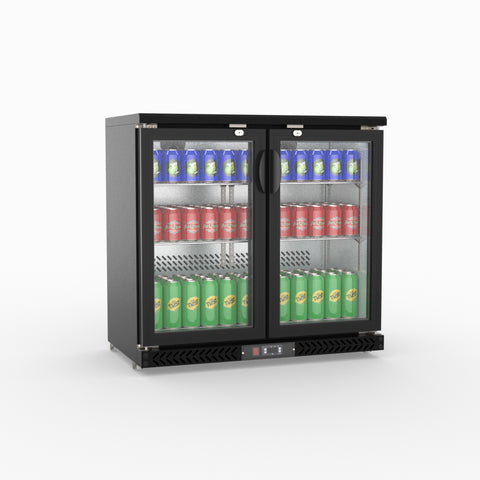
 Thermaster Two Door Drink Cooler SC248G
900(W) x 535(D) x 900(H)mm

 Bromic Upright Display Fridge - 290L - 1 Door - Flat Glass GM0300-NR
595(W) x 640(D) x 1725(H)mm

 Bromic Upright Display Fridge - 659L - 1 Door - Flat Glass - Lightbox GM0690LB
780(W) x 705(D) x 2185(H)mm

 Bromic Upright Display Fridge - 945L - 2 Doors - Sliding - Flat Glass - Lightbox GM0980LS-NR
1200(W) x 742(D) x 2000(H)mm

 FED-X S/S Two Full Glass Door Upright Fridge XURC1200G2V
1340(W) x 810+30(D) x 2000(H)mm

 FED-X S/S Two Full Glass Door Upright Fridge XURC1410G2V
1480(W) x 810+50(D) x 2000(H)mm

 Bromic Upright Display Fridge - 960L - 2 Doors - Flat Glass - Cassette - White GM1000LWCAS
1200(W) x 690(D) x 2080(H)mm

 FED-X S/S Full Glass Door Upright Fridge XURC600G1V
680(W) x 810+30(D) x 2000(H)mm

 FED-X Thermaster Stainless Steel Upright Static Display Fridge XR600SG
777(W) x 695(D) x 1890(H)mm

 1 Door Drink Fridges Single Glass Door | Atosa | P380WA
606(W) x 620(D) x 1940(H)mm

 Bromic Upright Display Fridge - 1126L - 2 Door - Flat Glass - Black GM1100B-NR
1200(W) x 775(D) x 2095(H)mm


 Skope ReFlex 3 Glass Door Underbench GN 1/1 Compatible Fridge 387L - RF7.UBR.3.GD
1750(W) x 850(H) x 730(D)mm

 Bromic Upright Display Fridge - 215L - 1 Door - Flat Glass GM0220-NR
595(W) x 640(D) x 1400(H)mm

 Skope ReFlex 2 Glass Door Underbench GN 1/1 Compatible Fridge 248L - RF7.UBR.2.GD
1290(W) x 850(H) x 730(D)mm

 Bromic Upright Display Fridge - 659L - 1 Door - Flat Glass - Lighbox GM0690LW
780(W) x 705(D) x 2185(H)mm

 Thermaster Under Bench Double Tropicalised Heated Glass Doors Bar Cooler with Heater Switch - LG-208TD
900(W) x 530(D) x 835(H)mm
 Skope Three Glass Door Bar Cooler 203L - BC.3.GSW
1350(W) x 825(H) x 593(D)mm

 Turbo Air Undercounter 2 Glass Door Fridge 1500mm Width x 700mm Depth KGR15-2-N
1500(W) x 700(D) x 850(H)mm

 Bromic Upright Display Fridge - 1082L - 2 Door - Flat Glass - Lightbox - Silver GM1100LS-NR
1200(W) x 775(D) x 2054(H)mm

 Bromic Upright Display Fridge - 372L - 1 Door - Flat Glass - Lightbox GM0374L-NR
595(W) x 640(D) x 2100(H)mm
 Atosa 3 Door Glass Door Display Fridges YCF9403
1800(W) x 730(D) x 1955(H)mm
 Atosa Refrigerated Back Bar Cooler with Glass Door MBB90
2268(W) x 713(D) x 1055(H)mm
 Atosa Refrigerated Back Bar Cooler with Glass Door MBB90
2268(W) x 713(D) x 1055(H)mm

 TRUE Pass-Thru Single Zone 2 Glass Swing Door Undercounter Refrigerator - Stainless - TBR60-PTSZ1-L-S-GG-GG-2
1524(W) x 631(D) x 881(H)mm
 TRUE Pass-Thru Single Zone 2 Glass Swing Door Undercounter Refrigerator - Black - TBR60-PTSZ1-L-B-GG-GG-2
1524(W) x 684(D) x 881(H)mm
 TRUE Pass-Thru Single Zone 1 Glass Swing Door Undercounter Refrigerator - Black - TBR36-PTSZ1-L-B-G-G-2
914(W) x 684(D) x 881(H)mm
 TRUE Pass-Thru Single Zone 1 Glass Swing Door Undercounter Refrigerator - Stainless - TBR36-PTSZ1-L-S-G-G-2
914(W) x 684(D) x 881(H)mm
 TRUE Reach-In Single Zone 3 Glass Swing Door Undercounter Refrigerator - Stainless - TBR72-RISZ1-L-S-GGG-2
1829(W) x 631(D) x 881(H)mm
 TRUE Reach-In Single Zone 3 Glass Swing Door Undercounter Refrigerator - Black - TBR72-RISZ1-L-B-GGG-2
1829(W) x 631(D) x 881(H)mm
 TRUE Reach-In Single Zone 2 Glass Swing Door Undercounter Refrigerator 1500mm Width - Stainless - TBR60-RISZ1-L-S-GG-2
1524(W) x 631(D) x 881(H)mm
 TRUE Reach-In Single Zone 2 Glass Swing Door Undercounter Refrigerator 1500mm Width - Black - TBR60-RISZ1-L-B-GG-2
1524(W) x 631(D) x 881(H)mm
 TRUE Reach-In Single Zone 2 Glass Swing Door Undercounter Refrigerator 1300mm Width - Stainless - TBR52-RISZ1-L-S-GG-2
1321(W) x 631(D) x 881(H)mm
 TRUE Reach-In Single Zone 2 Glass Swing Door Undercounter Refrigerator 1300mm Width - Black - TBR52-RISZ1-L-B-GG-2
1321(W) x 631(D) x 881(H)mm
 TRUE Reach-In Single Zone 2 Glass Swing Door Undercounter Refrigerator 1200mm Width - Stainless - TBR48-RISZ1-L-S-GG-2
1219(W) x 631(D) x 881(H)mm
 TRUE Reach-In Single Zone 2 Glass Swing Door Undercounter Refrigerator 1200mm Width - Black - TBR48-RISZ1-L-B-GG-2
1219(W) x 631(D) x 881(H)mm
 TRUE Reach-In Single Zone 1 Glass Swing Door Undercounter Refrigerator - Black - TBR32-RISZ1-L-B-G-2
813(W) x 631(D) x 881(H)mm
 TRUE Reach-In Single Zone 1 Glass Swing Door Undercounter Refrigerator - Stainless - TBR32-RISZ1-L-S-G-2
813(W) x 631(D) x 881(H)mm
 TRUE Swing Door Curved Edge Refrigerator Edge Glass Curved 1990mm Height - CVM-20-HC
686(W) x 750(D) x 1994(H)mm
 TRUE Swing Door Curved Edge Refrigerator Edge Glass Curved 1990mm Height - CVM-24-HC
686(W) x 750(D) x 1994(H)mm
Commercial glass door fridges do two jobs at once: they hold stock at temperature and they sell it. Cans and bottles in a bottle shop, grab-and-go sandwiches on a cafe counter, a back bar where staff need to see what is running low mid-service: in all of those, seeing through the door saves opening it to look. Whether you know it as a commercial glass fridge or a commercial glass front refrigerator, the range covers both main formats. An upright glass door fridge gives you height and merchandising volume, while an under counter glass door fridge tucks beneath a bar or prep bench where floor space is tight.
A sliding glass door fridge keeps doors out of a narrow walkway. A double glazed glass door fridge holds temperature better and is far less prone to glass door fridge condensation in humid venues. A countertop display fridge puts impulse stock at eye level beside the till. Single, double and triple door configurations run across the range, so you can buy the size that suits your business at its current size, then size up as your business grows.
Still scoping the fit-out rather than buying today? Request a callback and we will talk through the options with you.
It comes down to what the fridge is doing for you. An upright glass door fridge gives you height, capacity and visibility, so it is the right call when the fridge is part of your display, like a drinks wall in a bottle shop or a merchandiser near the till. For drinks-first venues, see our commercial drink fridges. You get far more stock in the same floor footprint, and customers can see the full range at eye level.
An under counter glass door fridge trades capacity for position. Sitting beneath the bar or a prep bench, it puts stock within arm's reach of whoever is serving, which is what matters during a rush. This is the classic commercial bar fridge position. Plenty of venues run both.
Nobody can tell you which one is cheaper to run without testing the two cabinets side by side. Glass door fridges are double glazed, and while the glass may hold the cold slightly less well than an insulated solid door panel, that is only half the picture. When staff can see the stock through the glass, the door spends far less time open. A solid door gets opened and closed all day while someone checks what is in there, and cold air is lost every time. So the overall power use and cost of ownership may still come out lower with glass. Double glazing, LED lighting and refrigerants like R290 all help, and many units in our energy efficient refrigeration range are glass door models.
Back of house, where no customer ever sees the fridge, the solid door cabinet is usually the better buy for different reasons: the same cabinet in solid door costs less than it does in glass, and it takes a knock from a trolley or a crate without a panel to crack or scratch.
In most Australian venues, yes. A double glazed glass door fridge holds temperature better, cuts compressor run time and is far less prone to fogging. In humid or coastal locations, or where the unit sits near a dishwasher or cooking line, it is the difference between a clear display and one customers cannot see into.
Triple glazing and heated frames exist for the most demanding positions, and are worth specifying for freezers or for fridges in unconditioned spaces.
Glass door fridge condensation is a humidity problem rather than a fault. It appears when warm, moist air meets cold glass, which is common in summer and in kitchens with steam in the air.
Units with double glazing and heated door frames are designed specifically to prevent it. Keeping door seals clean and in good condition also helps, since a leaking gasket lets humid air straight onto the cold surface.
A sliding glass door fridge is the better choice wherever a swinging door would block a walkway, which usually means narrow service areas, tight back-bar runs and anywhere staff pass behind each other during service.
The trade-off is that sliding doors are typically a little less airtight than a hinged door with a good gasket, so for long holding periods or temperature-critical stock a hinged unit has the edge.
For packaged food, generally yes. Sandwiches, salads, drinks and pre-packed items are exactly what a glass door display fridge is designed around. Check the stated operating range on the product page, because drinks-focused units sometimes run a little warmer than food service requires.
For open or unwrapped food you will usually want purpose-built refrigerated display instead, such as our deli display fridges or cake display fridges.
They do. Every refrigerated unit needs to shed heat, and if the condenser cannot breathe the fridge works harder, runs hotter and fails sooner. Manufacturer clearances are on the product page and should be treated as a minimum.
This catches people out most often with under counter installs that get boxed into cabinetry with no airflow path. If you are building a fridge into joinery, check whether it is specified for built-in or free-standing use before the cabinetry is made. If you want a second opinion on a layout, request a callback and we will go through it with you.

We have a special page just for stock that's warehoused in Perth.
Click Here to see all WA stockWhat our customers say about us on Google, and how Google scores our store for things like shipping and returns.
Store scores from Google