


 03 9070 5784
 Help & Support
 Track My Order



Recently Viewed
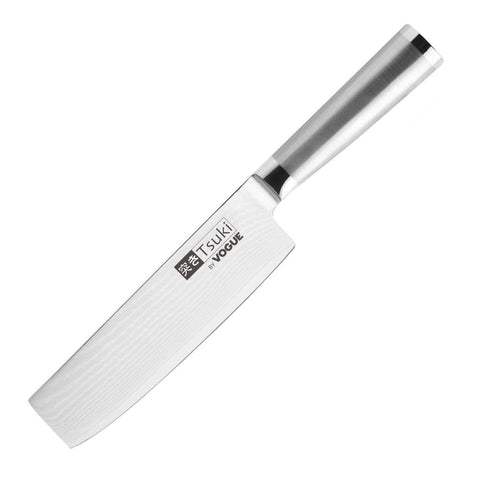

 Vogue Tsuki Series 8 Vegetable Chopper 160mm - DA448
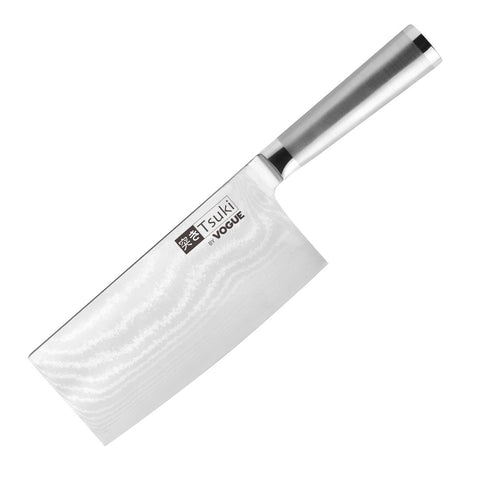
 Vogue Tsuki Series 8 Vegetable Chopper 190mm - DA449
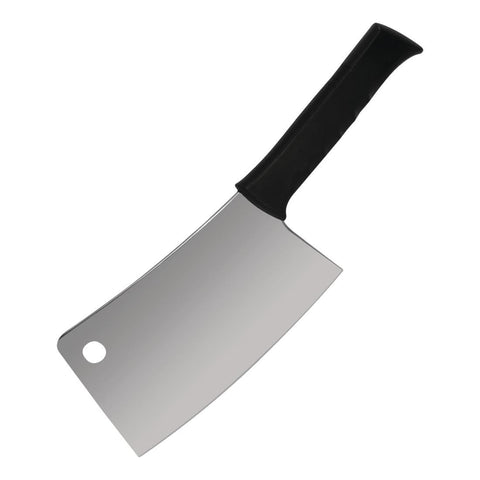

A kitchen cleaver chops through bone and heavy cuts: there is enough weight behind the thick blade to take a joint apart in one strike, which is a different job from the one a chef's knife does.
Two different knives share the name and get confused constantly. A commercial meat cleaver is heavy, thick-spined and ground for chopping bone. A Chinese cai dao, which looks similar, is a thin-bladed vegetable knife and will be destroyed on bone. Buying an industrial meat cleaver when you wanted the thin one, or the reverse, is the usual mistake.
Weight, spine thickness and handle grip are the specifications that matter, and they are on each product page. Keep a cleaver with the rest of the commercial knives and the heavy board it needs — see chopping boards and meat and seafood utensils.
Deciding between a heavy bone cleaver and the thin vegetable blade, or buying both? The price guide lists the cleavers with the boards and knives they work alongside.
A meat cleaver has a thick spine, a blunt included angle and real weight, and it chops through bone. A Chinese vegetable cleaver is thin, light and sharp, and it slices and scoops vegetables.
They look alike and are not interchangeable in either direction. If you want the thin one, look under chef knives and santoku knives for the same slicing job.
Heavy enough that the blade does the work when dropped, light enough to control for a shift. Too light means repeated strikes into the same cut, which is where accidents happen.
Weight is on the product page. If you cannot try one, err heavier for bone work and lighter for poultry — see fillet knives for boning instead of chopping.
A thick, stable one that will not move and will not be cut through. A thin board on a steel bench bounces, and a bouncing board is the main cause of a cleaver skipping.
End-grain timber or a heavy poly board both work. See chopping boards and put it on a stainless steel bench with a non-slip mat.
On a coarse stone, at a wider angle than a chef's knife. Putting a fine, acute edge on a bone cleaver is how the edge chips on the first strike.
A professional meat cleaver wants a working edge rather than a razor edge. See knife sharpeners for the stones and steels that suit the thicker grind.
Carbon-steel cleavers should not, because they will rust. Stainless cleavers with moulded handles usually can, and the product page states it — but a riveted timber handle will loosen over repeated cycles.
Hand wash and dry immediately is the safe answer for anything with a timber scale. A commercial dishwasher is also hard on an edge resting against a rack.
A stable board, a clear bench and a hand position behind the strike line.
Cut-resistant gloves are worth having at a butchery bench, and they are not the same as disposable kitchen gloves. Keep the station uncluttered and the safety signs visible.
Edge protected and the blade held, not loose in a drawer. A cleaver's weight means it damages whatever it lands against, including other knives.
A wall rack or a dedicated slot is the right answer — see knife wall rack, knife blocks and knife storage.

We have a special page just for stock that's warehoused in Perth.
Click Here to see all WA stockWhat our customers say about us on Google, and how Google scores our store for things like shipping and returns.
Store scores from Google