


 03 9070 5784
 Help & Support
 Track My Order



Recently Viewed

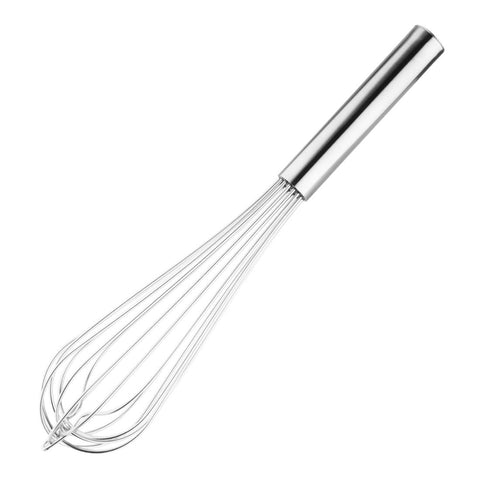



Commercial whisks do the hand work in a kitchen that makes its own sauces, dressings and desserts: aerating cream and egg whites, smoothing a sauce, working a roux in the pan. Which one you reach for comes down to wire count, wire gauge and balance. A whisk with few stiff wires moves a thick sauce; a whisk with many fine wires aerates egg white. Using one for the other job is slow and tiring.
The main shapes are a balloon whisk for aeration, a French whisk for sauces and roux in a narrow pan, and a flat whisk for getting into the corner of a pan without lifting the mix out. A commercial kitchen whisk is heavier and longer than a domestic one because it is used against resistance for longer.
A sealed stainless handle on a commercial whisk will not fill with water; a crimped plastic handle will, and that is where water and egg collect. 304 stainless steel is the food-safety grade used in Australian kitchens. Match the size to your mixing bowls and sauce pans, so you can start with the areas that need covering now and add more as your business grows, and see commercial planetary mixers where the batch is too big for hand work.
Matching whisk lengths to the bowls and pans already on the bench? The price guide lists each shape by length and wire count.
Balloon for aerating: cream, egg whites, meringue, where you want air into a light mix. French for sauces in a deep pan, where the narrower profile reaches the bottom. Flat for a roux or a pan sauce, because it gets into the corner of a sauté pan.
A kitchen making sauces and desserts needs all three. One doing neither can manage with a French whisk. See cream chargers and whippers for aeration without hand work.
Yes, and it is the most useful spec on the page. More wires and finer gauge means faster aeration and less ability to move something thick. Fewer, stiffer wires means the opposite.
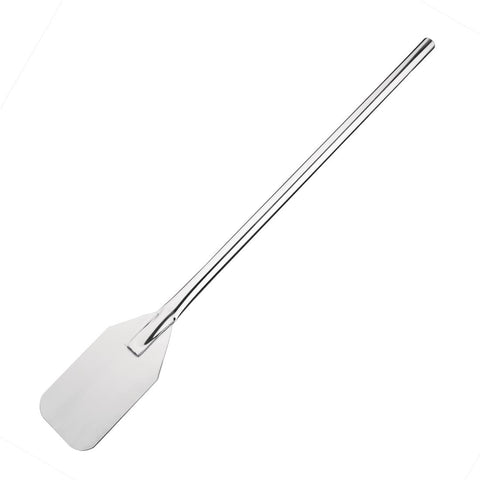
Thick mixes bend a fine whisk permanently, which is the common way a good whisk is ruined. Use a mixing paddle for anything that heavy.
Long enough that the hand stays out of the bowl and wide enough that the wires reach the sides without being forced. A whisk too small in a large bowl means the mix circulates rather than aerating.
Hold two or three lengths. Match them to your commercial mixing bowls rather than buying a set.
A metal whisk should not be. Silicone-coated whisks exist for exactly this and are the right choice in a coated pan.
Keep metal for stainless and cast iron cookware. See commercial frying pans for which is which.
Sealed stainless whisks generally can and a commercial dishwasher is the easiest way to clean between wires. The ones to check are plastic-handled whisks where the wires are crimped into the handle.
That crimp is where water and egg collect. If a whisk rattles or smells after washing, it is finished — see dishwashing accessories for the brushes that reach between wires.
Being used on something too thick, being dropped, and being stored with weight on them in a drawer. Once the wires splay unevenly the whisk no longer works the whole bowl.
Hang them rather than drawer them — see commercial kitchen wall shelves.
Yes, for small quantities, for finishing a sauce on the stove and for anything where you need to feel the mix changing. A mixer is for volume.
The two are complementary rather than alternatives. See commercial counter top mixers and commercial stick blenders.

We have a special page just for stock that's warehoused in Perth.
Click Here to see all WA stockWhat our customers say about us on Google, and how Google scores our store for things like shipping and returns.
Store scores from Google
