


 03 9070 5784
 Help & Support
 Track My Order



Recently Viewed
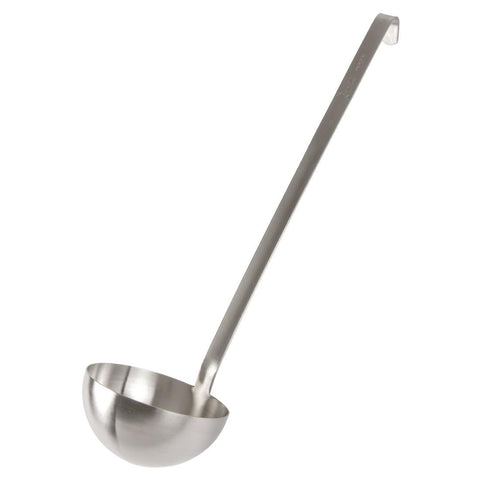

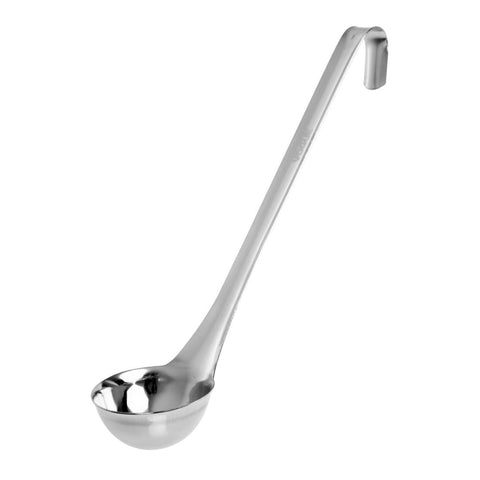

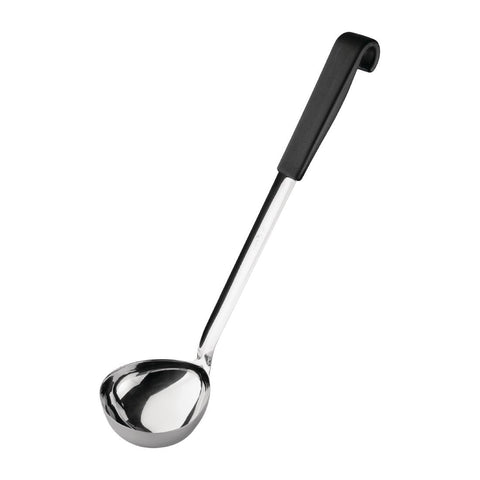


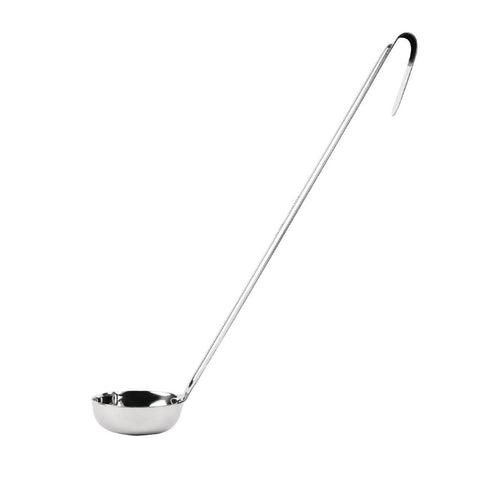


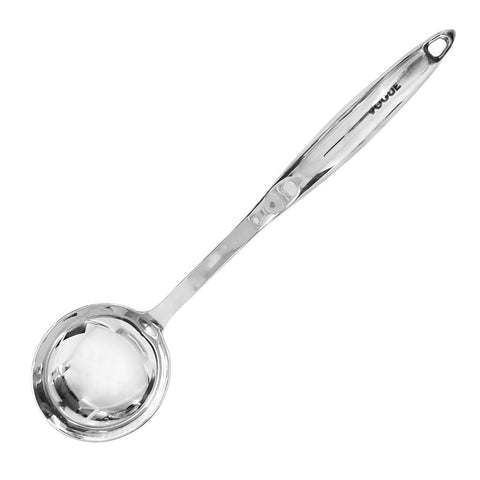

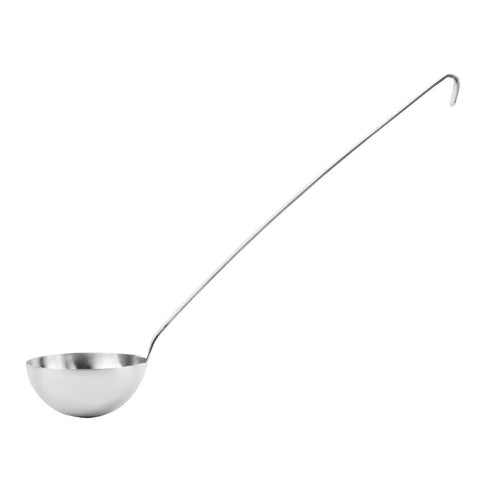

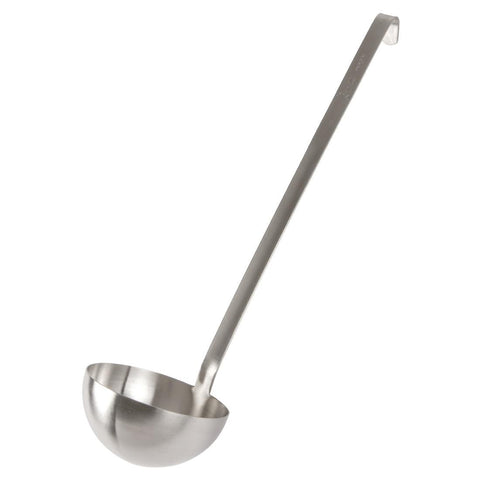



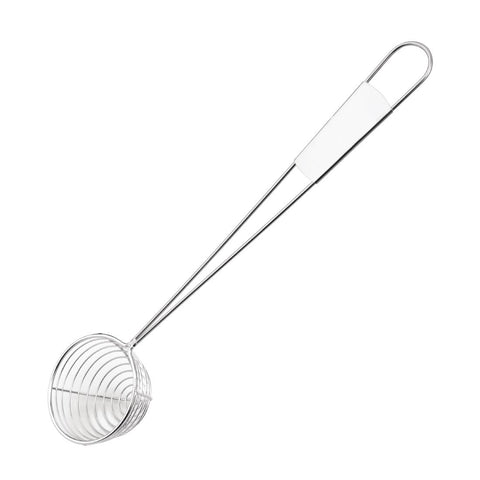

A ladle portions soup out of the pot and a soup spoon is what the customer eats it with, so they are bought together: the portion and the bowl have to suit each other.
Ladles are bought on capacity, because a sized ladle is portion control — one scoop, one serve, no judgement call at the pass. A spoon for soup is bought on bowl depth and balance, and a round bowl suits a thick soup while a shallower oval suits a broth.
Both are usually stainless. 304 stainless steel is the food-safety grade used in Australian commercial kitchens, and a hollow or thicker handle is what keeps a ladle usable when it has been sitting in a hot soup kettle.
Matching a ladle capacity to the bowl it is served into? The price guide has the ladles and the table spoons in the one list, so the portion and the spoon get ordered together.
Work backwards from the portion. Decide what a serve is, then buy the ladle that delivers it in one scoop, and the kitchen stops guessing.
Hold two or three sizes: one for the serve, a smaller one for sauces, a larger one for transferring out of a stock pot. Capacities are listed per product.
It decides whether the ladle stays in the pot or slides to the bottom. A hooked or notched handle sits on the rim; a straight handle disappears into the soup.
Handle length should clear the depth of the vessel. For a deep boiling pan that is longer than a standard ladle.
A soup spoon has a rounder, deeper bowl designed to be taken from the side; a dessert spoon is more oval and shallower. In service the difference shows up as spillage.
For table service, match the spoon to the bowl you are using from the soup bowls and dinnerware ranges.
Straining as you serve: lifting solids out of a stock, skimming fat off the top, or portioning the solids out of a broth separately from the liquid.
A skimmer or a spider from the kitchen utensils range does the same job with finer product.
It can, and it is the common practice, but the handle gets hot and the ladle ends up submerged. A rest on the edge of the bain marie or a notched handle solves both.
Replace it with a clean one between batches rather than carrying one ladle through a whole day.
Washed, dried while still warm, and buffed with a lint-free cloth. Water spots come from air drying, not from the machine, and once they dry on they need re-polishing.
Keep a set of tea towels and cloths for cutlery only, separate from bench cloths.
Enough table spoons to cover a full sitting plus a turn, and at least two ladles per hot dish on the line so one can be swapped out.
Store them sorted in cutlery storage so a server is not sorting spoons during service.

We have a special page just for stock that's warehoused in Perth.
Click Here to see all WA stockWhat our customers say about us on Google, and how Google scores our store for things like shipping and returns.
Store scores from Google
