


 03 9070 5784
 Help & Support
 Track My Order



Recently Viewed

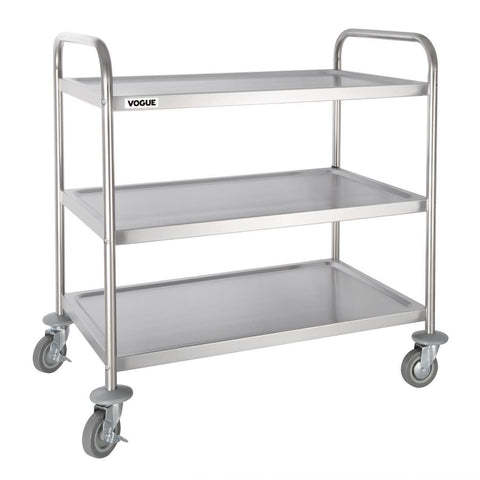

 Vogue Stainless Steel 3 Tier Clearing Trolley Large - F995
860(W) x 930(H) x 535(D)mm
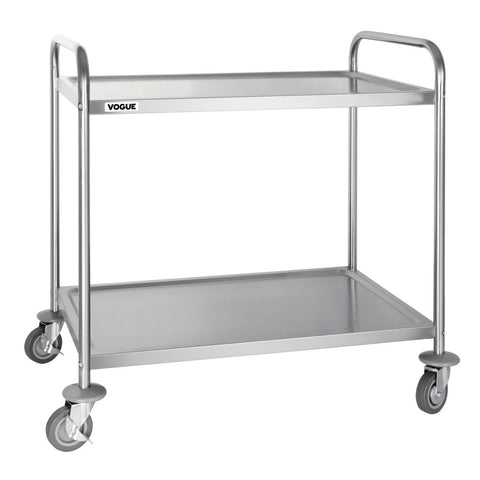
 Vogue Stainless Steel 2 Tier Clearing Trolley Large - F998
860(W) x 930(H) x 535(D)mm
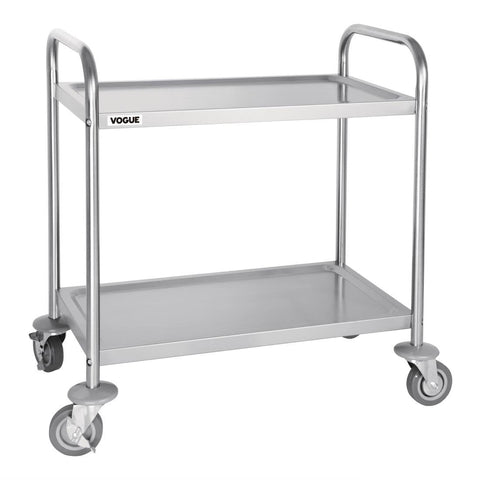
 Vogue Stainless Steel 2 Tier Clearing Trolley Small - F996
710(W) x 825(H) x 405(D)mm
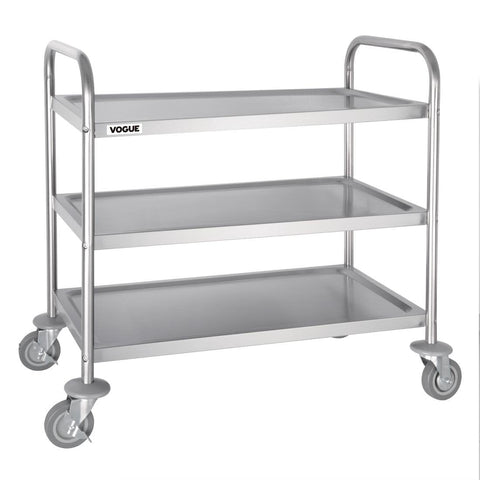
 Vogue Stainless Steel 3 Tier Clearing Trolley Medium - F994
810(W) x 855(H) x 455(D)mm
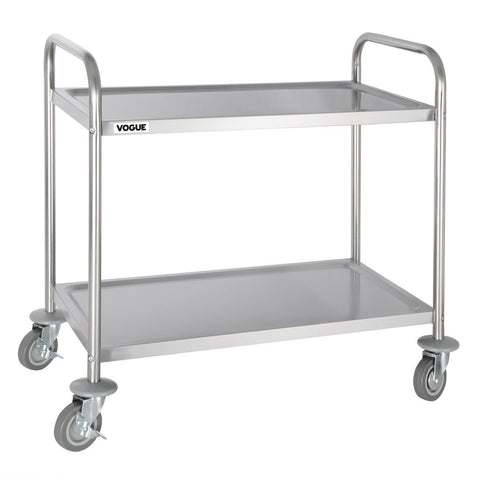
 Vogue Stainless Steel 2 Tier Clearing Trolley Medium - F997
855(W) x 855(H) x 455(D)mm
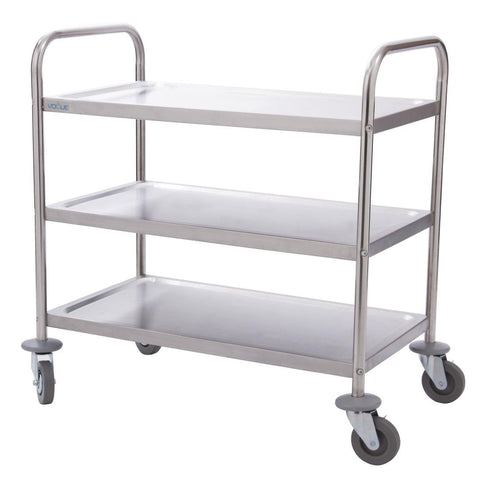
 Vogue Stainless Steel 3 Tier Clearing Trolley Small - F993
710(W) x 825(H) x 405(D)mm
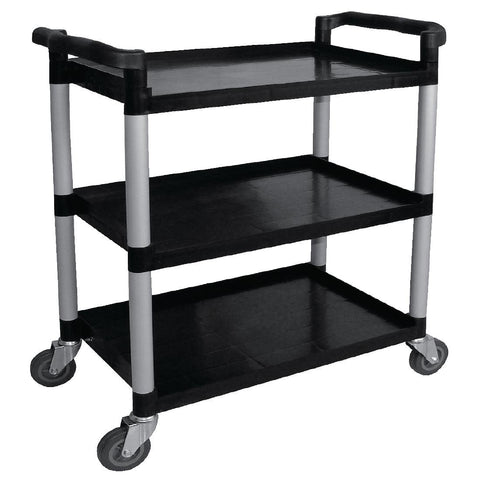
 Vogue Polypropylene Mobile Trolley Large - CF102
520(W) x 960(H) x 1070(D)mm
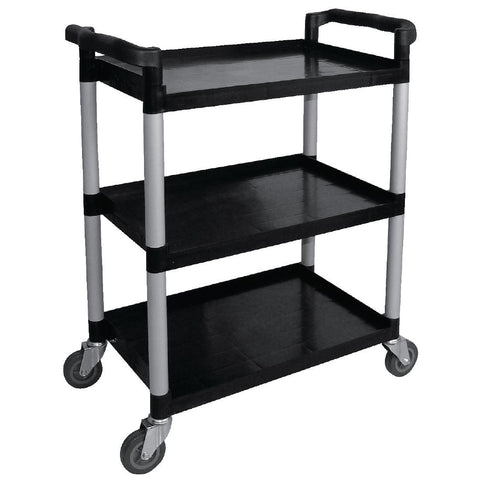
 Vogue Polypropylene Mobile Trolley Small - CF101
415(W) x 960(H) x 830(D)mm
 Vogue Chrome 3 Tier Wire Trolley - CC432
457(W) x 960(H) x 910(D)mm
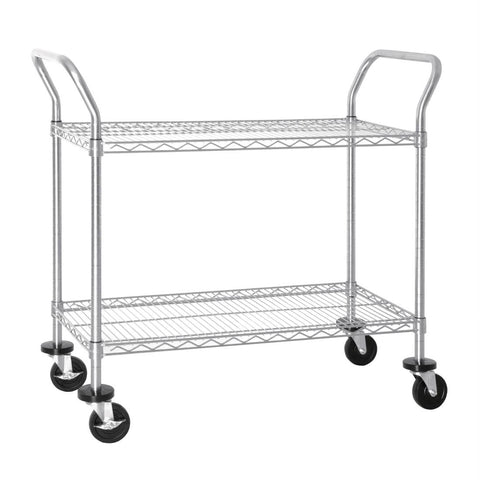
 Vogue Chrome 2 Tier Wire Trolley - CC430
457(W) x 960(H) x 910(D)mm

 Modular Systems System Gastronorm pan trolley 6 400660
380(W) x 550(D) x 1000(H)mm
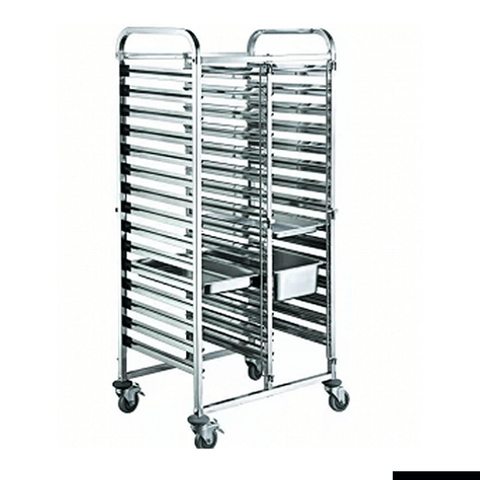
 Modular Systems System Gastronorm pan trolley 32 404090
740(W) x 550(D) x 1735(H)mm
 Modular Systems System Baking tray trolley with 16 trays - 404091
470(W) x 620(D) x 1800(H)mm
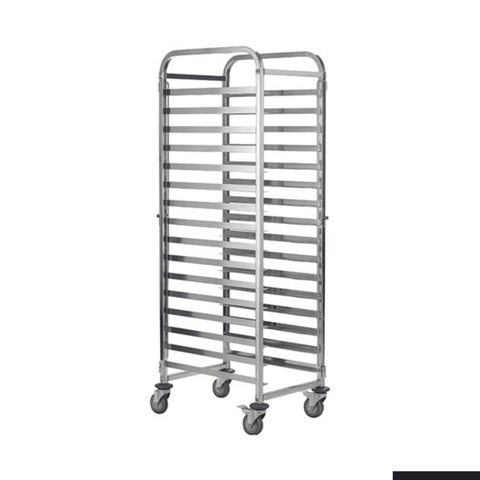
 Modular Systems System Gastronorm pan trolley 16 393577
380(W) x 550(D) x 1735(H)mm
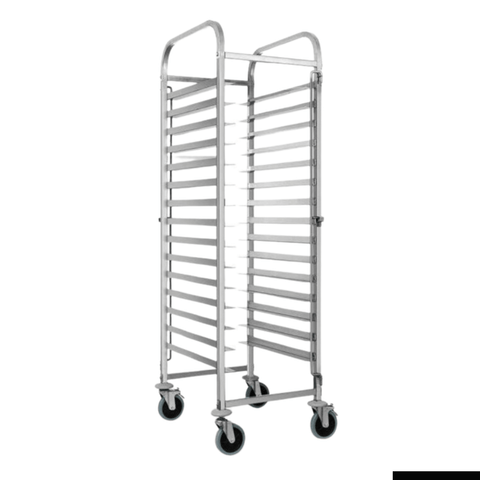
 Modular Systems System Baking tray trolley 16 413479
470(W) x 620(D) x 1735(H)mm

 Food Tek Utility Trolley Only JD-UC340-1
1280(W) x 500(D) x 960(H)mm
 Modular Systems Table Mounted Pan Rack STMSPRS-6
470(W) x 620(D) x 550(H)mm
 Food Tek Cuttery Bin To Suit Trolley JD-UC340-CB
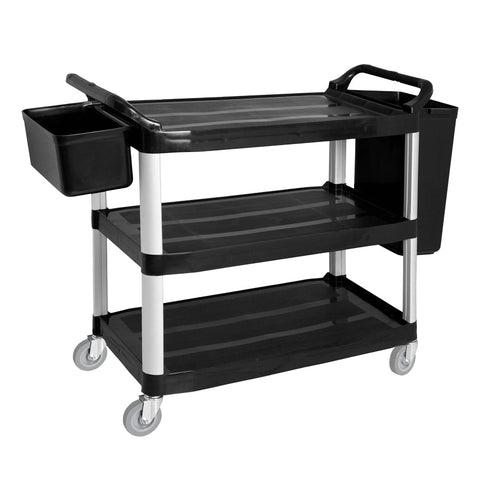
 Food Tek Complete Utility Trolley JD-UC340
1280(W) x 500(D) x 960(H)mm
 Food Tek Bin To Suit Trolley JD-UC340-B

 Bonvue Trolley for Countertop Bain Marie BMT11
1060(W) x 630(D) x 750(H)mm

 Carlisle Black Optimizer™ Adjustable Small Dish Dolly - 4 dividers & 4 swivel wheels. 737mm x 737mm x 806mm - ADS403
 Carlisle Grey Large Bin Top Utility Cart 1143mm x 685mm x 838mm - UC452523
 Carlisle Black Light Duty Utility Tilt Truck 204kg Capacity 1370mm x 660mm x 965mm - TTLD58003
 Carlisle Black Standard Duty Utility Tilt Truck 385kg Capacity 1727mm x 825mm x 1086mm - TTS58003
 Carlisle Black Service Cart on Castors 854mm x 515mm x 870mm - SBC23003
 Carlisle Black Large Fold ‘N Go® Cart. Unfolded: 520mm x 1016mm x 1099mm Folded: 267mm x 1016mm - SBC203103
 Carlisle Grey Flat Top Utility Cart 1026mm x 483mm x 830mm - UC194023
 Carlisle Black Small Fold ‘N Go® Cart. Unfolded 406mm x 749mm x 908mm Folded: 229mm x 749mm - SBC152103

 Jackstack Plate Rack Thermal Covers to suit JS104 - JS104TC
 Jackstack Plate Rack 104 plates - 600mm x 600mm x 1790mm - JS104
 Jackstack Non-Thermal Covers for 90 Plate Unit - JS901PC
 Carlisle Cateraide™ Black Dolly with Handle 730mm x 570mm x 994mm - XDL3000H03
570(W) x 730(D) x 994(H)mm

 Hobart Rack Storage & Drying Kit - 04-006507-001
Kitchen trolleys move stock, trays and plated food between the store, the kitchen and the service area, so staff push one load instead of carrying it by hand trip after trip.
A commercial kitchen trolley is built for a loaded weight and a daily washdown. An industrial kitchen trolley meant for a loading dock is built heavier again.
The range splits by job: catering trolleys for food and service, bain marie trolleys for hot food on the move, racking trolleys for trays, platform trolleys for cartons and cleaning trolleys for housekeeping. Most venues end up with two or three types rather than several of one, so you can start with the areas that need covering now and add more as your business grows.
Buying several at once for a new venue? get a quote and we will price the mix across stations.
Start from what moves and how far. Trays of product between an oven and a rack call for a racking trolley; cartons from a dock to a store call for a platform trolley; plated or hot food to a function room calls for a catering or bain marie trolley.
A professional kitchen trolley bought for the wrong job gets used once and then parked, so it is worth matching the trolley to the movement rather than buying the general-purpose one.
Diameter first. Larger castors roll over thresholds, floor wastes and door tracks that stop small ones dead, and they are easier to push with a load on. Then brakes on at least two, and swivels on at least two so the trolley can be steered.
Non-marking castors matter in front-of-house areas. If the trolley crosses a tiled kitchen floor with drains in it, tell us, because that is the single most common reason a trolley becomes hard to push within a year.
It is set by the individual trolley and listed on its product page, and it assumes the load is spread rather than piled on one corner. Our specifications page explains how we present the figures.
The practical limit is often the person, not the trolley. A trolley loaded to its maximum on a sloping floor is harder to control than most people expect, so size up rather than loading to the limit.
Measure before you order. The width of the trolley, the width of the narrowest door, and the internal dimensions of the service lift are the three numbers that decide it, and a trolley that cannot get to where it is needed is useless however good it is.
Allow for hands on the handles as well as the trolley itself. If the route includes a lift, send us the lift dimensions with your enquiry and we will check the options against them.
Stainless where there is heat, grease and a daily washdown, and where the trolley works in the kitchen itself. See stainless steel catering trolleys.
Plastic where the trolley is lighter, quieter and working front of house or in housekeeping, and where knocks against walls and furniture matter. See plastic catering trolleys. Many venues use both, in different parts of the building.
As many as you will fill without making the top shelf unreachable or the load unstable. Two or three shelves suits general use; a tray rack with many levels suits bakery and oven work where every level holds the same thing.
Tall and fully loaded is the configuration that tips. Keep the heaviest items on the bottom shelf. The gastronorm trays and gastronorms and containers ranges cover what sits on the levels.
No, and treating it as one is how trolleys get overloaded and left in walkways. A trolley moves things; a bench is where work happens. Prep on a trolley is unstable and it blocks the aisle it is standing in.
Where you want a mobile work surface, that is a specific product rather than a trolley with a flat top. Fixed stainless steel benching with an undershelf is the better answer for most stations.
Wiped down daily with a neutral detergent along the grain for stainless, and washed down for plastic. The parts that get skipped are the castors and the underside of the lowest shelf, which is where food debris and wrapping collect.
Check the castors monthly and clear anything wound around the axles. Keep the right products at hand from cleaning supplies, and see trolley accessories for replacement castors and handles.
Sometimes. Where a standard trolley will not fit a lift, an alcove or a specific tray size, fabrication is an option and it is more common than people assume.
Our custom refrigeration and stainless steel appliances page covers that work. Send the dimensions and the job, and we will check the stainless steel equipment range for an off-the-shelf fit first.

We have a special page just for stock that's warehoused in Perth.
Click Here to see all WA stockWhat our customers say about us on Google, and how Google scores our store for things like shipping and returns.
Store scores from Google