


 03 9070 5784
 Help & Support
 Track My Order



Recently Viewed


 Fiesta Recyclable PET Lids for No.3 Platter/Tray Bases (300 Pack) - HX293

 Fiesta Recyclable PET Lids for No.2 Platter/Tray Bases (300 Pack) - HX292

 Fiesta Recyclable PET Lids for No.1 Platter/Tray Bases (300 Pack) - HX291

 Fiesta Recyclable PET Lids for Rectangular Containers (300 Pack) - HW626

 Fiesta Recyclable PET Lids for Bagasse Container Bases (100 Pack) - HW038
138(W) x 10(H) x 189(D)mm


 Fiesta Compostable Bagasse Food Container Bases 800ml (100 Pack) - HW035
128(W) x 57(H) x 181(D)mm

 Fiesta Compostable Bagasse Lids for Bagasse Container Bases (100 Pack) - HW037
137(W) x 13(H) x 188(D)mm

 Fiesta Compostable Bagasse Lids for 750/900ml Bowl Bases (50 Pack) - HW027
167(W) x 175(H) x 167(D)mm

 Fiesta Compostable Bagasse Food Container Bases 1000ml (100 Pack) - HW036
128(W) x 73(H) x 181(D)mm

 Fiesta Compostable Bagasse Poke Bowl Bases 710ml (50 Pack) - HW028
208(W) x 120(H) x 208(D)mm

 Fiesta Compostable Bagasse Bowl Base 900ml (50 Pack) - HW024
160(W) x 260(H) x 160(D)mm

 Fiesta Compostable Bagasse Poke Bowl Bases 946ml (50 Pack) - HW029
208(W) x 150(H) x 208(D)mm

 Fiesta Recyclable PET Lids for Poke Bowl Bases 710/946ml (50 Pack) - HW030
216(W) x 184(H) x 216(D)mm

 Fiesta Compostable Bagasse Food Containers 245x150mm (200 Pack) - HW020
400(W) x 245(H) x 335(D)mm

 Fiesta Recyclable PET Lids for 400/500ml Bowl Bases (50 Pack) - HW026
142(W) x 180(H) x 142(D)mm

 Fiesta Compostable Bagasse Lids for 400/500ml Bowl Bases (50 Pack) - HW025
142(W) x 160(H) x 142(D)mm

 Fiesta Recyclable rPET Deli Cups 455ml (300 Pack) - HU066

 Fiesta Recyclable rPET Flat Lids for 340/455/568ml Cups (400 Pack) - HU062
96(W) x 8(H) x 96(D)mm

 Fiesta Recyclable rPET Deli Cups 340ml (300 Pack) - HU065

 Fiesta Recyclable rPET Flat Lids for Deli Cups 225/340/455ml (300 Pack) - HU069
119(W) x 8(H) x 119(D)mm

 Fiesta Recyclable rPET Domed Lids for 340/455/568ml Cups (400 Pack) - HU063

 Fiesta Compostable Bagasse Round Plates 304mm (50 Pack) - HT472
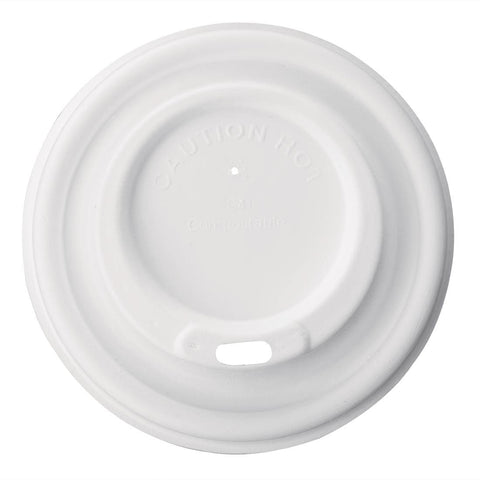
 Fiesta Compostable Bagasse Coffee Cup Lids 340ml (Pack of 1000) - FS061
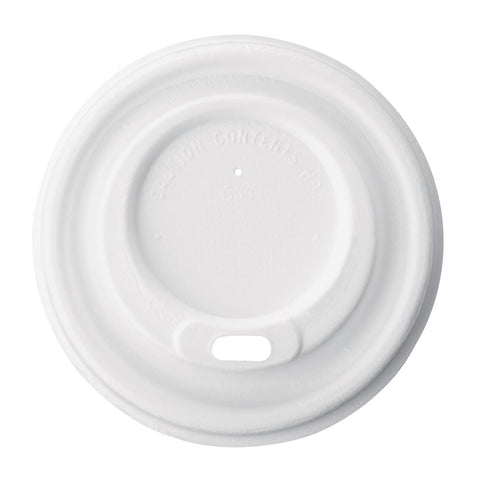
 Fiesta Compostable Bagasse Coffee Cup Lids 225ml (Pack of 1000) - FS060

 Fiesta Compostable Bagasse Oval Plates 316mm (Pack of 50) - FC535

 Fiesta Compostable Bagasse Rectangular Plates 258mm (Pack of 50) - FC539

 Fiesta Compostable Bagasse Round Bowls Natural Colour 312ml (Pack of 50) - FC543

 Fiesta Compostable Bagasse Square Plates 204mm (Pack of 50) - FC519

 Fiesta Compostable Bagasse Round Plates Natural Colour 260mm (Pack of 50) - FC545

 Fiesta Compostable Bagasse Oval Plates 198mm (Pack of 50) - FC534

 Fiesta Compostable Bagasse Square Plates 261mm (Pack of 50) - FC520

 Fiesta Compostable Bagasse Square Plates 159mm (Pack of 50) - FC518

 Fiesta Compostable Bagasse Plates Round 179mm (Pack of 50) - CW905

 Fiesta Compostable Bagasse Plates Round 260mm (Pack of 50) - CW904
Disposable plates and bowls serve food at functions, markets and takeaway counters, where nothing comes back to the kitchen to be washed. They are chosen on rigidity before anything else: a plate that flexes when a customer carries it across a room with one hand is a failure, however good the print looks.
Material decides the behaviour. Bagasse plates, pressed from sugarcane fibre, are rigid and handle warm and oily food well. Coated board is lighter and cheaper for dry food. Rigid plastic is the most durable and the least popular with customers.
Disposable bowls are a separate decision again, because a bowl holds liquid and needs a lid if it is going anywhere. Think about them with the disposable cutlery, napkins and takeaway containers that go out with them.
Catering a function? The price guide has carton prices for the plate sizes, the bowls and the lids that match them, so one list covers the table.
Bagasse is the strongest of the fibre options and takes hot, oily food without going translucent. Coated board is fine for a sandwich or a slice and poor under a curry.
Rigid plastic outlasts both and is the right answer where the plate is carried a distance or reused during an event. The reusable equivalents are in crockery if the event is on-site.
A rigid fibre or plastic plate will. A thin board plate will soften where the sauce sits and then fail at the rim, which is where it is being held.
If the dish is wet enough to pool, use a bowl rather than a plate. A rimmed bowl and a lid travels; a flat plate does not. See commercial soup bowls for the reusable version.
Two plate sizes and one bowl covers most functions: a main plate, a smaller plate for canapes or dessert, and a bowl for anything with liquid.
Buy the main size deep and the others by the sleeve. Serving tools are the other half of it — see serving spoons and chafing dish sets and fuel.
In a commercial composting stream, yes, which is what the material is designed for. In a general waste bin it behaves like any other fibre and goes to landfill.
The claim is only worth making if the waste stream exists behind it. Pair it with sorted rubbish bins and have a look at the rest of the eco friendly disposables range.
If the bowl leaves the premises, yes, and the lid has to come from the same range. If it is eaten where it is served, a lid is waste.
Order lids at the same ratio as bowls for delivery, and not at all for a buffet. Mixing the two is where the over-ordering happens.
Go up a grade rather than up a size. Flex is a function of material and thickness, so a smaller rigid plate carries better than a large flimsy one.
For a standing function, a plate with a moulded rim is far easier to hold one-handed. Food display baskets and trays take the load off the guest entirely.
Cutlery, napkins and something to hold them, then the serving tools beside each dish. A dispenser setup beats a pile for both hygiene and usage.
See napkin dispensers and cloches, food covers and lids for the rest of a self-serve line.

We have a special page just for stock that's warehoused in Perth.
Click Here to see all WA stockWhat our customers say about us on Google, and how Google scores our store for things like shipping and returns.
Store scores from Google