


 03 9070 5784
 Help & Support
 Track My Order



Recently Viewed
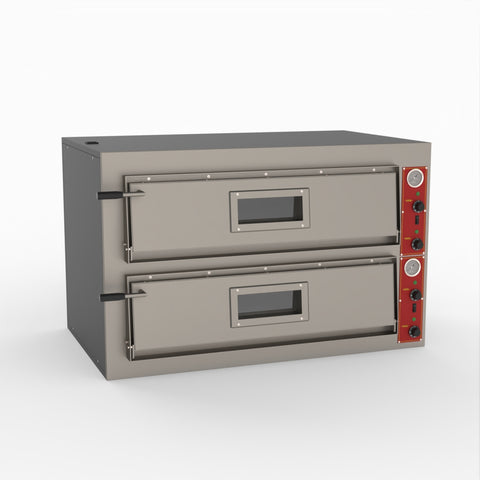

 BakerMAX Black Panther Pizza Deck Oven EP-1-SDE
1190(W) x 826(D) x 775(H)mm


 Prismafood Prisma Food Pizza Ovens Double Deck 12 x 35cm - TP-2-SD
1100(W) x 1320(D) x 745(H)mm

 Prismafood Pizza Ovens Double Deck 8 x 40cm - TP-2
1100(W) x 1080(D) x 745(H)mm

 BakerMAX Black Panther Pizza Deck Oven EP-2-1E
890(W) x 846(D) x 455(H)mm

 BakerMAX Black Panther Pizza Deck Oven EP-2E
890(W) x 846(D) x 775(H)mm
 BakerMAX Compact Countertop Double Deck Electric Pizza Oven - EP-2T
580(W) x 561(D) x 435(H)mm

 BakerMAX Black Panther Pizza Deck Oven EP-1-1-SDE
1190(W) x 826(D) x 455(H)mm
 BakerMAX Compact Countertop Double Deck Electric Pizza Oven EP-2T/15
580(W) x 561(D) x 435(H)mm


 Moretti Forni Bakery Oven - COMP SA/S
890-1660(W) x 1443-1973(D) x 1800-2450(H)mm

 Moretti Forni serieS Deck Oven - COMP S/1/S
435-1660(W) x 735-1973(D) x 1660-2030(H)mm

 Moretti Forni Amalfi Deck Oven - COMP S
1020-1520(W) x 1350-1732(D) x 1700-2150(H)mm

 Moretti Forni Neapolis Electric Deck Oven - NEAP
1084-1465(W) x 1414-1842(D) x 2229(H)mm

 BakerMAX Electric Deck Bakery Oven With Steam - ME2ST-1
1240(W) x 860(D) x 625(H)mm

 BakerMAX Electric Deck Bakery Oven - ME2-1
1240(W) x 860(D) x 625(H)mm

 BakerMAX Stackable Electric Deck Bakery Oven - ME2-1D
1300(W) x 908(D) x 770(H)mm

 BakerMAX Stackable Electric Deck Bakery Oven With Steam- ME2ST-1D
1300(W) x 908(D) x 770(H)mm
 BakerMAX Compact Countertop Single Deck Electric Pizza Oven - EP-1T
580(W) x 561(D) x 275(H)mm
 BakerMAX Prisma Food Pizza Ovens Single Deck 6 X 35cm - TP-2-1-SD
1100(W) x 1320(D) x 413(H)mm

 BakerMAX Prisma Food Pizza Ovens Single Deck 4 X 40cm TP-2-1
1100(W) x 1080(D) x 413(H)mm

 BakerMAX Prisma Food Single Deck Gas Pizza&bakery Ovens PMG-9
1305(W) x 1362(D) x 560(H)mm
 Moretti Forni serieS Triple Deck Bakery Oven on Prover - 9 x 60x40cm Tray - COMP S120E/3A/L
1660(W) x 1443(D) x 2450(H)mm
 Moretti Forni serieS Double Deck Bakery Oven on Prover - 12 x 60x40cm Tray - COMP S125E/2A/L
1660(W) x 1973(D) x 2150(H)mm
 Moretti Forni serieS Triple Deck Bakery Oven on Prover - 3 x 60x40cm Tray - COMP S50E/3A/L
890(W) x 1443(D) x 2450(H)mm
 Moretti Forni serieS Triple Deck Bakery Oven on Prover - 18 x 60x40cm Tray - COMP S125E/3A/L
1660(W) x 1973(D) x 2450(H)mm
 Moretti Forni serieS Double Deck Bakery Oven on Prover - 2 x 60x40cm Tray - COMP S50E/2A/L
890(W) x 1443(D) x 2150(H)mm
 Moretti Forni serieS Triple Deck Bakery Oven on Prover - 6 x 60x40cm Tray - COMP S100E/3A/L
1365(W) x 1443(D) x 2450(H)mm
 Moretti Forni serieS Single Deck Bakery Oven on Prover - 2 x 60x40cm Tray - COMP S100E/1A/L
1365(W) x 1443(D) x 1800(H)mm
 Moretti Forni serieS Single Deck Bakery Oven on Prover - 3 x 60x40cm Tray - COMP S120E/1A/L
1660(W) x 1443(D) x 1800(H)mm
 Moretti Forni serieS Single Deck Bakery Oven on Prover - 6 x 60x40cm Tray - COMP S125E/1A/L
1660(W) x 1973(D) x 1800(H)mm
 Moretti Forni serieS Triple Deck Bakery Oven on Stand - 18 x 60x40cm Tray - COMP S125E/3A/S
1660(W) x 1973(D) x 2450(H)mm
 Moretti Forni serieS Double Deck Bakery Oven on Prover - 4 x 60x40cm Tray - COMP S100E/2A/L
1365(W) x 1443(D) x 2150(H)mm
 Moretti Forni serieS Double Deck Bakery Oven on Prover - 6 x 60x40cm Tray - COMP S120E/2A/L
1660(W) x 1443(D) x 2150(H)mm
Moretti Forni serieS Single Deck Bakery Oven on Prover - 1 x 60x40cm Tray - COMP S50E/1A/L
890(W) x 1443(D) x 1800(H)mm

 Moretti Forni serieS Double Deck Bakery Oven on Stand - 6 x 60x40cm Tray - COMP S120E/2A/S
1660(W) x 1443(D) x 2150(H)mm
 Moretti Forni serieS Single Deck Bakery Oven on Stand - 2 x 60x40cm Tray - COMP S100E/1A/S
1365(W) x 1443(D) x 1800(H)mm
 Moretti Forni serieS Triple Deck Bakery Oven on Stand - 9 x 60x40cm Tray - COMP S120E/3A/S
1660(W) x 1443(D) x 2450(H)mm
 Moretti Forni serieS Triple Deck Bakery Oven on Stand - 3 x 60x40cm Tray - COMP S50E/3A/S
890(W) x 1443(D) x 2450(H)mm
 Moretti Forni serieS Triple Deck Bakery Oven on Stand - 6 x 60x40cm Tray - COMP S100E/3A/S
1365(W) x 1443(D) x 2450(H)mm
 Moretti Forni serieS Double Deck Bakery Oven on Stand - 12 x 60x40cm Tray - COMP S125E/2A/S
1660(W) x 1973(D) x 2150(H)mm
 Moretti Forni serieS Double Deck Bakery Oven on Stand - 2 x 60x40cm Tray - COMP S50E/2A/S
890(W) x 1443(D) x 2150(H)mm
 Moretti Forni serieS Double Deck Bakery Oven on Stand - 4 x 60x40cm Tray - COMP S100E/2A/S
1365(W) x 1443(D) x 2150(H)mm
 Moretti Forni serieS Single Deck Bakery Oven on Stand - 6 x 60x40cm Tray - COMP S125E/1A/S
1660(W) x 1973(D) x 1800(H)mm
Moretti Forni serieS Single Deck Bakery Oven on Stand - 1 x 60x40cm Tray - COMP S50E/1A/S
890(W) x 1443(D) x 1800(H)mm
 Moretti Forni serieS Single Deck Bakery Oven on Stand - 3 x 60x40cm Tray - COMP S120E/1A/S
1660(W) x 1443(D) x 1800(H)mm
 Moretti Forni Amalfi Single Deck Oven on Prover - 9 x 35cm Pizza - COMP C/1/L
1320(W) x 1650(D) x 1700(H)mm
 Moretti Forni Amalfi Double Deck Oven on Prover - 6 x 35cm Pizza - Chamber Size 650w x 1035d x 180h mm - COMP A/2/L
1020(W) x 1650(D) x 1950(H)mm
 Moretti Forni Amalfi Double Deck Oven on Prover - 6 x 35cm Pizza - Chamber Size 950w x 735d x 180h mm - COMP B/2/L
1320(W) x 1350(D) x 1950(H)mm
 Moretti Forni Amalfi Double Deck Oven on Prover - 9 x 35cm Pizza - COMP C/2/L
1320(W) x 1650(D) x 1950(H)mm
 Moretti Forni Amalfi Single Deck Oven on Prover - 6 x 35cm Pizza - Chamber Size 950w x 735d x 180h mm - COMP B/1/L
1320(W) x 1350(D) x 1700(H)mm
 Moretti Forni Amalfi Double Deck Oven on Stand - 18 x 35cm Pizza - COMP C/2/S
1320(W) x 1650(D) x 1950(H)mm
 Moretti Forni Amalfi Single Deck Oven on Prover - 6 x 35cm Pizza - Chamber Size 650w x 1035d x 180h mm - COMP A/1/L
1020(W) x 1650(D) x 1700(H)mm
 Moretti Forni Amalfi Triple Deck Oven on Stand - 18 x 35cm Pizza - Chamber Size 950w x 735d x 180h mm - COMP B/3/S
1320(W) x 1350(D) x 2150(H)mm
A commercial pizza deck oven bakes on a hot stone or refractory floor rather than in moving air, and that is the whole reason pizzerias use them. Heat conducted straight into the base is what gives a crisp bottom and a soft rim, and no other oven format does it the same way. The alternative formats are commercial conveyor pizza ovens and the general commercial deck ovens used for bread.
A pizza deck oven is bought by deck area and by how many decks. Shops building a menu around a few pizzas buy a single deck; shops where pizza is the business run two or three, because each deck holds its own temperature and is loaded on its own. Deck dimensions and the number of pizzas each deck takes are on the individual product page.
Gas is the usual choice for a dedicated pizza shop, because it recovers heat fast after the door has been open. Electric decks hold a steadier temperature and install without a gas connection, so they suit a site with no gas available or where the gas and flue work is the thing holding up the fit-out. What a given model needs is on its product page.
A deck oven is a big-ticket buy, and Silverchef Rent-Try-Buy is one way to stage it, with the option to upgrade or hand equipment back as things change. The full venue range is pizza shop equipment.
It bakes by conduction from a hot stone floor, which crisps the base in a way moving air cannot, and it leaves the operator in control of where the pizza sits and when it comes out. That is what makes it the choice for a hand-made product.
A conveyor oven trades that control for consistency and throughput: the pizza goes in one end, comes out the other, and anybody can run it. If the shop depends on volume and unskilled labour, the conveyor is the sensible machine; if it depends on the pizza, the deck is.
Gas is the default here. It recovers heat quickly after the door has been open, which matters when a deck is loaded and unloaded continuously through a rush.
Electric holds a steadier temperature and installs without a gas connection, so it is the answer where there is no gas to the site, where the gas and flue work is holding up the fit-out, or where the oven is a second unit used for part of the service. Check the supply each model needs on its product page and have a licensed gasfitter or electrician confirm it before delivery.
One deck if pizza is part of a wider menu and the volume is modest. Two or three once pizza is the business, because the decks stack, so a second one adds output without taking more floor, and you can hold each deck at a different temperature for a different product.
Decks are also independent, which means a quiet period can run on one. Work out the pizzas you need in the busiest hour and we will tell you what the range covers. The stands that carry them are pizza oven stands.
Longer than any other oven in the kitchen, because the mass of the stone has to be heated through rather than the air around it. Treat it as part of the opening routine, and take the actual figure from the model's own documentation rather than from a general rule.
That thermal mass is also the advantage: once it is up, the deck holds temperature through a rush instead of dropping every time the door opens. Plan the shift so the oven is on well before the first order.
Enough to clear the heat and the load the oven produces, and that is a question for a mechanical services contractor and your local council rather than for us. We will not tell you what your site is required to install, because it depends on the building, the appliance and the local requirements.
What we can say is that extraction is usually the longest-lead and highest-cost part of installing a deck oven, so price it before the oven. The ductless option exists for some appliances — see ductless exhaust canopies — but confirm its suitability for an oven of this type with your installer.
A bench to make up on, refrigerated prep at arm's reach, trays and peels, and somewhere to put a finished pizza. In practice that is a commercial pizza prep fridge beside the oven, commercial pizza trays and the peels and other handling tools in pizza utensils.
Upstream of that is the dough: a floor mixer and, if volume justifies it, a dough roller. The order of purchase matters more than the brand of any one item.
Brush the deck between bakes and let the oven burn off what has dropped onto it. Do not wet the stone and do not use detergent on it — a soaked deck can crack, and the moisture ruins the next few bakes.
Check the door seals, because a worn seal shows up as uneven baking. Get an oven that bakes unevenly looked at rather than working around it. Tell us the model and we will point you at the right parts in spares and accessories.

We have a special page just for stock that's warehoused in Perth.
Click Here to see all WA stockWhat our customers say about us on Google, and how Google scores our store for things like shipping and returns.
Store scores from Google