


 03 9070 5784
 Help & Support
 Track My Order



Recently Viewed

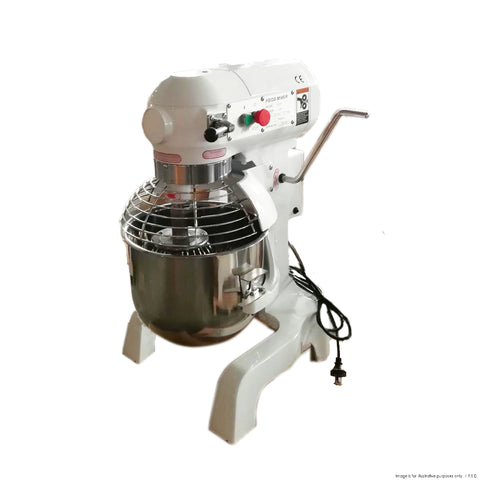

 BakerMAX 20 Litre Heavy Duty Mixer B20KG
530(W) x 496(D) x 780(H)mm
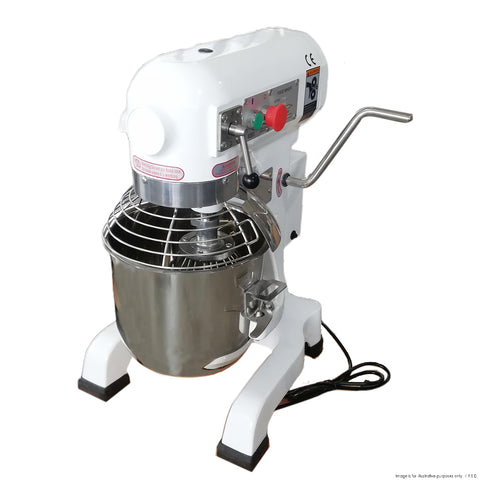
 Yasaki 10 Litre Heavy Duty Mixer B10KG
452(W) x 432(D) x 606(H)mm
 BakerMAX 7 Litre Heavy Duty Mixer B7B
429(W) x 240(D) x 425(H)mm


 Apuro Planetary Mixer White 7Ltr - DB266-A
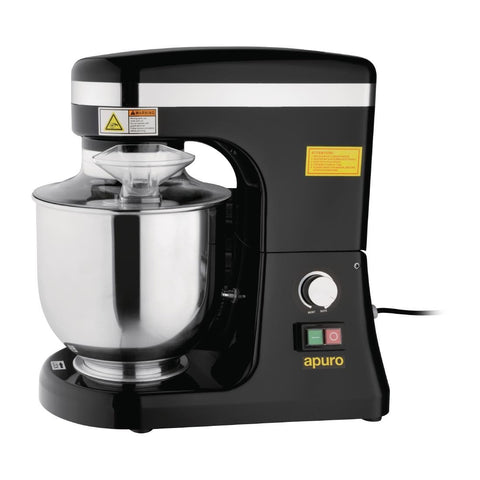
 Apuro Planetary Mixer Black 7Ltr - CP921-A
230(W) x 420(H) x 400(D)mm


 Tyrone Heavy Duty Planetary Mixer 60L B60GX/S
816(W) x 823(D) x 1472(H)mm

 Anvil 10 Quart Planetary Mixer - PMA1010
350(W) x 530(H) x 450(D)mm

 Yasaki 40 Litre Belt Drive Three Speed Mixer B40KG
620(W) x 630(D) x 1011(H)mm

 Apuro 10L Digital Planetary Mixer - FU137-A
475(W) x 635(H) x 475(D)mm

 AG 20 Litre Planetary Food & Dough Mixer P20
530(W) x 496(D) x 780(H)mm
 AG 15 Litre Planetary Food & Dough Mixer P15
465(W) x 444(D) x 676(H)mm

 Apuro 20L Digital Planetary Mixer - FU138-A
558(W) x 794(H) x 558(D)mm

 Tyrone Heavey Duty Planetary Mixer 10L – B10GX
447(W) x 518(D) x 690(H)mm

 Tyrone Heavy Duty Planetary Mixer 20L – B20GX
484(W) x 518(D) x 690(H)mm

 Tyrone Heavy Duty Planetary Mixer 40L B40GX
675(W) x 741(D) x 1154(H)mm


 Hobart Centerline 20 Quart Planetary Mixer - HMM20-90A


 Hamilton Beach Planetary Mixer 8L - CPM0800
350(W) x 400(H) x 430(D)mm
 AG 40 Litre Planetary Food & Dough Mixer P40
630(W) x 562(D) x 1011(H)mm

 Tyrone Heavy Duty Planetary Mixer 60L - B60GX
816(W) x 823(D) x 1472(H)mm
 Hobart 20 Quart Planetary Mixer - A200-2251-E-D
484(W) x 722(H) x 514(D)mm
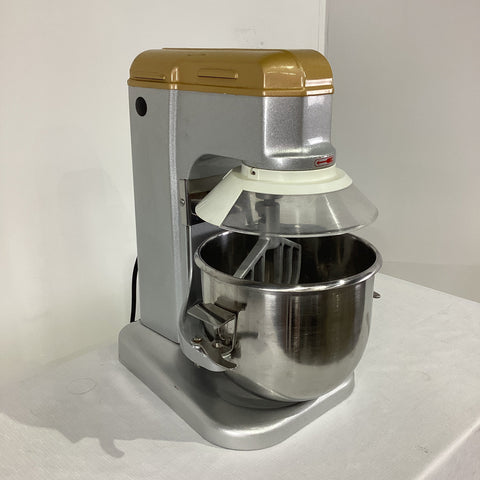
 Anvil PMA1010 Planetary Mixer - 787852
330W x 450D x 540Hmm
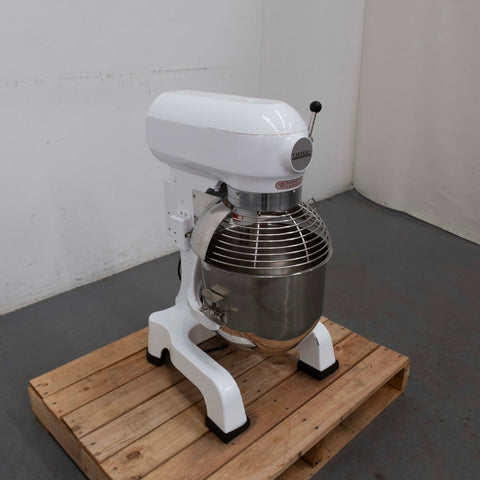

 Yasaki B20KG Mixer - Planetary - 877998
450W x 550D x 780Hmm


 Zanolli Galassia 60S Spiral Mixer - 876770
578W x 928D x 996Hmm

 Apuro GL191-A Planetary Mixer - 822562
430W x 520D x 765Hmm

 Tyrone B20GX Planetary Mixer - 901053
500W x 620D x 810Hmm

 Anvil PMA1020 Planetary Mixer - 867455
430W x 450D x 850Hmm
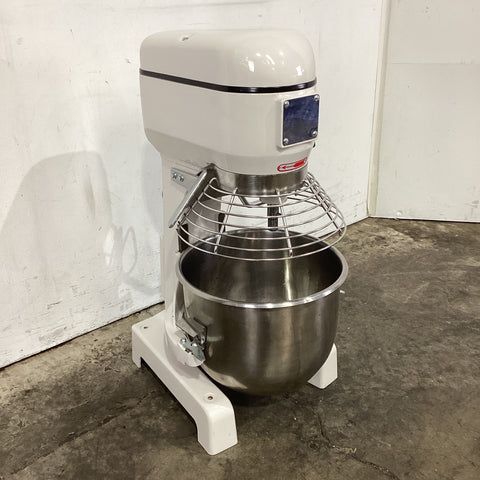

 IBE TF20B Planetary Mixer - 904430
480W x 500D x 820Hmm


 Robot Coupe MP350VVULTRA Stick Blender - 805212
200W x 120D x 780Hmm
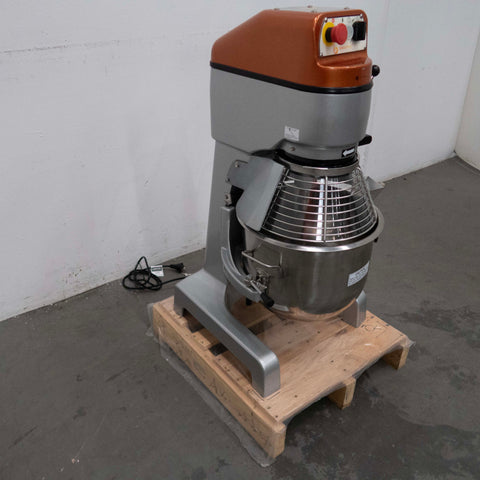

 Bakermix SP-22A-C Planetary Mixer - 820860
460W x 450D x 910Hmm
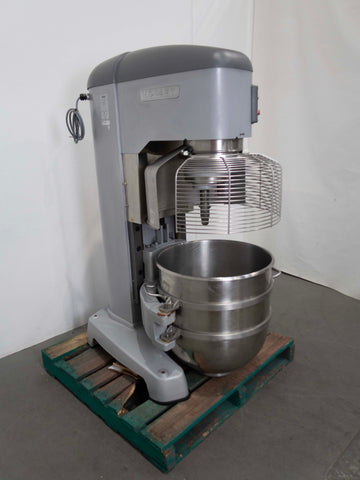
 Hobart HL1400 Planetary Mixer - 839981
850W x 1200D x 1700Hmm
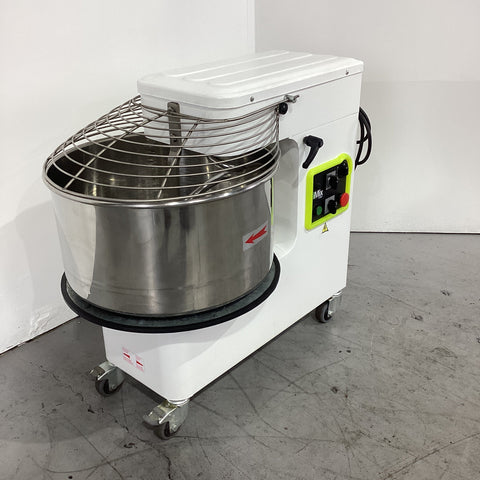

 Moretti Forni IMR44/2 Spiral Dough Mixer - 876835
530W x 860D x 815Hmm

 Robot Coupe SP25-S Planetary Mixer - 901416
560W x 540D x 925Hmm
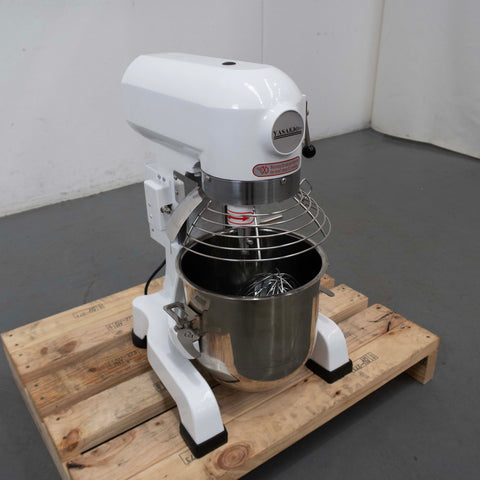
 Yasaki B10KG Planetary Mixer - 931445
380W x 460D x 620Hmm

 Federal FS100M Spiral Mixer - 833351
700W x 1080D x 1380Hmm

 Moretti Forni Planetary Mixer with Variable Speed - MPV
500-680(W) x 700-1000(D) x 1200-1600(H)mm
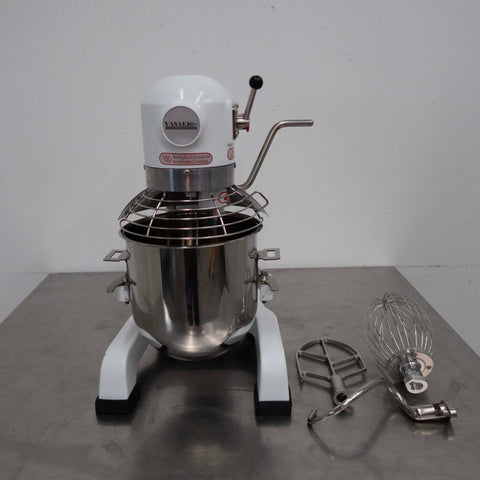
 Yasaki B10KG Planetary Mixer - 887777
380W x 450D x 600Hmm
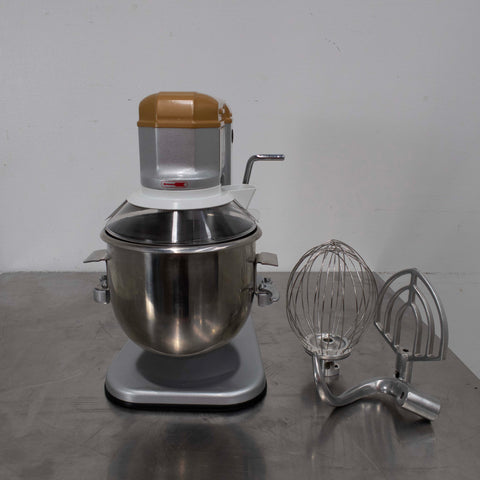
 Anvil PMA1010 Planetary Mixer - 883400
340W x 470D x 540Hmm
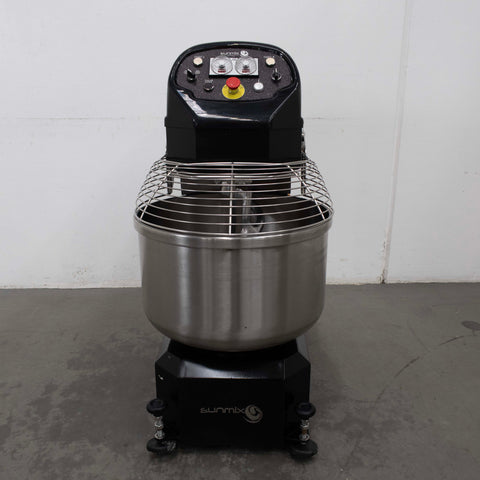

 Sunmix SUN60 CL Spiral Mixer - 917345
580W x 1000D x 1160Hmm


 Kalor KAL-PM10 Planetary Mixer - 871646
450W x 366D x 606Hmm

 Bakermix SP-502A-C Countertop Planetary Mixer - 883661
320W x 400D x 435Hmm

 Bakermix SP-100A/nh-C Countertop Planetary Mixer - 915922
375W x 410D x 775Hmm


 Atlas AS-20 Planetary Mixer - 879022
520W x 550D x 820Hmm
 Anvil 60 Quart Planetary Mixer - PMA3060
1039(W) x 1430(H) x 708(D)mm
 Anvil 20 Quart Planetary Mixer - PMA1020
417(W) x 802(H) x 486(D)mm
 Anvil 40 Quart Planetary Mixer - PMA1040
610(W) x 1215(H) x 660(D)mm

 Apuro Planetary Mixer 5Ltr - HT993-A

 Apuro Planetary Mixer 20Ltr - GL191-A
558(W) x 794(H) x 558(D)mm

 Apuro Planetary Mixer 30Ltr - GJ461-A
540(W) x 1030(H) x 570(D)mm

 Apuro 30L Digital Planetary Mixer - FU139-A
611(W) x 1142(H) x 611(D)mm
Moretti Forni Planetary Mixer with Variable Speed - 20L - MP20V
500(W) x 700(D) x 1200(H)mm
 Moretti Forni Planetary Mixer with Variable Speed - 80L - MP80V
680(W) x 1000(D) x 1600(H)mm
Moretti Forni Planetary Mixer with Variable Speed - 60L - MP60V
680(W) x 1000(D) x 1600(H)mm
A commercial planetary mixer moves one tool around a stationary bowl, so with a hook, a paddle and a whisk the same machine kneads dough, creams butter and sugar, beats batter and whips egg whites. That is why it is usually the first mixer in a kitchen that does a bit of everything — a cafe making its own cakes, a restaurant doing pastry, a bakery that is not only bread.
Our commercial planetary mixers include small benchtop machines for a cafe bench up to large floor-standing machines for a production kitchen, so you can buy the size that suits your business at its current size, then size up as your business grows. Delivered anywhere in Australia, which means one order to track and one number to call if something goes wrong.
Equipping a bakery is a lot of capital at once. We can arrange installation, and bundle it with the equipment under SilverChef Rent-Try-Buy, who can fund the whole package, with the option to upgrade or hand equipment back as things change.
The name comes from the way the tool moves: it spins on its own axis while orbiting the centre of the bowl, so everything in the bowl gets worked evenly.
It kneads dough for every kind of bread, ready for the bread prover. It also creams butter and sugar, whips egg whites for meringues and pavlovas, beats batters, and makes mashed potato or a sauce if you are baking pies.
Over-kneading or under-kneading dough shows up later, once the bread is out of the oven. Speed control is how you avoid it: a low speed with a dough hook for kneading, a whisk on high to whip cream.
Planetary mixers come standard with three attachments — a dough hook, a flat beater and a wire whisk. One machine with three tools covers jobs that would otherwise need several appliances on the bench.
Near the prep area, with the ingredients it uses in reach and the next station it feeds close by, so staff are not carrying full bowls across the kitchen. Line it up with whatever the mix goes into next.
Within reach of a sink or a dishwasher is worth planning too, because bowls and attachments get washed between jobs all day.
The three it comes with cover nearly everything, from specialty breads to pastry. The whisk is the one to reach for with anything aerated — mousse, foams, light sauces. The flat beater does the mixes that are thick rather than airy, including dairy-free and plant-based batters.
That is the point of it in a shared kitchen, like a cafe that also caters. Early morning dough gets pastries into the oven and then into a food display for the day.
In the evening or for an event the same machine whips egg whites for desserts and cream to go on top. One appliance covering both ends of the menu is less bench space taken and less equipment sitting idle.
When the batches get big: hotel breakfasts, brunch service, catering production. A 30 litre machine or a floor-standing model holds more per batch and is built to run continuously rather than in bursts.
Keep in mind that bowl capacity is not weight capacity. The litre rating on a bowl is not how many kilos it will take. Every mixer has a maximum flour weight, and going past it overloads the motor. That is not a manufacturing fault, so the warranty will not cover it.
Because the output is repeatable. Dough mixed the same way every morning behaves the same way when it goes through a dough roller to divide and round buns to weight, and that is what lets a franchise serve the same product in every shop.
The attachments are the other reason: the same machine covers dough, batter, sauce and cream, so a new site needs one appliance instead of three.
Set the speed and the time for each job and write them down, so whoever is on prep that morning mixes it the way the last person did. Many commercial planetary mixers have pre-set functions for exactly that.
It also means fewer batches thrown out for being over or under mixed, which is where the waste goes in a prep kitchen.
If you mix stiff dough or run the mixer all day, yes. A heavy duty planetary mixer or professional planetary mixer is built for continuous work rather than a few batches a day. For bread dough in volume, spiral mixers knead more efficiently, though they only do dough.
Compare bowl sizes from 20 litre to 60 litre mixers, and pair with bread provers and dough dividers.

We have a special page just for stock that's warehoused in Perth.
Click Here to see all WA stockWhat our customers say about us on Google, and how Google scores our store for things like shipping and returns.
Store scores from Google