


 03 9070 5784
 Help & Support
 Track My Order



Recently Viewed


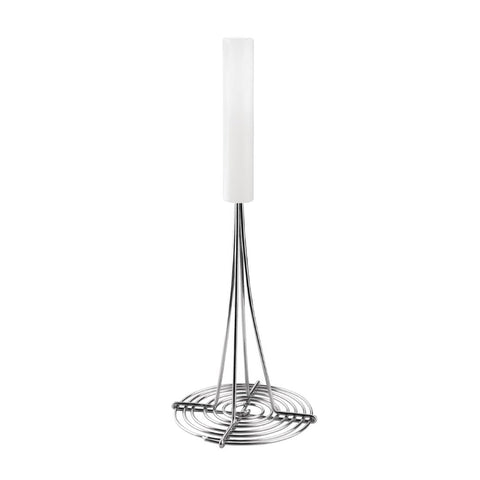

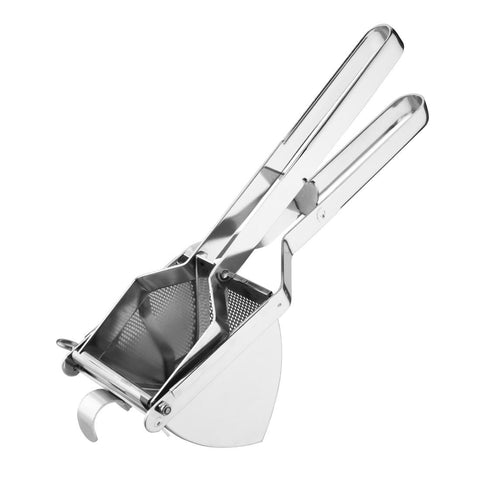

A commercial potato masher makes mash by hand, in the pot, at the volume a kitchen serves it in, and it does the same job on pumpkin, cooked beans and anything else soft enough to crush. It is built for the amount of potato a service goes through.
Two designs cover almost everything. A perforated-plate masher pushes potato through holes and gives a coarser, more rustic mash. A wire or grid masher cuts through and gives a smoother result with more passes. A commercial potato press, which forces potato through a plate, is the third option and gives the finest texture of the three.
Size the masher to the pot. A masher narrower than the base of the pot leaves lumps around the edge, and one too wide cannot be worked. Match it to your commercial sauce pans or casserole pans. The rest of the range is in commercial kitchen tools.
Plate masher, wire grid or press? The price guide has all three priced, so you can see what the step up to a press costs before you decide.
A perforated plate is the workhorse and gives a texture most kitchens want. A wire grid cuts more easily through hot potato and suits a lighter mash. A press gives the smoothest result and takes the most effort per batch.
If the mash is a menu feature, the press is worth it. If it is a side, the plate masher is the sensible buy. For volume beyond hand work, see commercial floor mixers with a paddle.
Overworking it. Potato starch releases the more it is agitated, so a smooth mash made by mashing harder ends up like glue rather than like mash.
Mash less and heat more: hot potato, warm liquid, few passes. A stick blender is the wrong tool here for exactly this reason and is best kept for soups.
Long enough to work a deep pot without getting a hand near the steam, and joined to the head in a way that will not twist. A welded or one-piece stainless join is what to look for.
Hollow handles that fill with water are the usual hygiene complaint. 304 stainless steel is the food-safety grade in Australia and a solid-handled stainless masher will outlast several cheap ones — see stainless steel kitchen accessories.
Not a metal one. A stainless masher will mark a non-stick surface and once the coating is scratched the pot is finished. Mash in a stainless pot, or use a nylon-headed masher.
Most kitchens mash in a stainless pot and serve from something else. See commercial stainless steel cookware and commercial food dishes.
Covered, over gentle heat, with the surface protected. Mash held uncovered skins over and then the skin gets stirred back in as lumps.
A bain marie with a lid is the standard answer, and a hot bain marie display for a service counter.
Immediately and before the starch dries, because dried potato in a perforated plate sets hard. A soak and a brush does it; a quick rinse does not.
Most solid stainless mashers take a commercial dishwasher cycle, which is the easiest route where the plate has many holes.
Avocado, pumpkin, cooked beans, soft fruit for a compote, and breaking up mince in a pan. Anything soft enough to crush and firm enough not to turn to puree.
For harder work, a mortar and pestle or a mixing paddle is the better choice.

We have a special page just for stock that's warehoused in Perth.
Click Here to see all WA stockWhat our customers say about us on Google, and how Google scores our store for things like shipping and returns.
Store scores from Google
