


 03 9070 5784
 Help & Support
 Track My Order



Recently Viewed
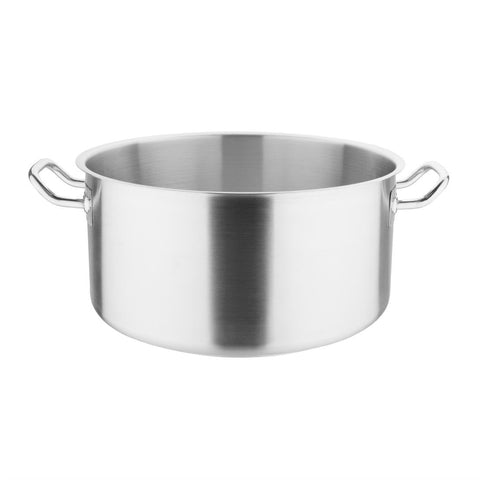

 Vogue Stainless Steel Stew Pan 18.5Ltr - T088
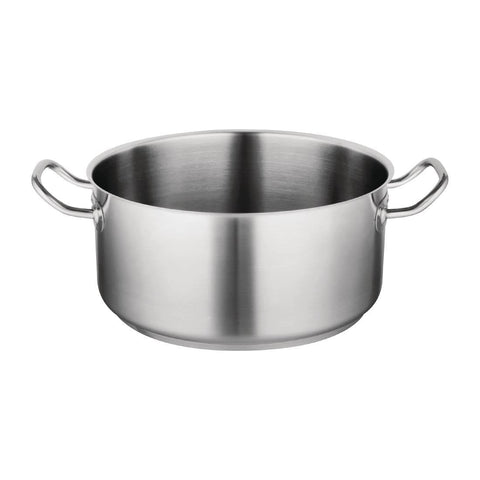
 Vogue Stainless Steel Casserole Pan 13Ltr - T187
360(W) x 140(H) x 360(D)mm
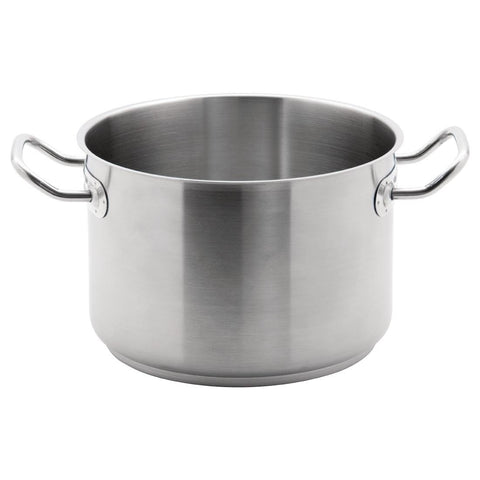

 Vogue Stainless Steel Casserole Pan 7.5Ltr - T177
280(W) x 120(H) x 280(D)mm
 Vogue Stainless Steel Stew Pan 12.5Ltr - M942
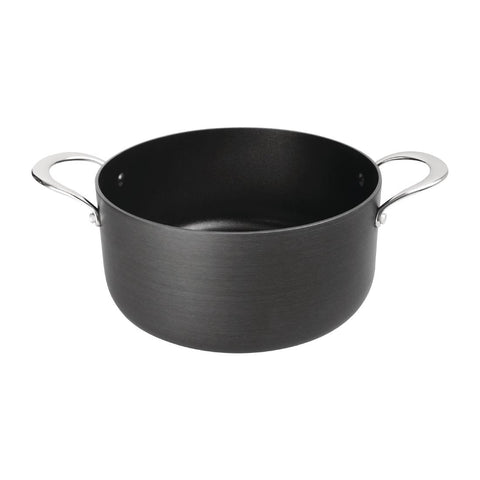
 Vogue Anodised Aluminium Non-Stick Casserole Pan 240mm - CN950
240(W) x 115(H) x 240(D)mm

 Vogue Cook Like A Pro 3-Piece Cast Iron Casserole Dish Set - SA620
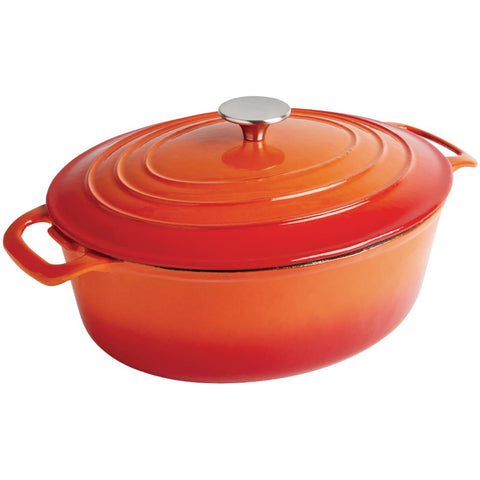
 Vogue Orange Oval Casserole Dish 5Ltr - GH311
243(W) x 110(H) x 295(D)mm
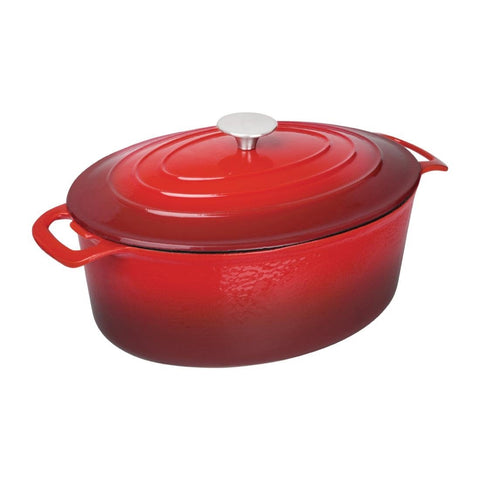

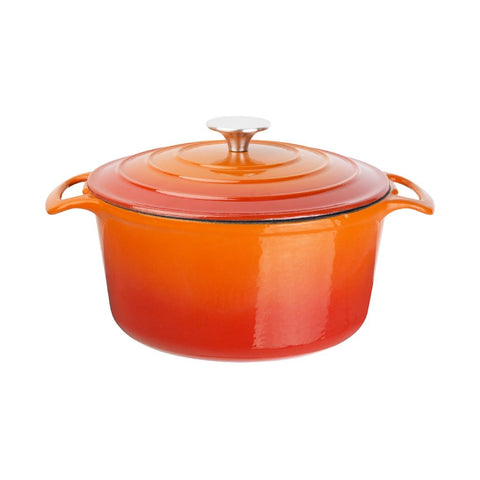
 Vogue Orange Round Casserole Dish 4Ltr - GH303
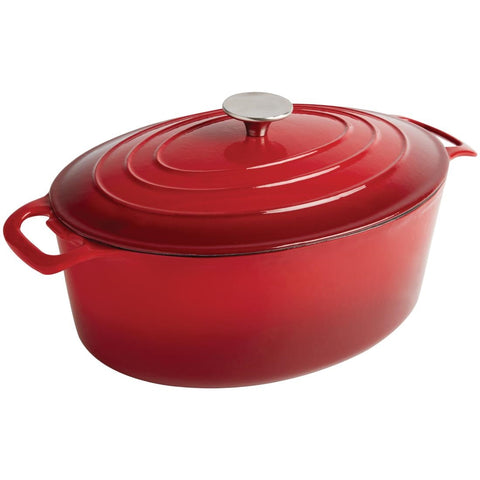
 Vogue Red Oval Casserole Dish 5Ltr - GH313
243(W) x 110(H) x 295(D)mm
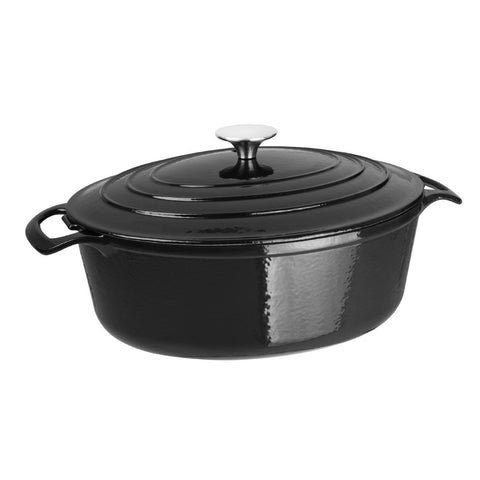
 Vogue Black Oval Casserole Dish 5Ltr - GH306
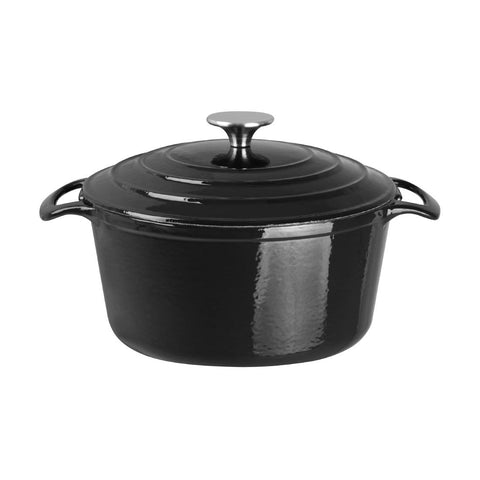
 Vogue Black Round Casserole Dish 3.2Ltr - GH300
205(W) x 120(H) x 205(D)mm
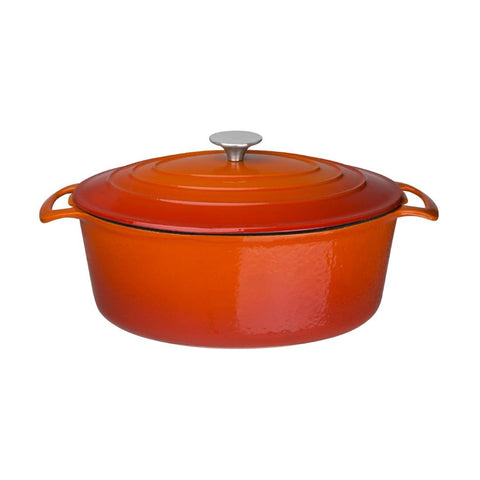
 Vogue Orange Oval Casserole Dish 6Ltr - GH312

 Vogue Red Round Casserole Dish 3.2Ltr - GH304
205(W) x 120(H) x 205(D)mm

 Vogue Black Oval Casserole Dish 6Ltr - GH310
230(W) x 125(H) x 305(D)mm

 Vogue Black Round Casserole Dish 4Ltr - GH301
235(W) x 125(H) x 235(D)mm
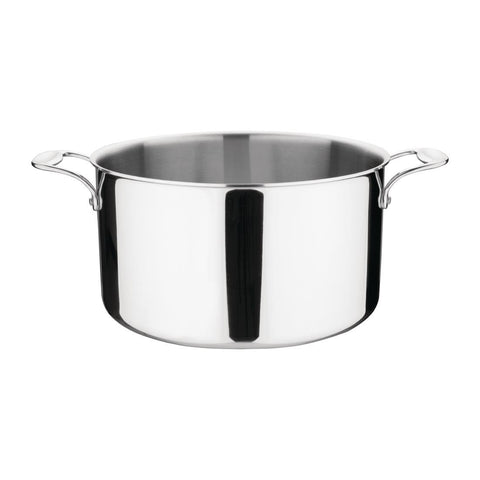
 Vogue Tri Wall Stew Pan 9.5Ltr - Y256
280(W) x 155(H) x 280(D)mm

 Vogue Tri Wall Stew Pan 7Ltr - Y255
254(W) x 160(H) x 254(D)mm

 Vogue Stainless Steel Casserole Pan 4.5Ltr - T149
240(W) x 100(H) x 240(D)mm
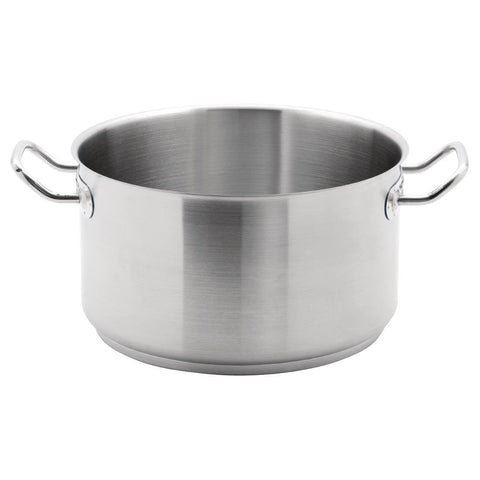
 Vogue Stainless Steel Stew Pan 9.5Ltr - M941
Casserole pans are the deep, lidded pans a kitchen braises in. A casserole pan goes on the stove to sear, into the oven to cook slowly, and in many venues straight onto the table.
Material decides what the pan is good at. Cast iron and enamelled cast iron hold heat hardest and give the most even, slow cook, which is the whole point of a braise. Stainless is lighter, faster to respond and easier to deglaze in. Aluminium-cored stainless sits between the two.
Size is the thing kitchens get wrong. A braise needs the meat in a single layer with the liquid coming part way up; a pan that is too deep for the batch steams rather than braises, and one that is too shallow boils dry.
Casseroles sit in the commercial cookware range with commercial cast iron cookware and commercial sauce pans, and the oven they go into is in commercial ovens.
Sizing a pan to the batch you braise? The price guide lists the casseroles by capacity and material, so you can choose the big one and the smaller sides pans in one sitting.
Usually two or three: a large one for the batch braise that goes on the menu all week, and a smaller one or two for sides and anything cooked to order.
Buy the big one first and buy it bigger than feels necessary. Splitting a braise across two pans gives you two slightly different results.
Cast iron for anything long and slow. It takes a while to come up to temperature and then holds it through the oven cycle, which is exactly what a braise wants, and it will go from stove to oven to table.
Stainless for anything where you need to control the heat quickly or build a sauce in the pan. It is also much lighter, and a full cast iron casserole is a serious lift.
For a braise, yes. The lid is what keeps the moisture in the pan, and a loose lid means the liquid reduces away and the top of the meat dries out.
Some kitchens cover with foil under the lid for a longer cook. If you do that routinely, the cling wrap and foil line is a running cost worth counting.
Only if the base is magnetic, which rules out plain aluminium and some stainless. Cast iron and most clad stainless work; check the induction rating on the product page before buying for an induction section.
This matters more than it used to, because commercial induction cooktops are now common and a pan that does not couple is simply dead weight.
It saves seasoning and it does not react with wine, tomato or vinegar, which is most of what goes into a braise. That is a real advantage over bare cast iron for this particular job.
The trade-off is that enamel chips, usually at the rim, and a chipped pan has to be retired. Bare cast iron can be beaten up for years and re-seasoned.
Deglaze while it is still warm, which does most of the work. Soaking a cold braising pan and then scouring it is slower and harder on the surface than lifting the fond out with liquid.
Enamel and bare cast iron are hand-wash items. Stainless casseroles generally take a machine cycle — check the product page before putting one through the commercial dishwasher.
That is half the appeal, and it is why handle design matters. A pan going to the table needs handles a server can hold with a cloth and a lid that will not slide off on the way.
Put it down on something. A cast iron sizzler base or a trivet protects the table, and anything else is a repair bill.

We have a special page just for stock that's warehoused in Perth.
Click Here to see all WA stockWhat our customers say about us on Google, and how Google scores our store for things like shipping and returns.
Store scores from Google