


 03 9070 5784
 Help & Support
 Track My Order



Recently Viewed
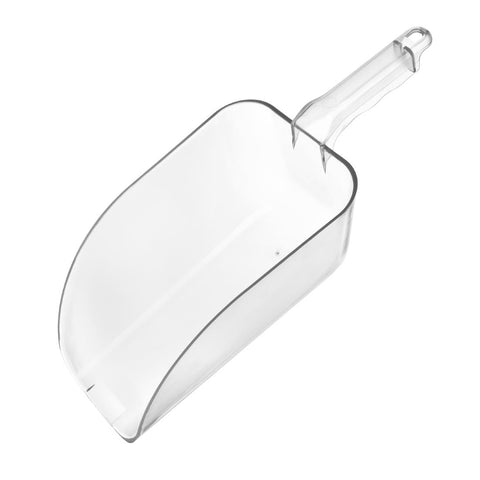

 Vogue Polycarbonate Scoop 1.8Ltr - K937
147(W) x 95(H) x 370(D)mm
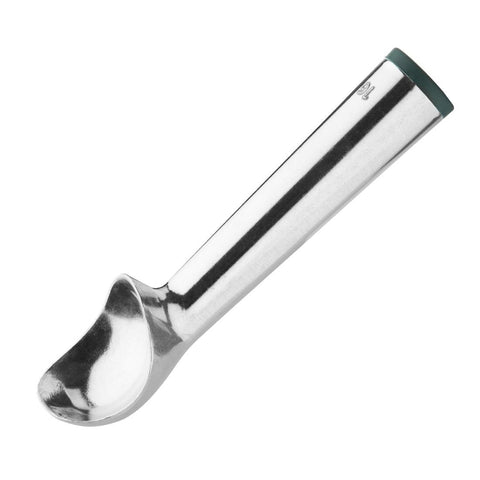
 Vogue Ice Cream Scoop Green Cap Size 16 - J089
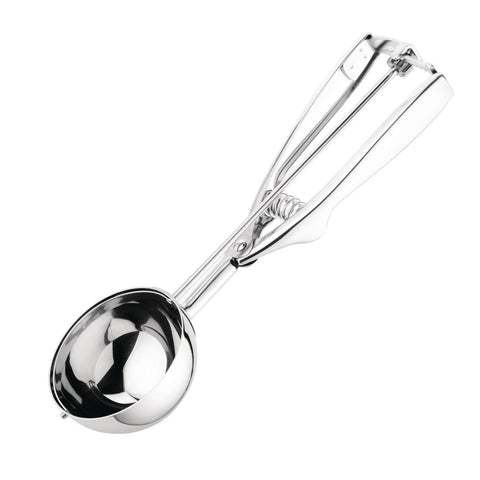

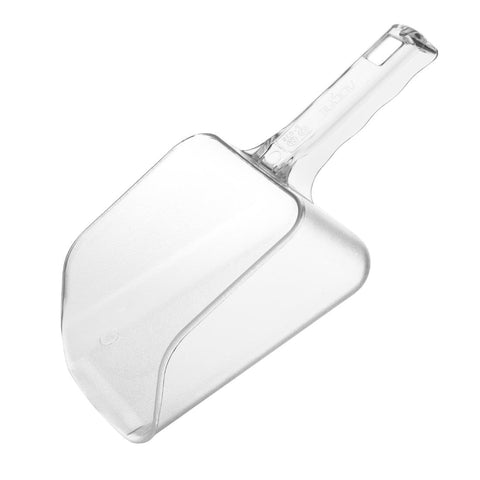
 Vogue Polycarbonate Scoop 900ml - K938
122(W) x 116(H) x 277(D)mm

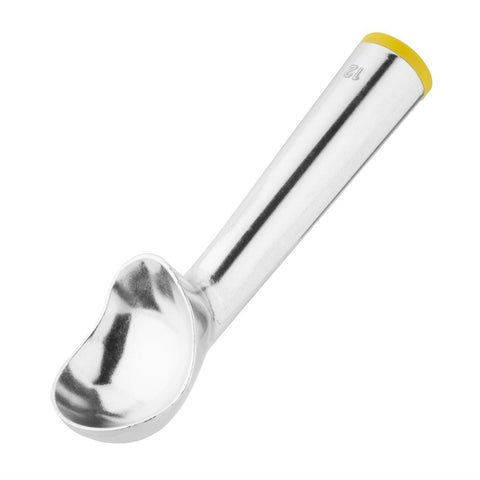
 Vogue Ice Cream Scoop Yellow Cap Size 12 - GJ540


 Vogue Stainless Steel Portioner Size 40 - J095


 Fiesta Compostable Paper Ice Cream Spoons 95mm (100 Pack) - HT487


 Vogue Polycarbonate Scoop 170ml - K940
204(W) x 63(H) x 175(D)mm


 Vogue Stainless Steel Portioner Size 16 - J092

 Vogue Stainless Steel Portioner Size 24 - J093


 Vogue Stainless Steel Portioner Size 12 - J091
 Vogue Ice Cream Scoop Brown Cap Size 20 - GJ541
 Vogue Flat Handled Chip Scoop 86mm - J611
86(W) x 25(H) x 100(D)mm


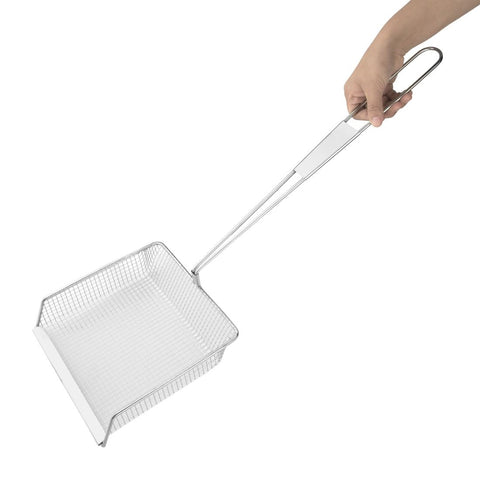
 Prince Castle Dual Handle Fry Scoop - 252-DH
Scoops are the simplest portion control a kitchen has. A scoop that holds the same amount every time removes the variation that creeps into any portion served with a spoon, and it does it without anyone having to think about it.
Two families share the name. Kitchen scoops for dry goods — flour, sugar, ice, chips — are open-ended and sized by volume, and they are about moving product quickly. Commercial scoops with a release mechanism, the disher type, are about portioning: one squeeze, one identical portion, every time.
Commercial kitchen scoops are chosen on the volume they hold and on whether the handle survives commercial use. A welded or one-piece stainless scoop will outlast a riveted one. 304 stainless steel is the food-safety grade used in Australian kitchens. See ingredient bins for the dry goods they work in and serving spoons for the service alternative.
Portioning across a few stations? The price guide prices the dry-goods scoops and the dishers in the one list.
A dry-goods scoop moves volume: it is open, fast and nothing sticks in it. A disher with a sprung release is for anything that holds a shape — mash, ice cream, mince, rice.
Most kitchens need both. The disher is the one that controls cost, so it is the one worth standardising on. See commercial ice cream freezers for where the release type earns its keep.
By the number of portions per volume, which is why the numbering looks backwards — a higher number is a smaller scoop. Each product page states the capacity it holds.
Pick the size from the portion you want to serve, then standardise. Mixing sizes on one dish is how plate costs drift. A kitchen scale is how you confirm the scoop is giving what you costed.
Yes, always, and it should never be stored in the ice. A scoop left buried in an ice bin is a contamination point and in many venues it is the first thing an inspector looks for.
Keep it in a holder outside the bin. See commercial ice machines and insulated beverage storage for where it lives.
To tie a size to a portion and to keep raw and ready-to-eat work apart. A colour-coded handle makes both visible without anyone reading a number.
It works the same way as colour-coded chopping boards. Use the same colour scheme across the kitchen so nobody has to learn two systems.
One-piece stainless scoops generally can. Dishers with a spring and a wire release are the ones to check on the product page, because the mechanism is what wears.
Sprung scoops need the mechanism cleared properly — product dried into the release is the common failure. A commercial dishwasher will do it if the product page allows it; otherwise soak and brush.
No. It gets buried, handled, and becomes the dirtiest thing in the bin. A clip or bracket on the outside solves it.
Most ingredient bins have a scoop holder for this reason. The same applies to kitchen storage boxes.
Chips and fries out of a warmer, coffee beans, pet-food style bulk retail, and portioning cookie dough onto a tray. The disher does more jobs than most kitchens use it for.
See commercial chip warmers and commercial baking trays for two of the common ones.

We have a special page just for stock that's warehoused in Perth.
Click Here to see all WA stockWhat our customers say about us on Google, and how Google scores our store for things like shipping and returns.
Store scores from Google
