


 03 9070 5784
 Help & Support
 Track My Order



Recently Viewed
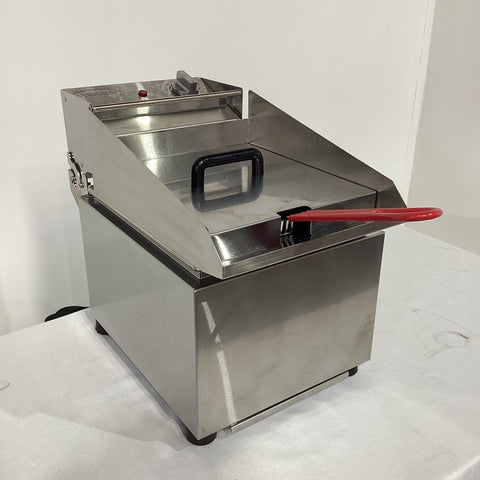

 Woodson W.FRS80 Fryer - 885685
290W x 590D x 370Hmm
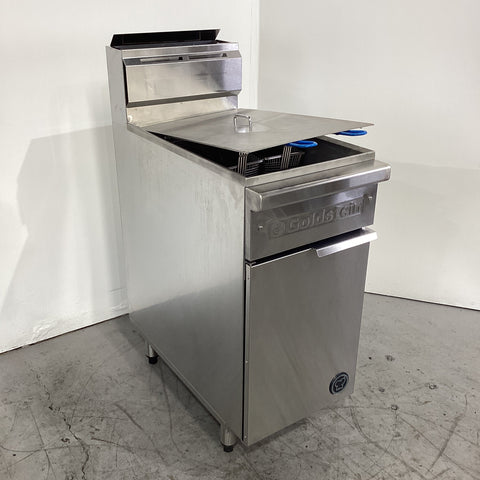

 Goldstein TGF-1M400L Fryer - 838086
395W x 800D x 1150Hmm
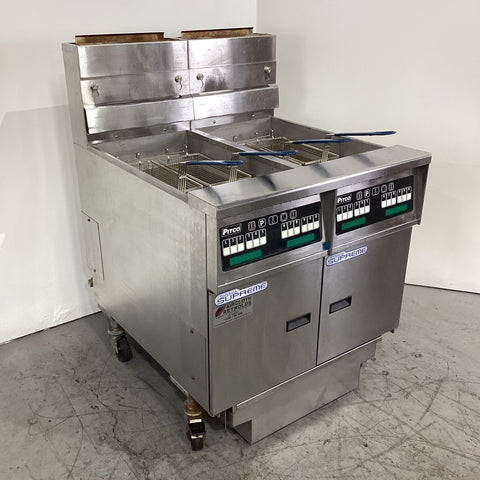

 Pitco SSH55-FR Fryer - 866016
795W x 930D x 1180Hmm
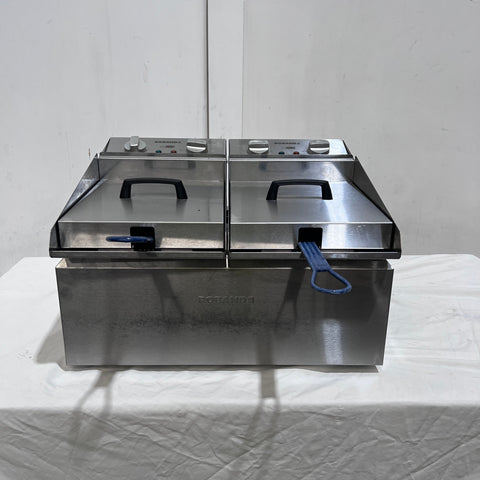

 Roband FR28 Counter Top Split Pan Fryer - 851313
570W x 620D x 380Hmm

 Woodson W.FRS80 Fryer - 805479
285W x 370D x 470Hmm
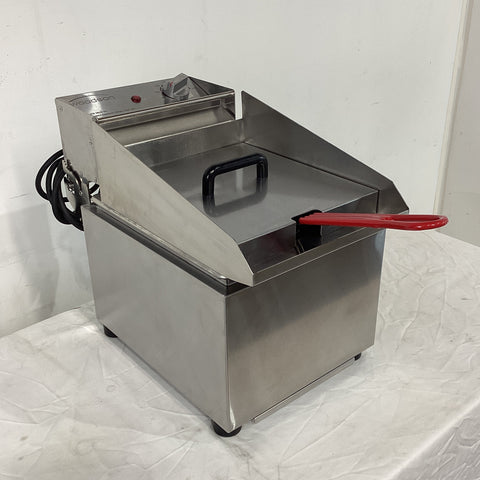
 Woodson W.FRS80 Countertop Fryer - 854598
290W x 590D x 370Hmm
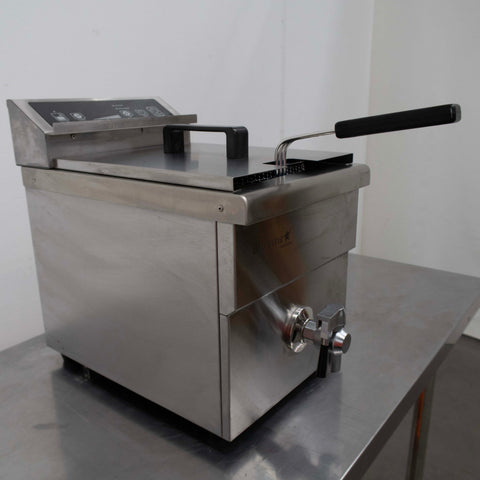

 Federal IF3500S Fryer - 905649
295W x 500D x 415Hmm
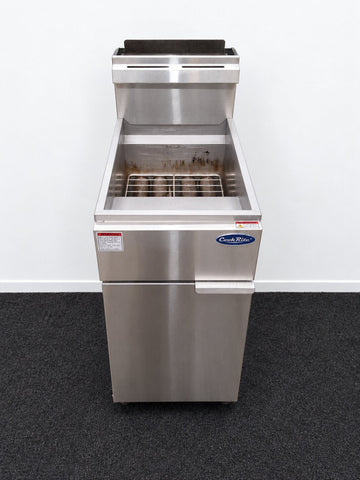

 Cookrite ATFS-50 Fryer - 893604
395W x 785D x 1115Hmm
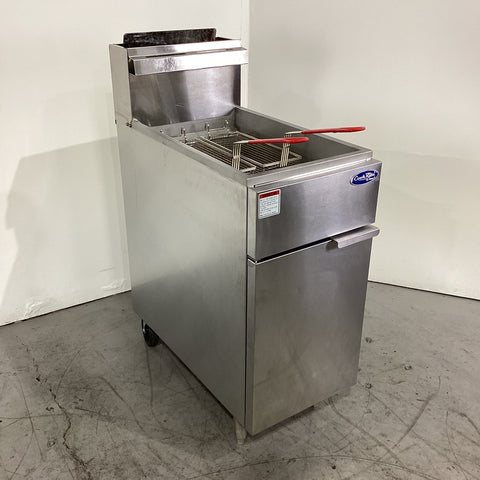
 Cookrite ATFS-50 Fryer - 805046
395W x 785D x 1115Hmm
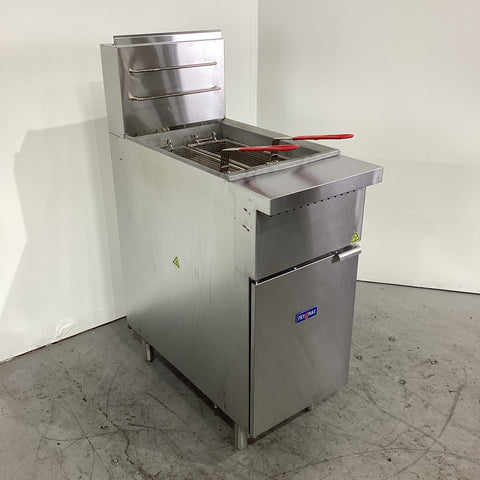

 Frymax VP122 Fryer - 911985
400W x 815D x 1210Hmm
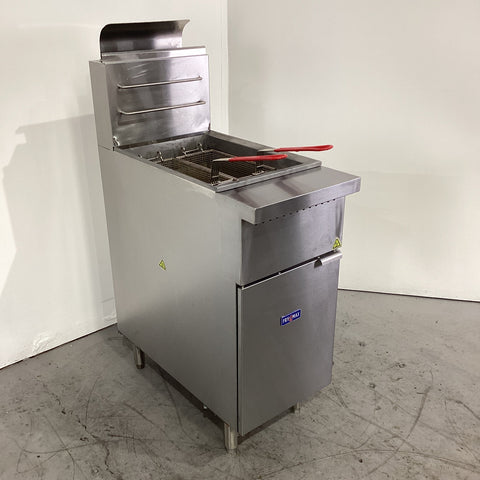
 Frymax VP122 Fryer - 898031
400W x 815D x 1290Hmm


 B+S KTF-451S Fryer - 865640
450W x 840D x 1070Hmm

 Vito VS Oil Filter System - Filters up to 12L - 116mm x 356mm x 176mm
 Vito VM Oil Filter System - Filters up to 18L - 116mm x 400mm x 191mm
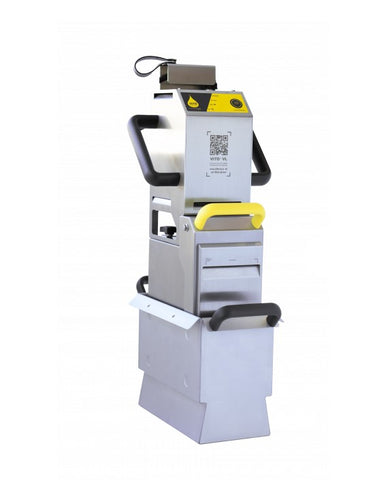
 Vito VL Connect Oil Filter System - Filters 20L upwards - 116mm x 487mm x 185mm
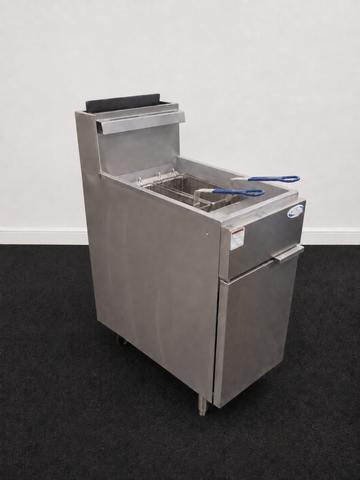
 Cookrite ATFS-50 Fryer - 889910
395W x 785D x 1115Hmm

 Pitco SSH75-3/FD Fryer - 929779
1500W x 930D x 1170Hmm


 Birko 1001004 Fryer - 908824
550W x 510D x 450Hmm


 FastFri FF18 Single Pan Fryer - 886277
400W x 755D x 1085Hmm


 Luus FSV-45 Fryer - 876333
450W x 850D x 1090Hmm


 Blue Seal GT60HPO Fryer - 863579
600W x 815D x 1085Hmm


 Cookon MCFR.1 Fryer - 859302
550W x 730D x 550Hmm


 Henny Penny OFG-341 Fryer - 806638
575W x 1010D x 1220Hmm

 Luus FV-60 V-Pan Fryer - 806576
600W x 800D x 1090Hmm

 Luus FSV-45 Fryer - 850391
450W x 850D x 1090Hmm


 Trueheat RCF4 Fryer - 860333
400W x 805D x 1200Hmm

 FastFri FF18 Fryer - 806159
400W x 770D x 1080Hmm

 Goldstein FRE24DL Fryer - 908822
610W x 800D x 1115Hmm
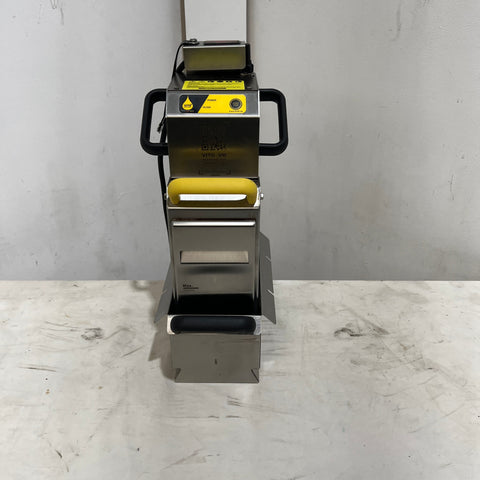
 Vito VM50 Oil Filter - 859789
116W x 191D x 400Hmm

 Luus FV-45 Fryer - 834680
450W x 800D x 1100Hmm

 Goldstein VFGTL Fryer - 820802
450W x 800D x 1200Hmm
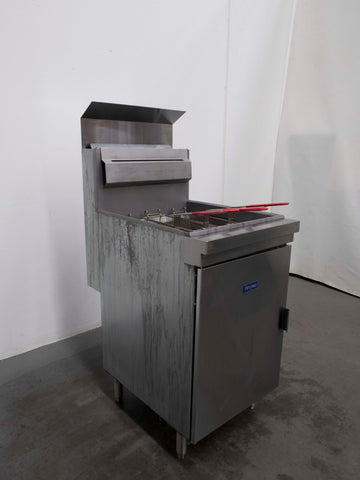

 FryMAX RC500E Fryer - 846997
530W x 775D x 1355Hmm

 Trueheat RCF4 Fryer - 845127
400W x 800D x 1100Hmm


 Waldorf FN8120G Fryer - 875305
450W x 800D x 1125Hmm
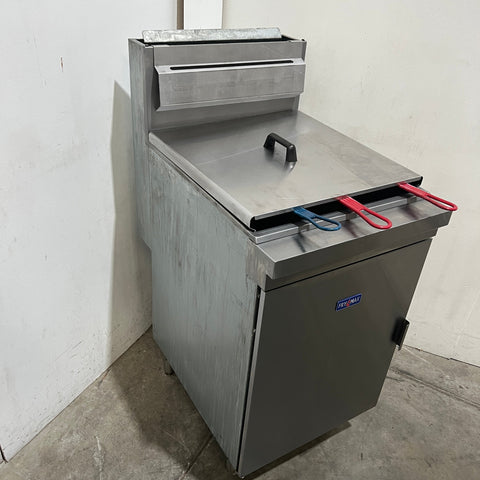
 FryMAX RC500E Fryer - 876496
540W x 870D x 1370Hmm

 Waldorf FN8226G Fryer - 846740
450W x 800D x 1030Hmm

 FastFri FF18 Fryer - 875353
400W x 760D x 1080Hmm


 Wise AWEL-1L Electric Fryer - 846523
400W x 800D x 1160Hmm

 Trueheat RCF4-NG Fryer - 854484
400W x 805D x 1220Hmm


 Giorik FG7417PT Fryer - 778047
400W x 720D x 1040Hmm


 FryKing EF400 Single Tank Electric Fryer - 776210
400W x 800D x 1095Hmm

 Roband F25 Countertop Fryer - 857416
540W x 620D x 340Hmm
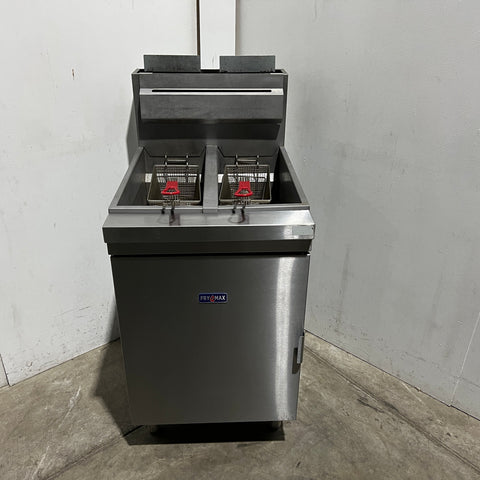
 FryMAX RC400TE Fryer - 838914
535W x 770D x 1200Hmm
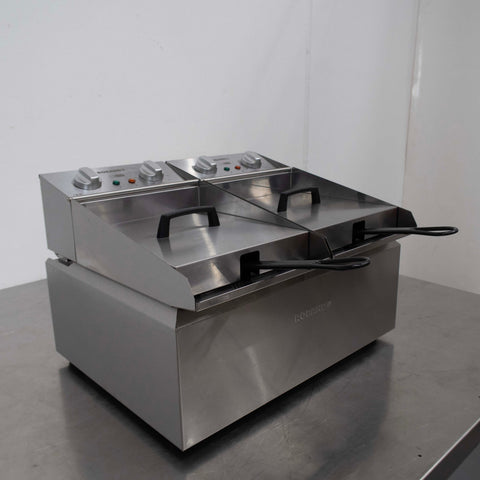
 Roband FR28 Fryer - 909850
575W x 485D x 440Hmm

 Frymax RC400TE Fryer - 895264
540W x 775D x 1350Hmm

 Roband FR18 Fryer - 875737
290W x 480D x 390Hmm


 Birko 1001002 Fryer - 903098
560W x 460D x 370Hmm
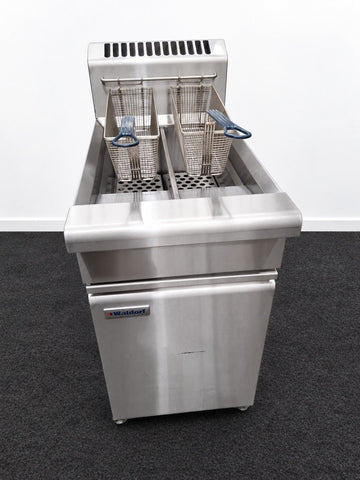
 Waldorf FN8226G Fryer - 891912
450W x 805D x 1115Hmm
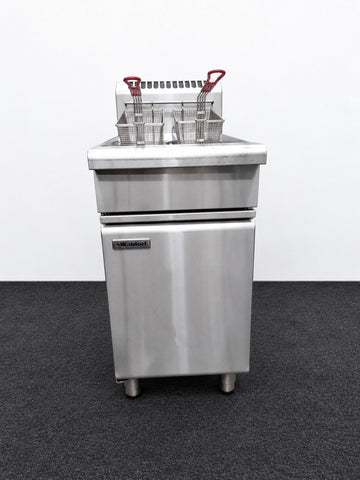
 Waldorf FN8226G Fryer - 891915
450W x 805D x 1115Hmm

 Roband FR18 Countertop Fryer - 889080
290W x 630D x 370Hmm
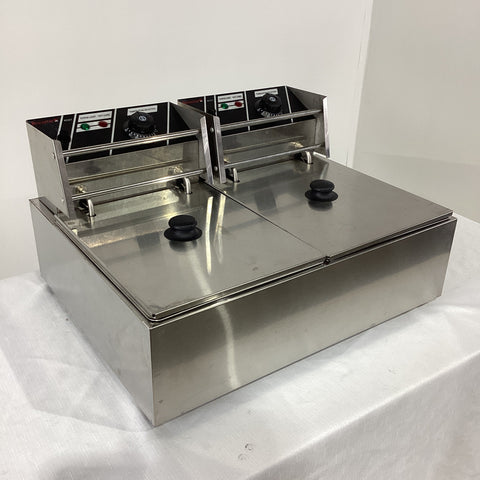

 Benchstar TEF-82KW Electric Countertop Fryer - 915143
550W x 430D x 300Hmm
Cooking oil filters take the crumbs and the fine bits of batter out of frying oil between services. Frying oil goes off because of the particles suspended in it, so pulling those out extends the life of the oil well beyond what skimming achieves, and oil is the expensive consumable in a fryer.
There are two approaches. Filter cones, bags and paper — a manual setup where oil is drained through a medium into a clean pot. And a filter machine, which pumps and filters in place. A fryer oil filter medium is a consumable either way, and how fine it is decides what gets taken out.
Which suits a kitchen depends on fryer count and volume. One fryer and a manual cone works. Three fryers filtered daily and the manual route becomes the longest job of the shift. See commercial fryer filter machines for the powered option, and commercial gas deep fryers and commercial electric deep fryers for the fryers themselves.
Working out a standing order for filter media? The price guide lists the cones, bags and papers in one place, so you can set a reorder level that matches how often you filter.
Because oil is the expensive consumable and the particles are what degrade it. Removing the fines and crumbs between services means the oil lasts noticeably longer before it has to go.
Filtering does not replace changing the oil — it delays it. Keeping the fryer itself clean matters as much, so see cooking equipment cleaners.
A cone, a bag or filter paper over a clean pot is cheap, slow and completely adequate for one fryer. A machine filters faster, handles multiple fryers and removes the hot-oil carrying step.
The carrying is the real argument for a machine. Moving a pot of hot oil across a kitchen is the main burn risk in this job — see commercial fryer filter machines.
Daily for a fryer in constant use, and after any heavy battered or crumbed service. The food being fried matters more than the hours: crumbs load oil far faster than chips do.
Skim during service with a frying basket or a spider, and filter at the end of it. Skimming is not filtering.
When it darkens and smokes early, when it foams, or when it starts carrying flavour between products. Filtering cannot fix oil that has broken down chemically.
A test strip or a meter takes the judgement out of it. The quality of the fry is the other tell — see deep fryer buying guide for how the fryer itself affects it.
Let the oil come down in temperature before it moves, use a vessel rated for hot oil, and keep the route clear.
Mitts, closed footwear and a clear floor. See kitchen mitts, kitchen and hospitality footwear and safety signs.
Fine enough to take out the crumb and the fines, which is what paper and a fabric bag do and a coarse mesh does not. Each product page states what the medium catches.
Oil filter paper is the finest of the common media and a mesh insert the coarsest. Too fine and the flow stops and the job takes forever; a two-stage approach — coarse mesh then paper — is what most kitchens settle on.
Collected for recycling rather than poured away, and most areas have a collector who takes it. Oil down a drain is a blockage and in many cases a trade waste breach.
Keep a sealed container for it away from the cooking line. See commercial kitchen rubbish bins for the rest of the waste setup.

We have a special page just for stock that's warehoused in Perth.
Click Here to see all WA stockWhat our customers say about us on Google, and how Google scores our store for things like shipping and returns.
Store scores from Google