


 03 9070 5784
 Help & Support
 Track My Order



Recently Viewed
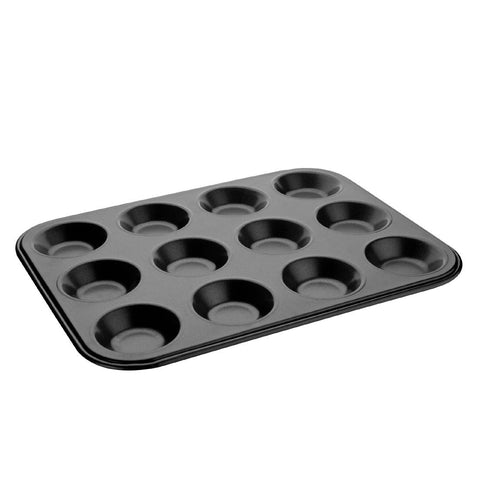

 Vogue Carbon Steel Non-Stick Mini Muffin Tray 12 Cup - GD013
315(W) x 14.4(H) x 240(D)mm
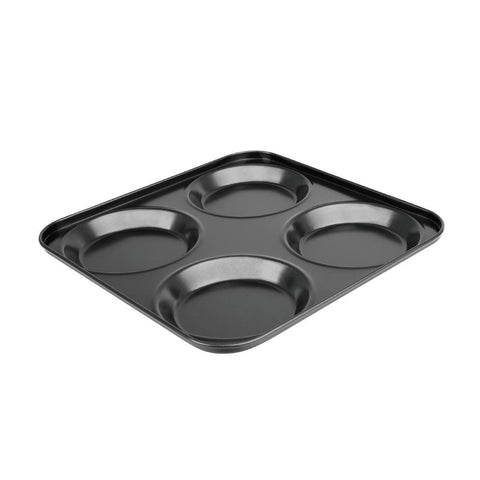
 Vogue Carbon Steel Non-Stick Yorkshire Pudding Tray 4 Cup - GD012
235(W) x 23(H) x 235(D)mm
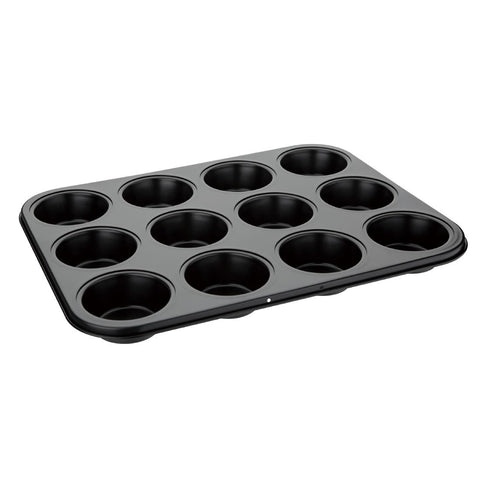
 Vogue Carbon Steel Non-Stick Muffin Tray 12 Cup - GD011
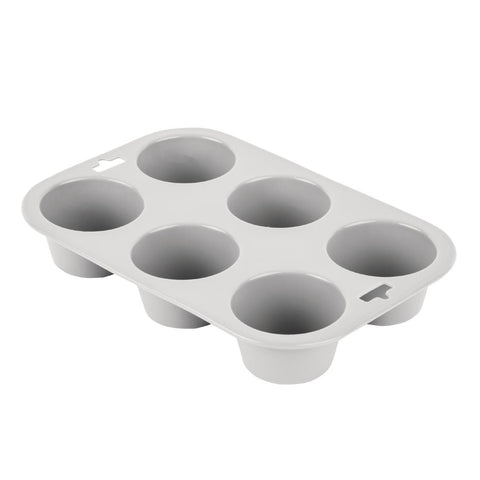
 Vogue Flexible Silicone Six Hole Muffin Pan - DA520
161(W) x 37(H) x 241(D)mm
Commercial muffin pans bake a full tray at a time with every cup the same size, which is what a cafe selling muffins over the counter needs: the price is the same for each one and the customer compares. Commercial muffin trays with evenly formed cups and a flat frame give you that, and a warped pan does not.
The variables are cup count, cup depth and coating. A higher cup count fills an oven rack faster but makes a heavier, more awkward tray to handle full. Deeper cups give the domed top most cafes want; shallow ones give a flatter, more biscuit-like result.
Coating decides whether you line them. Commercial muffin tins with a good non-stick release bare, which saves the cost of cases, but the coating wears with machine washing and the pans then need lining anyway. Industrial muffin pans in heavier gauge hold their shape longest.
Pans sit with commercial loaf pans, cake tins and the rest of the commercial bakery accessories range, and bake on commercial baking trays in the commercial ovens line.
Cup counts and tray dimensions are all in the price guide, so you can work out which tray fills your oven rack before you order.
Match it to the oven rack and to one batch of batter. A tray that half fills a rack wastes oven capacity; a tray that does not match the batch means a partly filled last tray every bake.
Then check what staff can carry. A full large tray coming out of a hot oven at height is heavier than people expect.
Not with a good coating, and not greasing is faster. Cases do two other things though: they make the muffin easier to handle at the counter and they stop it drying out on display.
Many cafes use cases for front-of-counter product and bake bare for anything served on a plate. Cases sit with the baking papers range.
Usually scooping, not the pan. Filling cups by eye gives a tray with a range of sizes, and that difference bakes in. A scoop or a portioner fixes it immediately.
A kitchen scoop of the right size is the cheapest consistency improvement available to a muffin bake.
Metal for structure and browning. The pan conducts heat into the sides of the muffin, which is what gives a set crust and a clean release.
Silicone is flexible, releases reliably and stores flat, but it browns the sides far less and needs supporting on a tray. It suits delicate items more than it suits a classic muffin.
Mechanically yes, and the coating will not thank you for it. Commercial detergent is what takes non-stick from releasing dry to needing cases.
Scrape, wipe and wash only when needed, and check the product page before putting coated pans in the commercial dishwasher.
Egg bites, friands, individual quiches, Yorkshire puddings and portioned frittata — anything that wants a single-serve shape. In a cafe, that versatility is often what justifies a second tray.
For a pastry case, a proper tin is better than a muffin cup. See quiche tins where the shell has to come out whole.
Flat and stacked no higher than the bottom tray can carry, because the stack weight is what distorts the cups. A distorted cup is a differently sized muffin.
Store them where the bakery bench can reach them. A rack beside the bench or modular shelving above it beats a floor stack.

We have a special page just for stock that's warehoused in Perth.
Click Here to see all WA stockWhat our customers say about us on Google, and how Google scores our store for things like shipping and returns.
Store scores from Google