


 03 9070 5784
 Help & Support
 Track My Order



Recently Viewed
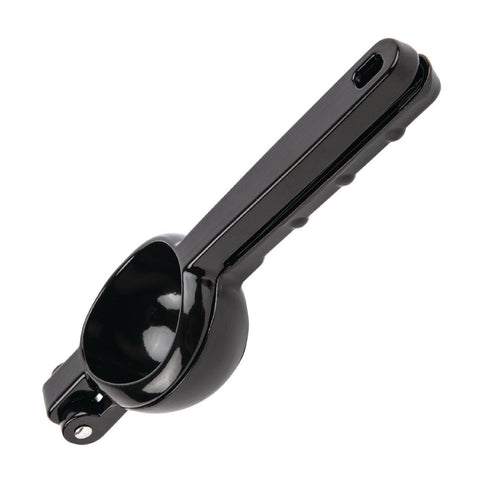

 Olympia Lemon and Lime Press - DM105
210(W) x 50(H) x 70(D)mm
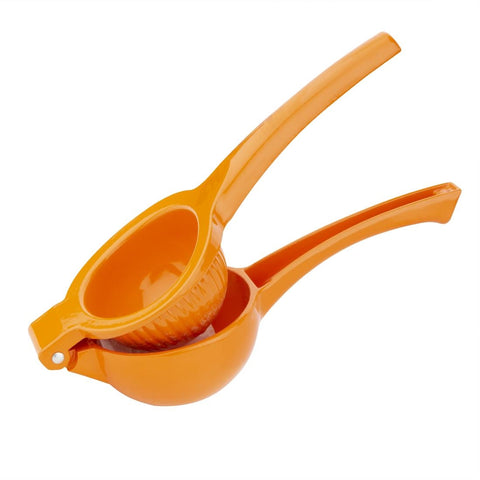
 Olympia Hand Juicer Orange - DP121
98(W) x 70(H) x 240(D)mm
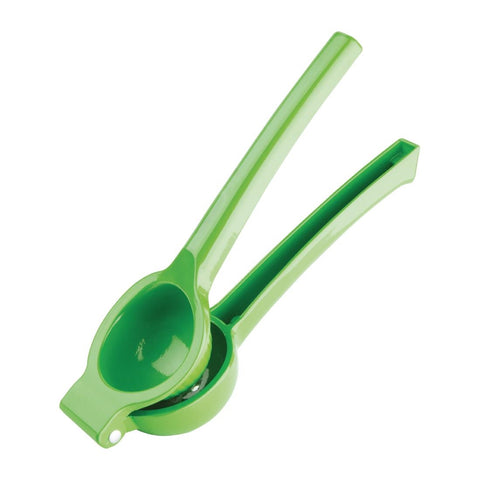
 Olympia Hand Juicer Lime - DP123
65(W) x 55(H) x 205(D)mm
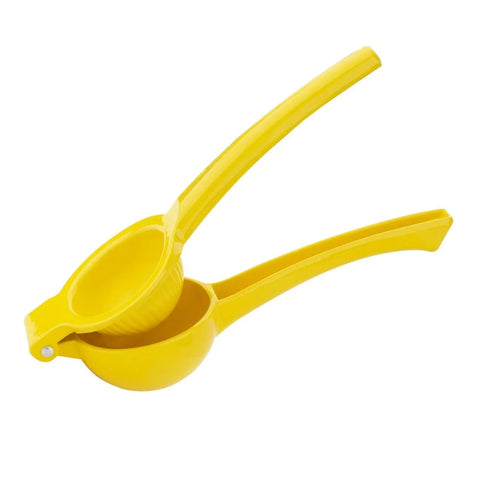
 Olympia Lemon Hand Juicer - DP122
82(W) x 60(H) x 225(D)mm
Commercial lemon juicers press the juice out of a cut lemon or lime in one squeeze, so a bar can pour fresh citrus to order and a kitchen can batch it for the shift. A press also gets noticeably more juice out of a piece of fruit than squeezing by hand, and across a bar's citrus use that difference is the whole case for buying one.
The two types do different jobs. A hand-held citrus press, squeezed in one hand, is right for a bar where juice is made to order. A bench-mounted lemon squeezer with a lever gets through a crate and suits a kitchen juicing a batch for the shift.
A press has to match the fruit — a lemon press struggles with an orange and crushes a lime. Where volume goes past a press, the answer is a commercial juicer rather than a bigger press. The rest of the hand tools are in commercial kitchen tools.
Choosing between a hand press and a bench lever, or buying one press per fruit size? The price guide has them priced in one place.
A hand press is quick for one or two pieces and goes in a drawer. A bench lever press takes far less effort per piece and is the only sensible option for batching.
Bars usually have both: a press on the rail for made-to-order, a lever press in the back for the pre-shift batch. See bar accessories for the rest of the rail.
Yes, and it is the most common mistake. A press sized for lemons will not close on an orange, and a lime in a lemon press slides and gets crushed rather than pressed.
Buy per fruit if you use more than one, or buy the bench lever with interchangeable cones. Sizes are on each product page. For whole-fruit volume, see fruit preparation tools.
Cut side up, against the perforated plate, which is counter-intuitive and is what most people get wrong. Pressing it that way turns the peel inside out and forces the juice out through the pith.
It also keeps most of the bitter oil in the peel rather than in the glass. The yield difference is immediate.
Cast bodies take the force of a hard squeeze without flexing. Stainless is easier to keep clean, and 304 stainless steel is the food-safety grade used in Australian kitchens for food-contact parts.
Avoid a coated or enamelled press. Citrus acid lifts coatings, and a chipped press is a hygiene problem — see stainless steel kitchen accessories.
Less than most bars assume, and it loses aroma before it loses safety. Juice a batch for the shift rather than for the day, and keep it cold and covered in the meantime.
Store it in a sealed container in a bar fridge or bench fridge, not in an open jug on the rail. See preserving jars for sealed storage.
Immediately, because pulp dries into the perforations and then has to be dug out. Rinse on the rail, then wash properly at the end of service.
Most solid presses handle a commercial dishwasher cycle, and the product page states it for anything with a coating or a bonded handle.
On a busy bar, yes — one per size of citrus in use, so nobody is washing a press between a lemon and a lime mid-round. They are low-cost items and the time saved is immediate.
Keep them where the citrus is cut, next to the chopping board and the paring knives.

We have a special page just for stock that's warehoused in Perth.
Click Here to see all WA stockWhat our customers say about us on Google, and how Google scores our store for things like shipping and returns.
Store scores from Google