


 03 9070 5784
 Help & Support
 Track My Order



Recently Viewed


 Bolero Wooden High Chair Dark Wood Finish - DL901
510(W) x 750(H) x 510(D)mm

 Bolero Wooden High Chair Natural Finish - DL900
510(W) x 750(H) x 510(D)mm

 Bolero Steel & Acacia Side Chairs (Pack of 4) - DS150
450(W) x 860(H) x 530(D)mm

 Bolero Wooden High Chair Antique White Finish - DL833
510(W) x 750(H) x 510(D)mm

 Bolero Acacia Wood and Steel Industrial Benches 1600mm (Pack of 2) - DS158
1600(W) x 450(H) x 380(D)mm

 Bolero Rectangular Steel and Acacia Benches 1000mm (Pack of 2) - DS154
1000(W) x 450(H) x 350(D)mm

 Bolero Aluminium Stacking Chairs 735mm - U419
530(W) x 735(H) x 580(D)mm

 Bolero Black Pavement Style Steel Folding Chairs (Pack of 2) - GH553
387(W) x 800(H) x 471(D)mm

 Bolero Black Wicker Chair with Aluminium Frame (Pack 4) - U507
530(W) x 735(H) x 580(D)mm

 Bolero Steel & Acacia Armchair (Pack of 4) - DS151
550(W) x 860(H) x 530(D)mm

 Bolero PP Folding Chairs Black (10 Pack) - GD386
440(W) x 800(H) x 480(D)mm

 Bolero Aluminium Stacking Chairs Arched Arms (Pack of 4) - U501
600(W) x 780(H) x 495(D)mm

 Bolero Wooden High Chair - CJ588
510(W) x 750(H) x 510(D)mm

 Bolero Steel Dining Side Chairs with Wooden Seat pads Black (Pack of 4) - GG707
445(W) x 855(H) x 520(D)mm

 Bolero Natural Wooden Dining Chairs with Backrest (Pack of 2) - GG656
460(W) x 880(H) x 540(D)mm

 Bolero Red Pavement Style Steel Folding Chairs (Pack of 2) - GH555
387(W) x 800(H) x 471(D)mm

 Bolero Mateo Café Chairs Slate Blue (2 Pack) - DX980

 Bolero Highchair Bright White Single - CY599
650(W) x 1010(H) x 770(D)mm

 Bolero Faux Leather Dining Chairs Black (Pack of 2) - GF954
405(W) x 940(H) x 500(D)mm

 Bolero Natural Wicker Chair with Aluminium Frame (Pack 4) - U422
530(W) x 735(H) x 580(D)mm

 Bolero Square Back Side Chair Zebrano (Pack of 4) - GR344
505(W) x 855(H) x 520(D)mm

 Bolero Black Steel Bistro Side Chair (Pack of 4) - GL331
445(W) x 855(H) x 520(D)mm

 Bolero Gun Metal Grey Steel Bistro Side Chair (Pack of 4) - GL329
445(W) x 855(H) x 520(D)mm

 Bolero White Steel Dining Sidechairs with Wood Seatpad (Pack of 4) - GM644
445(W) x 855(H) x 520(D)mm

 Bolero Black Slatted Steel Side Chairs (Pack of 4) - CS728
470(W) x 830(H) x 570(D)mm

 Bolero Faux Leather Dining Chairs Brown (Pack of 2) - GF955
405(W) x 940(H) x 500(D)mm

 Bolero Ash Bistro Side Chair (Pack of 4) - GK997
485(W) x 773(H) x 565(D)mm
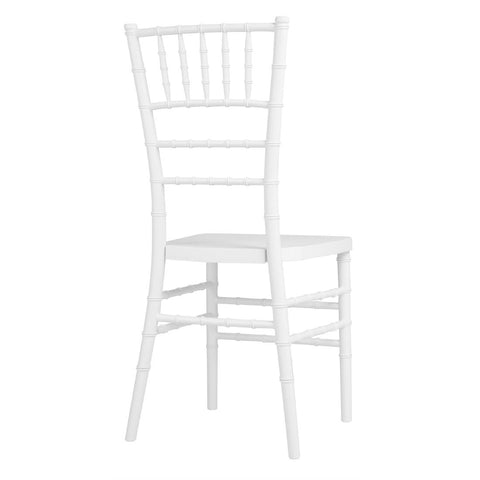
 Bolero Chiavari Polypropylene Chairs White (4 Pack) - JA998

 Bolero Adeline Arm Chairs Dark Navy (4 Pack) - HZ359

 Bolero Windsor Aluminium Black Chairs (4 Pack) - DX686
510(W) x 880(H) x 510(D)mm

 Bolero Clarisse Side Chairs Metallic Grey (2 Pack) - DC178

 Bolero Wooden Dining Chair with Metal Cross Backrest Walnut Finish (2 Pack) - GG658

 Bolero Eden Side Chair Cream (2 Pack) - CH940
480(W) x 775(H) x 480(D)mm

 Bolero Parisian Style Rattan Side Chair Black (2 Pack) - CH111
564(W) x 890(H) x 564(D)mm

 Bolero Wicker Wraparound Bistro Chairs Charcoal (Pack of 4) - CG223

 Bolero Folding Chairs Grey Wood Effect (2 Pack) - HZ891
460(W) x 814(H) x 565(D)mm

 Bolero Folding Bar Chairs Black Wood Effect (2 Pack) - HZ893
650(W) x 1147(H) x 435(D)mm

 Bolero Adeline Side Chair Light Green (4 Pack) - HZ363

 Bolero Adeline Side Chairs Slate Blue (4 Pack) - HZ361

 Bolero Adeline Arm Chair Light Green (4 Pack) - HZ360

 Bolero Adeline Side Chair Dark Navy (4 Pack) - HZ362
480(W) x 855(H) x 558(D)mm

 Bolero Adeline Arm Chairs Slate Blue (4 Pack) - HZ358

 Bolero Lorenzo Cafe Chairs Warm Cream (2 Pack) - DX972
530(W) x 775(H) x 565(D)mm

 Bolero Verona Café Chairs Mild Orange (2 Pack) - DX977
525(W) x 770(H) x 480(D)mm

 Bolero Verona Café Chairs Forest Green (2 Pack) - DX978
525(W) x 770(H) x 480(D)mm

 Bolero Mateo Café Chairs Mint Green (2 Pack) - DX981
525(W) x 760(H) x 525(D)mm

 Bolero Lorenzo Cafe Chairs Medium Grey (2 Pack) - DX970
530(W) x 775(H) x 565(D)mm

 Bolero Mila Café Chairs Light Salmon (2 Pack) - DX975
490(W) x 794(H) x 505(D)mm

 Bolero Lorenzo Cafe Chairs Green Tea (2 Pack) - DX971
530(W) x 775(H) x 565(D)mm

 Bolero Mila Café Chairs Icy Blue (2 Pack) - DX973
490(W) x 794(H) x 505(D)mm

 Bolero PP Rattan Wraparound Armchairs (Pack of 4) - GR363
550(W) x 820(H) x 595(D)mm

 Bolero Camden Padded Interior Chairs (2 Pack) - FU529
A commercial kitchen chair seats a paying customer or a staff member all day and gets wiped down, stacked and moved at the end of it. The mix of styles you pick is what sets how many covers the room holds: cafe chairs for loose dining, commercial cafe benches for fixed runs along a wall, commercial folding chairs for rooms that get reset, and cafe bar stools for counters, so you can start with the areas that need covering now and add more as your business grows.
Commercial kitchen chairs are made to be wiped down and re-tightened rather than vacuumed and thrown out. Materials and dimensions for each model are on its own product page.
Pick the seating after the tables, not before, because table height and edge shape decide what fits under them. The table range is commercial kitchen tables, with cafe tables underneath it, and shapes split into round cafe tables and square cafe tables.
Fit-outs are easier to get right on the phone than in a cart. Tell us the room, the covers and the turnover and request a callback — we will talk through what suits it before you order. The wider fit-out range is in furniture.
Loose chairs for the open floor, because the room can be reconfigured and people can pull a chair to a different table. Bench seating along walls and under windows, because it fits more covers in the same footprint. Stools at counters and window bars for short stays. Folding chairs only where the room is regularly reset.
Most venues end up with two or three of these rather than one. The mix is what makes a floor plan work — all loose chairs wastes the walls, all benches makes a room impossible to change.
Steel is the default for heavy trade use and takes the most knocking about. Aluminium is lighter and the usual choice where the chair goes outside or gets carried a lot. Timber suits dining rooms with a slower pace and looks better doing it, but it is less forgiving of being dragged.
Whatever the material, look for a chair where the fixings can be reached and re-tightened. That is what lets you keep a set tight instead of replacing it.
Vinyl wipes clean and handles spills, which is why it dominates high-turnover rooms. Polypropylene is the easiest to hose off and the usual pick for outdoor and casual areas. Timber and ply seats look warmer and suit slower service, and they want a dry room.
Upholstered fabric is the most comfortable and the most work. It belongs in dining rooms where people stay for a meal, not in a cafe window.
If the room is ever cleared — for a function, a deep clean of the floor, or storing chairs overnight — stackable saves a great deal of time and space. If the layout never changes, stackability costs you nothing but buys you nothing either.
Check the stated stack limit on the product page and do not exceed it. A stack that is too tall is the most common way commercial chairs get damaged, and it is a hazard when someone pulls from the middle.
Measure the clear height under the table, from the floor to the underside of the top or the apron, then compare it with the seat height on the chair's product page. The gap between the seat and the underside of the table is what decides whether people can cross their legs or get a chair in at all.
Counter and bar runs are a separate exercise — a dining chair at a bar is useless and a bar stool at a dining table is worse. Pick the counter height first, then choose from cafe bar stools, and check the top you are pairing it with in cafe table tops.
Only where the product page says the chair is rated for outdoor use. Indoor chairs put outside fail at the joints and the fixings, and upholstered seats are ruined by one wet night.
If the outdoor area is the one you want full, the seating is only part of it. Shade from commercial outdoor umbrellas and warmth from outdoor heaters do more for outdoor covers than the chair does.
Enough to cover breakages without changing the look of the room, which in practice means buying a small margin above your seat count in the same batch. Commercial finishes and coverings change between production runs, and a replacement bought two years later rarely matches exactly.
If budget is tight at fit-out, buy the spares in the same order and store them rather than skipping them. It is cheaper than re-seating a room because one chair broke.
By the material. Vinyl and polypropylene take a damp cloth and a mild detergent and that is the whole job. Timber needs the water kept off it. Upholstered fabric needs a scheduled clean rather than spot work, because it holds what it absorbs.
Get underneath as well. Crumbs and spills collect where the seat meets the frame and under bench seating, which is the real reason to be able to pull furniture out from a wall. Clean floors matter as much — the surface and floor cleaners range covers that side.
Rock each chair, front to back and side to side. Movement means a fixing has loosened or a joint has opened, and the first is a quick fix while the second is the end of the chair. Do the whole set at once, on a schedule, rather than waiting for a complaint.
Also check the feet. A missing or worn foot wobbles, scratches floors and puts the load on one leg. Replacement feet and fixings are in spares and accessories, and we can help identify the right ones if you tell us the model.

We have a special page just for stock that's warehoused in Perth.
Click Here to see all WA stockWhat our customers say about us on Google, and how Google scores our store for things like shipping and returns.
Store scores from Google