


 03 9070 5784
 Help & Support
 Track My Order



Recently Viewed

 Yasaki Cordless Electric Kebab knife - CKS100
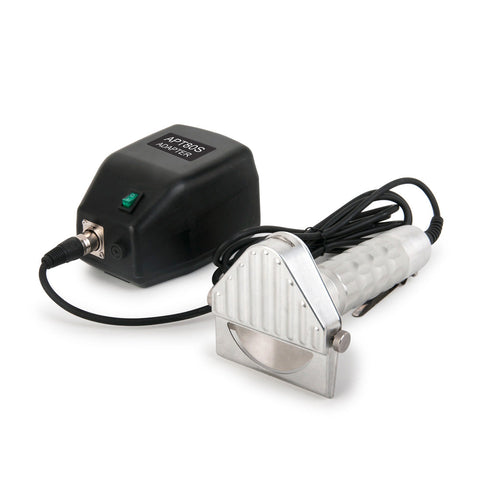
 Yasaki Heavy Duty Stainless Steel Electric Kebab KniFE KS80AS
Kebab knives exist for one motion: a long, flat, downward stroke that shaves meat off a rotating vertical stack without digging into it. A normal chef's knife cannot do it, because the blade is too short and the belly of the blade fights the curve of the stack.
The two options are a long manual blade and a powered shaver. Manual blades are cheaper, quieter and give more control over thickness; powered shavers are faster and more consistent across a long shift, which matters on a busy kebab grill.
Either way the knife works beside radiant heat all day, so the handle and the blade finish matter. Blades should be stainless, and 304 stainless steel is the food-safety grade used in Australian commercial kitchens.
Choosing between a long manual blade and a powered shaver? The price guide shows what each one costs before you fit out the counter.
A manual blade suits lower volume and a cook who wants to vary the shave. An electric shaver suits sustained volume, gives an even thickness and takes the fatigue out of a long lunch run.
Many shops keep a manual blade as the backup for when the shaver is being cleaned. Both live beside the rotisserie and the grill.
Long enough to take a full stroke down the face of the stack in one movement. Short blades need several passes, which tears the surface and dries the meat out.
Blade lengths are listed per product. Match it to the height of the stack your grill carries, not to the knife you are used to.
Because the cut has to stay parallel to the stack. A curved blade with a belly rides in and out of the meat, giving thick and thin shavings in the same stroke.
That straight profile is also why it is a poor general-purpose knife. Keep a chef knife on the bench for everything else.
Honed frequently, because the blade is long and the cut is shallow, so a dull edge shows immediately as tearing rather than slicing. A long steel is the practical tool.
Re-grind on a stone or by a service when honing stops working. See the sharpeners range for long blades.
Wiped down through service so fat does not build on the blade, then washed and dried properly at close. Fat left on a warm blade polymerises and then needs a degreaser.
Hand wash it, not the machine. A commercial dishwasher will dull the edge and bang a long blade around.
On a rack or in a holder beside the grill, edge protected, not resting against the machine or on the bench where it can be knocked. A wall rack mounted clear of the heat works well.
Never leave it on top of the stack, where the next person to reach in will find it with a hand.
A grill, a long board or tray to catch the shavings, tongs, and somewhere to hold warm — see bain maries for the salad and sauce side.
The rest of the commercial knives range covers prep. The kebab knife should only ever be used on the stack.

We have a special page just for stock that's warehoused in Perth.
Click Here to see all WA stockWhat our customers say about us on Google, and how Google scores our store for things like shipping and returns.
Store scores from Google